
Ingredients
Purée
- 500 gyellow split peas
- 1.5 litreswater
- 1onion, halved
- 2bay leaves
- 100 mlextra virgin olive oil
- salt
To serve
- 1red onion, finely diced
- capers
- more olive oil
- lemon
- dried oregano
Directions
- Note what this actually is: in Greece, fava does not mean broad beans. Santorini fava is Lathyrus clymenum, a vetchling grown on volcanic soil, and it holds PDO status. Elsewhere yellow split peas stand in for it.
- Rinse the split peas thoroughly in several changes of water, until the water runs clear.
- Put them into a pot with the water, the halved onion and the bay leaves, and bring to the boil.
- Skim the foam off carefully for the first ten minutes. Left in, it makes the finished purée grey and slightly bitter.
- Simmer, partly covered, for 45 minutes to an hour, until the peas have collapsed completely and almost all the liquid has gone.
- Add no salt until the very end. Salted early, the peas stay stubbornly firm however long you cook them.
- Fish out the onion halves and the bay leaves.
- Beat it hard with a wooden spoon, or blend it briefly, while pouring in the olive oil in a steady stream.
- Beat the oil in while it is hot. It emulsifies into the starch and gives a purée that sets glossy rather than pasty.
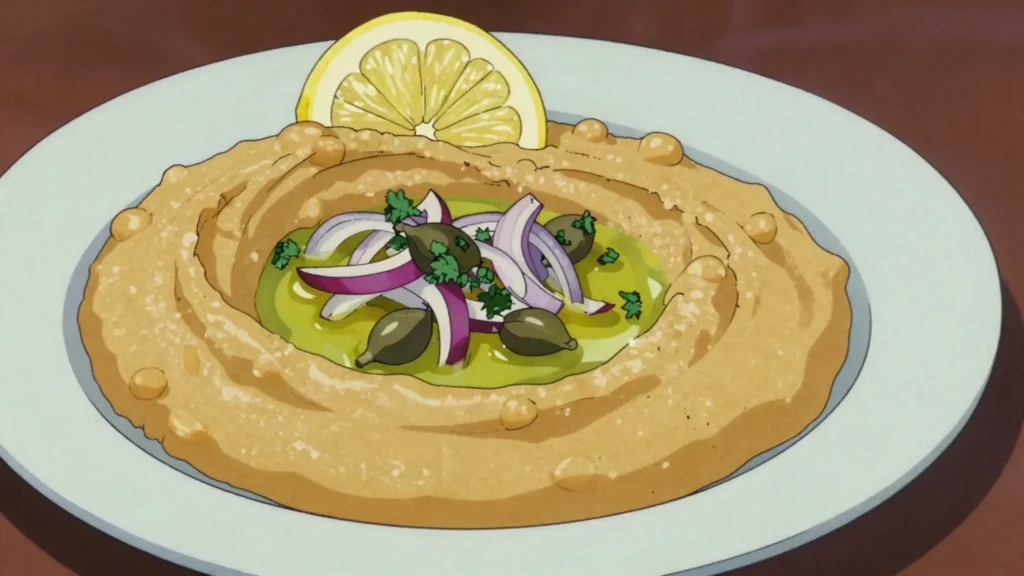
- Season with salt and spread it onto a plate while still warm, making a hollow in the middle with the back of the spoon.
- It firms considerably as it cools, so leave it looser than you want to serve it.
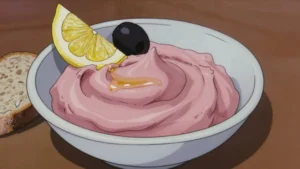
- Fill the hollow with olive oil, top with diced raw onion, capers and oregano, and serve with lemon.
Technique
- Santorini fava is creamier and sweeter than split peas and cooks faster. If you find it, use less water.
- Raw onion on top is not a garnish. The sharpness against the soft purée is the point of the dish.
- It is eaten warm or at room temperature, never hot, and it is very good cold the next day.
Substitutions
- Yellow split peas, which are the standard substitute everywhere outside Santorini.
- Chana dal, which behaves similarly and tastes slightly nuttier.
Variations
- Fava me koukia, topped with braised capers and their leaves.
- With caramelised onion piled on top, which is the taverna version.
- Pantremeni, married fava, cooked with onion and tomato stirred through.
History
A smooth, creamy purée made from yellow split peas, cooked slowly and blended with olive oil and lemon, documented across Greece, particularly associated with the island of Santorini, where the local variety of yellow split pea grown in the island’s distinctive volcanic soil is protected under European Union geographic indication status. Its simple preparation, relying on just split peas, olive oil, lemon and often raw onion as a topping, reflects a broader Greek culinary tradition of transforming humble, affordable legumes into a refined, satisfying dish through careful, minimal technique. Fava remains one of Greece’s most beloved traditional dips, closely associated with Santorini’s specific agricultural and culinary identity.
Frequently asked questions
What is Fava?
Fava is a salad & side from Greece: santorini yellow split-pea purée with capers, onion. A smooth, creamy purée made from yellow split peas, cooked slowly and blended with olive oil and lemon, documented across Greece, particularly associated with the island of Santorini, where the local variety of yellow split pea grown in the island’s distinctive volcanic soil is protected under European Union geographic indication status. Its simple preparation, relying on just split peas, olive oil, lemon and often raw onion as a topping, reflects a broader Greek culinary tradition of transforming humble, affordable legumes into a refined, satisfying dish through careful, minimal technique. Fava remains one of Greece’s most beloved traditional dips, closely associated with Santorini’s specific agricultural and culinary identity.
How long does Fava take to make?
Fava takes 10 min of preparation and 1 hr of cooking. The recipe makes 6 servings. It is rated easy to make.
What can I substitute in Fava?
Yes, within limits. Yellow split peas, which are the standard substitute everywhere outside Santorini. Chana dal, which behaves similarly and tastes slightly nuttier.
What is the most important thing to get right in Fava?
Beat the oil in while it is hot. It emulsifies into the starch and gives a purée that sets glossy rather than pasty.