
Ingredients
Dough
- 400 gplain flour
- 80 mlsesame oil
- 80 mlhoney
- 60 mlrice wine
- or 60 ml ginger water
- 1/2 teaspoonsalt
- 1/2 teaspoonground ginger
- 1/2 teaspoonblack pepper
Syrup
- 300 mlhoney
- or 200 g sugar with 100 ml honey
- 150 mlwater
- 3cm ginger, sliced
- 1cinnamon stick
To fry
- oil, for deep frying
To finish
- toasted sesame seeds
- chopped pine nuts
- ground cinnamon
Directions
- Put the flour and salt in a bowl. Add the ground ginger and black pepper. Whisk them together thoroughly. Pour in all of the sesame oil. Rub it through with your fingertips.
- Keep rubbing until it looks like damp sand. The oil must coat every particle of flour. Sieve the whole mixture if you can. Adding the liquid takes a light hand. Mix the honey with the rice wine. Pour it over all the oiled flour.
- Fold it in with a rubber spatula. Press it together into a mass. Do not knead or work it at all. Add a spoonful of wine if it will not hold. Press the dough into a flat rectangle. Fold the dough over onto itself. Press it out flat again once more.
- Repeat that three or four times. Wrap the dough and let it rest. Give it at least thirty minutes. Roll the dough to about one centimetre thick. Cut it into squares or diamonds. Prick each piece through several times.
- Prick right through with a skewer. Put the honey and water in a pan. Add the sliced ginger and cinnamon. Warm it until it is thin and pourable. Let it simmer for five minutes. Take it off and let it cool down. The syrup should be cool or barely warm.
- Pour oil into a deep pan to eight centimetres. Never fill a pan more than halfway with oil. Heat the oil to about 100C only. Give them about eight minutes. Fry them for about four minutes more. Turn them over as they colour. They should be a deep golden brown. Lift them straight from the oil. Drop them into the cool syrup at once.
- Let them soak for at least three hours. Judging the soak takes a test. Cut one in half after a few hours. The syrup should have reached the centre. Lift them out onto a wire rack. Let the excess syrup drain off. Give them about one full hour.
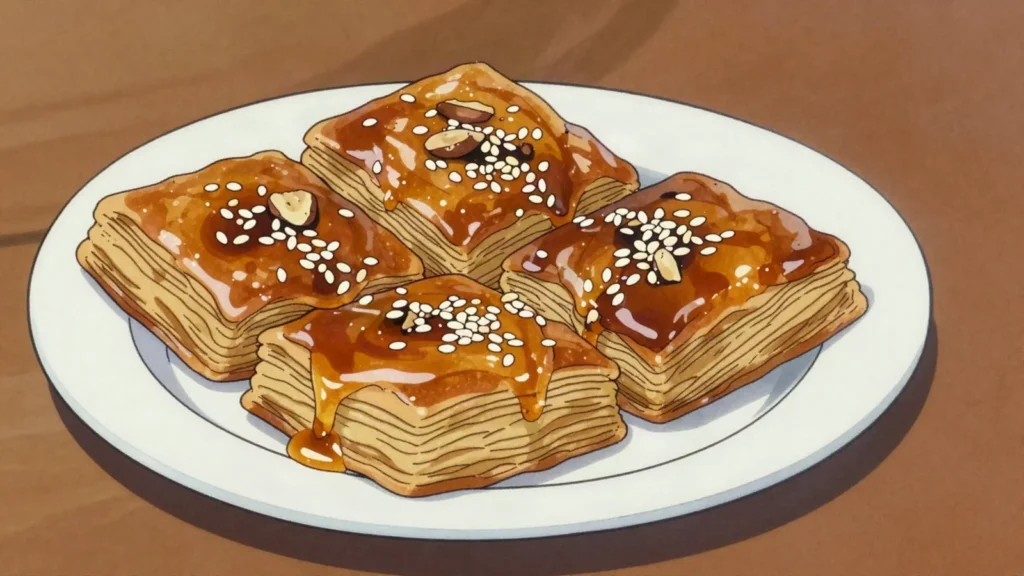
- Scatter toasted sesame seeds over them. Add the chopped pine nuts over them. Dust a little cinnamon over them. Set them out on a plate or a tray. They keep two weeks in a sealed tin.
Technique
- Yak means medicine and gwa means confection, so yakgwa means medicine confection, honey having been regarded as medicinal; the same naming gives yakbap and yakju.
- The sweet dates to the Goryeo dynasty, whose capital was Kaesong, and used such quantities of honey, oil and costly wheat flour that the courts issued orders restricting its making more than once, a repetition suggesting the restrictions were widely ignored.
- The dough must never be kneaded, since gluten makes it tough and bready while yakgwa should crumble and layer; the oil is rubbed through the flour to coat every particle and prevent gluten forming, and the dough is folded rather than worked.
Substitutions
- Sugar syrup with some honey stands in where honey alone is too costly.
- Ginger water can replace the rice wine in the dough.
Variations
- Traditional wooden moulds press flower shapes into the pieces.
- Some makers add more ginger and pepper for a warmer flavour.
- The soaking time varies from three hours to a full day.
History
A Goryeo-dynasty ritual sweet from Kaesong; honey pastries were so costly that Goryeo courts repeatedly restricted their making by law.
Frequently asked questions
What is Kaesong Yakgwa?
Kaesong Yakgwa is a dessert from North Korea: deep-fried honey pastry soaked in syrup, dense and chewy, made for ceremonies. A Goryeo-dynasty ritual sweet from Kaesong; honey pastries were so costly that Goryeo courts repeatedly restricted their making by law.
How long does Kaesong Yakgwa take to make?
Kaesong Yakgwa takes 45 minutes plus resting of preparation and 30 minutes of cooking. The recipe makes about 20 pieces. It is rated hard to make.
What can I substitute in Kaesong Yakgwa?
Yes, within limits. Sugar syrup with some honey stands in where honey alone is too costly. Ginger water can replace the rice wine in the dough.
What is the most important thing to get right in Kaesong Yakgwa?
Keep rubbing until it looks like damp sand. The oil must coat every particle of flour. Sieve the whole mixture if you can. Adding the liquid takes a light hand. Mix the honey with the rice wine. Pour it over all the oiled flour.