
Ingredients
Bamboo
- 800 gfresh bamboo shoots, or 600 g prepared
- water, for boiling
Yanang
- 100 gfresh yanang leaves, or 200 ml prepared yanang extract
- 1 litrewater
Aromatics
- 6shallots
- 6garlic cloves
- 3dried red chillies
- 1 tbsppadaek, or 2 tbsp fish sauce
- 1 tspsalt
To add
- 200 gmixed forest mushrooms
- 150 gpumpkin, in chunks
- 100 ggreen beans, cut short
- a handful of ivy gourd leaves or other greens
Herbs
- a large handful of Thai basil
- a handful of pak wan, or any soft green
- 3spring onions, sliced
To thicken, if wanted
- 2 tbspsticky rice, toasted and ground
To serve
- sticky rice
Directions
- Peel the tough outer sheaths off each shoot until you reach the pale core. Cut off the hard base and slice the shoots into thin strips. Put them in a large pot with plenty of water and no lid. Boil them hard for twenty minutes. Drain them and discard the water completely. Rinse them and boil them a second time for ten minutes in fresh water.
- Taste one: any lingering bitterness means they need longer. Tinned or vacuum-packed shoots are already prepared and need only a rinse. Put the fresh leaves in a bowl with the litre of water. Rub and squeeze them hard with your hands for several minutes.
- Keep working until the leaves are pale and spent. Strain the liquid and discard the leaves. Roast the unpeeled shallots and garlic in a dry pan for ten minutes. Turn them until blackened in patches and soft inside. Toast the dried chillies briefly in the same pan. Peel the shallots and garlic once cool enough to handle.
- Pound them with the chillies and salt in a mortar to a rough paste. Now building the soup, which is simple once everything is ready. Pour the yanang liquid into a large pot and bring it to a simmer. Stir in the pounded paste and the padaek. Simmer it for ten minutes so the flavours combine.
- Add the boiled bamboo shoots and simmer for fifteen minutes more. The shoots should soften further and take up the flavour of the broth. Add the pumpkin first, since it takes longest. Cook it for eight minutes until it begins to soften. Add the mushrooms and the green beans. Cook them for another five minutes. Toast the raw sticky rice in a dry pan until deep golden.
- Grind it to a coarse powder in a mortar. Stir it into the pot and simmer for three minutes. Add the soft greens and the ivy gourd leaves. Cook them for one minute only, until they wilt. Take the pot off the heat entirely.
- Stir in the Thai basil and spring onions. The residual heat is enough to release their aroma. Taste the broth: it should be savoury and herbal rather than salty. Add more padaek or fish sauce a little at a time. The broth should be thick enough to cling lightly to a spoon. Serve it hot in bowls with sticky rice alongside.
Technique
- Boil fresh bamboo shoots twice with the lid off and discard the water, since raw shoots are toxic.
- Yanang leaves are crushed in water to extract the green liquid, which is the body of the soup.
- Add the basil off the heat, since cooking destroys its aroma.
Substitutions
- Bottled or frozen yanang extract, sold in Lao and Thai shops.
- Fish sauce in place of padaek, though the flavour is shallower.
Variations
- With chicken or pork added to the broth.
- Vegetarian, with salt and mushroom seasoning in place of padaek.
- Made thicker, closer to a stew than a soup.
History
A Lao village soup built entirely on forest gathering: shoots, yanang vine, mushrooms and herbs.
Frequently asked questions
What is Kaeng No Mai?
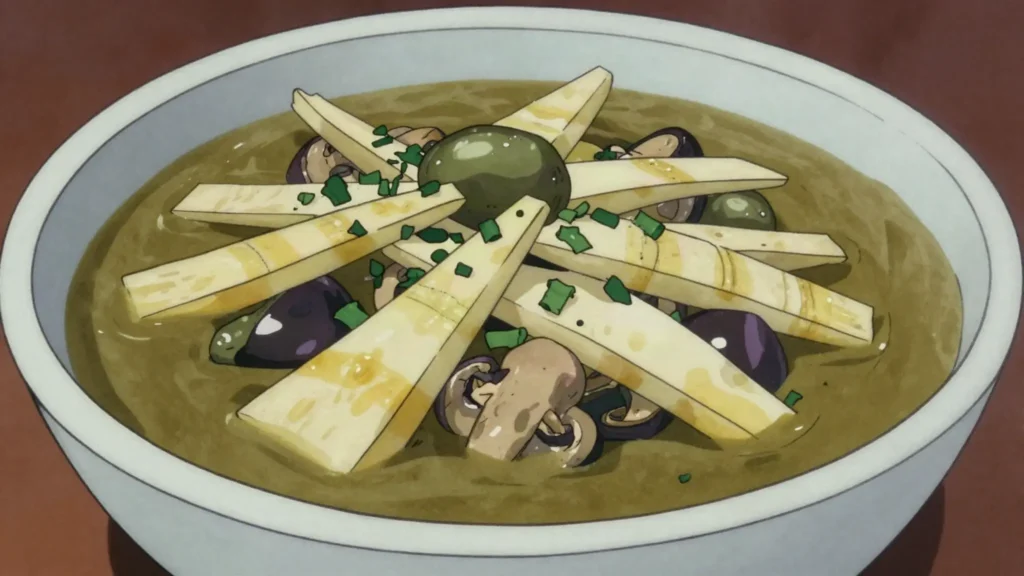
Kaeng No Mai is a soup & stew from Laos: bamboo shoot stew thickened with ground yanang leaf and seasoned with padaek. A Lao village soup built entirely on forest gathering: shoots, yanang vine, mushrooms and herbs.
How long does Kaeng No Mai take to make?
Kaeng No Mai takes 30 min of preparation and 50 min of cooking. The recipe makes 6 servings. It is rated medium to make.
What can I substitute in Kaeng No Mai?
Yes, within limits. Bottled or frozen yanang extract, sold in Lao and Thai shops. Fish sauce in place of padaek, though the flavour is shallower.
What is the most important thing to get right in Kaeng No Mai?
Stir in the Thai basil and spring onions. The residual heat is enough to release their aroma. Taste the broth: it should be savoury and herbal rather than salty. Add more padaek or fish sauce a little at a time. The broth should be thick enough to cling lightly to a spoon. Serve it hot in bowls with sticky rice alongside.