
Ingredients
The kadhi
- 150 ggram flour
- besan, chickpea flour
- 500 gplain yoghurt
- sour is better than fresh
- 1.5 litreswater
- 1 teaspoonturmeric
- 1 teaspoonsalt
- or to taste
- 1 teaspoonchilli powder
The tempering
- 4 tablespoonsoil
- or ghee
- 1 teaspooncumin seeds
- 1 teaspoonmustard seeds
- half a teaspoon fenugreek seeds
- methi, use sparingly
- a pinch of asafoetida
- hing
- 2dried red chillies
- a few curry leaves
- 1large onion, sliced
- 6 clovesgarlic, sliced
- a thumb of ginger, grated
The pakoras
- 200 ggram flour
- 2large onions, sliced thinly
- 2green chillies, chopped
- 1 teaspooncumin seeds
- half a teaspoon carom seeds
- ajwain, optional
- half a teaspoon chilli powder
- 1 teaspoonsalt
- a pinch of bicarbonate of soda
- about 100 ml water
- oil, for deep frying
To finish
- coriander leaf, chopped
- a final tempering of ghee
- with chilli powder, optional
To serve
- plain boiled rice
- or roti
- sliced onion and lemon
- a pickle
Directions
- Salt encourages the proteins to separate. Put the yoghurt in a large bowl. Whisk it until smooth. Add the gram flour gradually. Whisk hard after each addition. Those lumps never break down afterwards.
- Add it gradually, whisking as you go. Add the turmeric and chilli powder. Hold back the salt. It should be thin at this stage. Heat the oil in a large heavy pot. Add the mustard seeds first. Wait for them to pop.
- Add the cumin and fenugreek. Fenugreek seeds turn very bitter if overcooked. Add them last of the seeds. Use them sparingly. Half a teaspoon is enough. Add the asafoetida, dried chillies and curry leaves. Stand back, since curry leaves spit. Add the sliced onion.
- Cook it for about eight minutes until soft. Add the garlic and ginger. Cook them for two minutes. Pour the yoghurt mixture into the pot. Turn the heat to medium-low. Stir constantly with a whisk or spoon. Keep stirring until it comes to a boil. That takes about ten minutes. Simmer it for at least forty minutes. An hour is better.
- Stir it occasionally. It should be like single cream. Add hot water if it goes too far. Slice it very thinly. Thin slices fry crisp and cook through. Toss the sliced onion with the salt. Leave it ten minutes. That water helps bind the batter. Add the gram flour to the onions.
- Add the chillies, cumin, carom and chilli powder. Add the bicarbonate of soda. Mix it with your hands. Add water very sparingly. Add a tablespoon at a time. You want a thick clinging batter. Use a deep heavy pot.
- Fill it no more than one third full. Never leave hot oil unattended. Keep a lid within reach. If it catches fire, turn off the heat and cover it. Heat the oil to one hundred and seventy degrees. Drop in rough spoonfuls of the mixture. Do not shape them neatly.
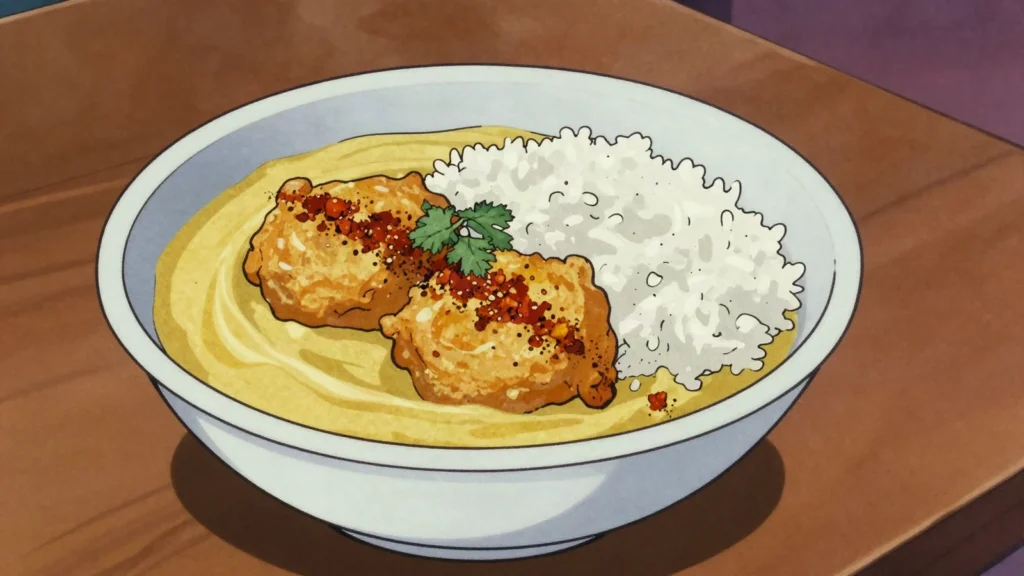
- Fry them for four or five minutes. They should be deep golden and crisp. Drain them on a rack. Both are done. Add the pakoras to the simmering kadhi. They become soft and spongy. Heat a spoonful of ghee in a small pan. Add chilli powder off the heat. Pour it over the kadhi in the serving dish. Serve it over plain boiled rice.
- Serve sliced onion with lemon squeezed over. Serve a pickle alongside. Scatter coriander over. It keeps three days refrigerated. Add water when reheating it. Freeze the kadhi without them if that matters.
Technique
- Four rules stop the yoghurt curdling: whisk it completely smooth with the gram flour before any heat, bring it up gradually, stir constantly until it reaches a boil, and add no salt until after it has boiled. Once it has boiled it is stable and will not split.
- The gram flour is doing structural work, not just thickening. Its starch coats the milk proteins and stabilises them against heat.
- Whisk the gram flour into the yoghurt until completely smooth, and sieve it if any lumps remain. Gram flour lumps easily and those lumps never break down afterwards.
- Simmer at least forty minutes and preferably an hour. Long cooking removes the raw taste of the gram flour and mellows the sourness — a short-cooked kadhi tastes floury and sharp, and this is the step people rush.
- Use sour yoghurt rather than fresh. The tang is the point of the dish, and using up yoghurt past its best is part of why kadhi exists.
- Keep the pakora batter thick and clinging, just coating the onions. Too much water gives flat greasy pakoras, which is the commonest failure — and the salted onions have already released liquid, so add water a tablespoon at a time.
- Salt the sliced onions and leave them ten minutes, then do not drain them. The water they release helps bind the batter.
- Slice the onions very thinly so they fry crisp and cook through.
- Use fenugreek sparingly and add it last of the seeds. It turns very bitter within seconds of overcooking.
- Add the chilli powder to the final tempering off the heat. It burns in seconds.
- Traditionally the pakoras go in and soak — a soft pakora full of kadhi is the point. Adding them at the table keeps them crisp, which some people prefer, and both are done.
- Punjabi and Pakistani kadhi is thick and holds pakoras; Gujarati kadhi is thin and sweet, Sindhi kadhi uses no yoghurt at all, and Rajasthani is thinner and hotter. The atlas records those as different dishes rather than variations.
Substitutions
- Sour yoghurt is better than fresh; a squeeze of lemon sharpens fresh yoghurt at a push.
- Ghee replaces oil and gives a richer tempering.
- Spinach, potato or cauliflower pakoras replace onion ones.
- The pakoras can be left out entirely for a plain kadhi.
- Dairy-free yoghurt makes a vegan version, though it behaves differently and needs care.
- Carom seeds and asafoetida are both optional, though both are characteristic.
Variations
- Gujarati kadhi is thin, lightly sweetened and drunk almost as a soup.
- Sindhi kadhi is made with vegetables and tamarind and contains no yoghurt.
- Rajasthani kadhi is thinner, hotter and cooked more briefly.
- Kadhi with spinach pakoras is common in many households.
- Punjabi kadhi chawal, with plain rice, is the everyday form.
- A version finished with a tempering of whole dried chillies and ghee is the standard restaurant presentation.
Frequently asked questions
What is Kadhi Pakora?
Kadhi Pakora is a soup & stew from Pakistan: tangy yoghurt and gram-flour gravy holding fried onion fritters, ladled over rice.
How long does Kadhi Pakora take to make?
Kadhi Pakora takes 30 minutes of preparation and 1 hour of cooking. The recipe makes serves 6. It is rated medium to make.
What can I substitute in Kadhi Pakora?
Yes, within limits. Sour yoghurt is better than fresh; a squeeze of lemon sharpens fresh yoghurt at a push. Ghee replaces oil and gives a richer tempering. Spinach, potato or cauliflower pakoras replace onion ones. The pakoras can be left out entirely for a plain kadhi. Dairy-free yoghurt makes a vegan version, though it behaves differently and needs care. Carom seeds and asafoetida are both optional, though both are characteristic.
What is the most important thing to get right in Kadhi Pakora?
Salt encourages the proteins to separate. Put the yoghurt in a large bowl. Whisk it until smooth. Add the gram flour gradually. Whisk hard after each addition. Those lumps never break down afterwards.