
Ingredients
Pastry
- 500 gplain flour
- 2 tspground turmeric
- 1 tspJamaican curry powder
- 1.5 tspfine salt
- 250 gvery cold beef suet or hard block margarine, grated or diced
- 180 mlice-cold water
- 1 tspwhite vinegar
Filling
- 500 gminced beef, at least 15 percent fat
- 2 tbspvegetable oil
- 1onion, finely diced
- 3spring onions (escallion), finely sliced
- 3garlic cloves, minced
- 1scotch bonnet pepper, deseeded and minced
- 1 tbspJamaican curry powder
- 1 tspground pimento (allspice)
- 1 tspfresh thyme leaves
- 1 tsppaprika
- 1.5 tspsalt, 1 tsp black pepper
- 60 gfine breadcrumbs
- 250 mlbeef stock
To finish
- 1 tbspmilk mixed with a pinch of turmeric, for glazing
Directions
- Whisk the flour, turmeric, curry powder and salt together. Rub or cut in the cold fat until you have flakes the size of split peas, leaving some larger. Visible fat is what gives the patty its shattering layers.
- Add the vinegar to the iced water and bring the dough together with a fork in as few strokes as possible. Flatten to a slab, wrap and chill 1 hour.
- Roll the dough out, fold it in three like a letter, turn it 90 degrees and repeat twice, then chill another hour. These turns build the flake.
- Fry the onion, escallion, garlic and scotch bonnet in the oil over medium heat for 5 minutes, then add the curry powder, pimento, thyme and paprika and cook 1 minute until fragrant.
- Add the minced beef, breaking it up, and brown 8 minutes, then season and pour in the stock.
- Simmer 20 minutes, stir in the breadcrumbs and cook 5 minutes more until you have a moist, spoonable filling that holds a line when you drag a spoon through it. Cool completely, ideally overnight: warm filling will rip the pastry.
- Roll the dough 3 mm thin and cut 16 cm discs. Place 3 tbsp of cold filling on one half, brush the rim with water, fold over and press out the air.
- Seal the curved edge with a fork, then fold and crimp the rim inwards to make the rope edge. Chill the patties 20 minutes.
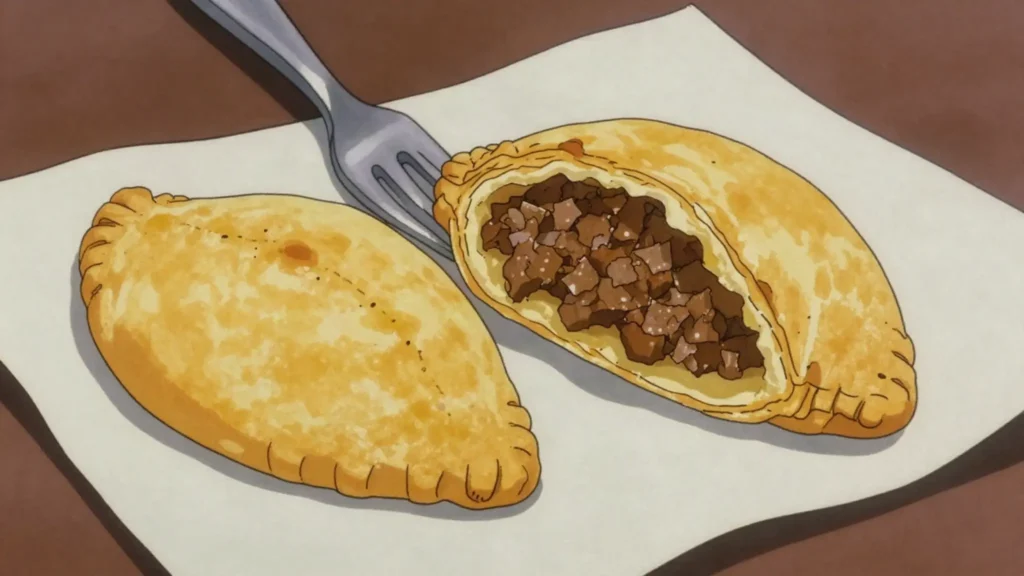
- Bake at 200°C (400°F) on a lined tray for 30–35 minutes, brushing with the turmeric milk halfway, until deep golden, blistered and firm. Rest 10 minutes; the filling is molten.
- Eat hot, traditionally shoved inside a piece of coco bread.
Technique
- The yellow is turmeric in the pastry, not annatto and not food colouring, and the pastry is seasoned as heavily as the filling.
- Suet or a hard block fat beats butter here: it stays solid longer while you roll, which is what keeps the layers separate.
- The filling must be wet but not runny. Breadcrumbs are the traditional binder and stop the gravy soaking into the base.
Substitutions
- Vegetarians and Rastafarians eat the callaloo or lentil patty; use 400 g of chopped callaloo or cooked lentils with the same seasoning and vegetable margarine in the pastry.
- No suet: use 250 g of frozen butter grated on a coarse box grater and work fast.
Variations
- Curry chicken patty and saltfish patty, both standard at Jamaican bakeries.
- The Tastee versus Juici argument, the two national chains, which comes down to how peppery the filling is.
History
A flaky, curry-coloured pastry, filled with seasoned ground meat, vegetables or fish, its dough coloured yellow with turmeric or annatto, developed in Jamaica, generally understood to combine the pastry-making tradition of British colonial influence with the spicing tradition of Cornish pasties brought by British settlers, adapted using Jamaican seasoning including Scotch bonnet pepper and curry powder introduced through Indian indentured laborers who arrived in Jamaica during the 1800s. Its distinctively spiced, flaky pastry crust, coloured a bright golden yellow, distinguishes the Jamaican patty clearly from its British pasty ancestor, reflecting the layered colonial and immigrant culinary history that shaped much of Jamaican cuisine. Jamaican patties remain one of the country’s most iconic and internationally exported foods.
Frequently asked questions
What is Jamaican patty?
Jamaican patty is a street food from Jamaica: flaky turmeric pastry filled with spiced beef. A flaky, curry-coloured pastry, filled with seasoned ground meat, vegetables or fish, its dough coloured yellow with turmeric or annatto, developed in Jamaica, generally understood to combine the pastry-making tradition of British colonial influence with the spicing tradition of Cornish pasties brought by British settlers, adapted using Jamaican seasoning including Scotch bonnet pepper and curry powder introduced through Indian indentured laborers who arrived in Jamaica during the 1800s. Its distinctively spiced, flaky pastry crust, coloured a bright golden yellow, distinguishes the Jamaican patty clearly from its British pasty ancestor, reflecting the layered colonial and immigrant culinary history that shaped much of Jamaican cuisine. Jamaican patties remain one of the country’s most iconic and internationally exported foods.
How long does Jamaican patty take to make?
Jamaican patty takes 50 min plus 2 hr chilling of preparation and 40 min of cooking. The recipe makes 10 patties. It is rated hard to make.
What can I substitute in Jamaican patty?
Yes, within limits. Vegetarians and Rastafarians eat the callaloo or lentil patty; use 400 g of chopped callaloo or cooked lentils with the same seasoning and vegetable margarine in the pastry. No suet: use 250 g of frozen butter grated on a coarse box grater and work fast.
What is the most important thing to get right in Jamaican patty?
The filling must be wet but not runny. Breadcrumbs are the traditional binder and stop the gravy soaking into the base.