
Ingredients
Dried goods
- 20 gdried wood ear mushrooms
- 10dried shiitake mushrooms
- 20 gdried lily buds, golden needles
- hot water for soaking
Solids
- 200 gfirm tofu, in fine strips
- 150 gbamboo shoots, in fine strips
- 150 gpork loin, in fine strips, optional
Broth
- 1.5 litresgood chicken or pork stock
- 2 tbsplight soy sauce
- 1 tbspdark soy sauce
Hot and sour
- 4 tbspChinkiang black vinegar
- 2 tspfinely ground white pepper, or more
- 1 tspsugar
- 1 tspsesame oil
To thicken and finish
- 4 tbspcornflour mixed with 6 tbsp cold water
- 2eggs, beaten
- 3spring onions, sliced
- chilli oil, optional
To serve
- very hot, in bowls
Directions
- Use far more white pepper than feels reasonable, and grind it finely. White or rice vinegar gives a flat, sharp sourness that lacks the roundness the soup needs. Soak the wood ear, shiitake and lily buds in hot water for at least thirty minutes. Trim the hard knot from the end of each lily bud and tie them in a knot if you like, which is traditional.
- Trim the tough stems from the shiitake and the hard base from the wood ear. Keep the shiitake soaking water, strained, since it is intensely savoury and belongs in the broth. Strain it carefully through muslin, since grit settles at the bottom of the bowl. Cut everything into fine matchsticks of roughly the same size. Bring the stock to a simmer with the strained mushroom water and both soy sauces.
- Add the soaked mushrooms, lily buds, bamboo shoots and pork and simmer for ten minutes. Add the tofu strips and warm them through gently, without stirring hard. Stir the cornflour and cold water together again right before use, since it separates within a minute. Pour it into the simmering soup gradually while stirring.
- Add it in stages and judge the thickness as you go, since it is easy to overshoot and a gluey soup cannot be fixed. It should be thick enough to coat the back of a spoon and hold the solids in suspension, without being a gel.
- Let it come back to a simmer so the cornflour cooks out and loses its raw floury taste. Take the pot off the heat or turn it right down, so the soup is barely moving. Now pour the beaten egg in a very thin stream from a height, moving in a slow circle.
- Pour it slowly and thinly, since egg poured in fast lands in a lump instead of forming ribbons. Do not stir while pouring, and stir once gently a few seconds afterwards.
- Stir in the black vinegar and the white pepper once the soup is off the heat. Taste it now and adjust the balance, which is the whole character of the dish. It should be pronouncedly sour and pronouncedly peppery, with neither dominating.
- Add more vinegar or pepper freely until it makes you sit up. Stir in the sesame oil and scatter the spring onions over. Serve it very hot, with chilli oil at the table for anyone who wants it.
Technique
- The heat comes from white pepper rather than chilli.
- Chinkiang black vinegar is what gives the proper sourness.
- Vinegar and pepper go in off the heat.
Substitutions
- Any good stock, and a vegetarian mushroom stock works well.
- Rice vinegar in place of Chinkiang, accepting a sharper result.
Variations
- Made vegetarian, without pork and with mushroom stock.
- The Sichuan version, with more pepper and less thickening.
- With pork blood cubes, as in some regional versions.
History
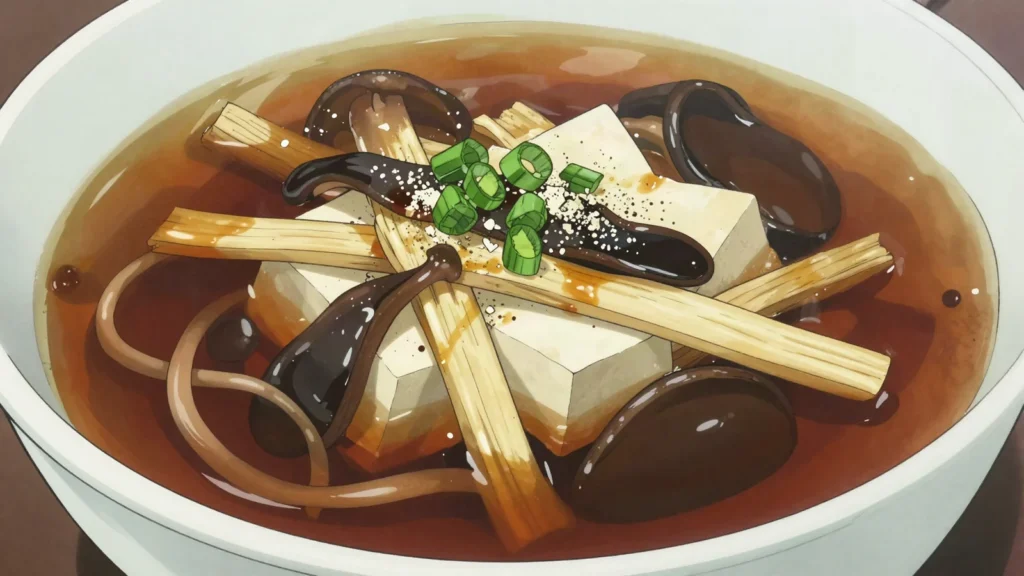
A soup combining vinegar’s sourness with white pepper’s heat, thickened with cornstarch and typically containing tofu, wood ear mushroom and often pork or egg, generally traced to Sichuan and neighboring Chinese regions, with hot and sour flavour combinations documented across Chinese cooking for centuries as one of several core flavour profiles Chinese chefs traditionally aim to balance within a broader meal. Its specific combination of black vinegar and white pepper, rather than chili, for its two defining sensations distinguishes it from many other spicy Chinese dishes that rely on chili oil or fresh chili for heat instead. It became one of the most widely recognized Chinese dishes internationally through Chinese restaurants abroad, particularly in the United States, where it remains a staple menu item.
Frequently asked questions
What is Hot and Sour Soup?
Hot and Sour Soup is a soup & stew from China: peppery vinegar-laced soup with tofu, bamboo shoots, wood-ear mushroom and egg. A soup combining vinegar’s sourness with white pepper’s heat, thickened with cornstarch and typically containing tofu, wood ear mushroom and often pork or egg, generally traced to Sichuan and neighboring Chinese regions, with hot and sour flavour combinations documented across Chinese cooking for centuries as one of several core flavour profiles Chinese chefs traditionally aim to balance within a broader meal. Its specific combination of black vinegar and white pepper, rather than chili, for its two defining sensations distinguishes it from many other spicy Chinese dishes that rely on chili oil or fresh chili for heat instead. It became one of the most widely recognized Chinese dishes internationally through Chinese restaurants abroad, particularly in the United States, where it remains a staple menu item.
How long does Hot and Sour Soup take to make?
Hot and Sour Soup takes 30 min plus soaking of preparation and 25 min of cooking. The recipe makes 6 servings. It is rated medium to make.
What can I substitute in Hot and Sour Soup?
Yes, within limits. Any good stock, and a vegetarian mushroom stock works well. Rice vinegar in place of Chinkiang, accepting a sharper result.
What is the most important thing to get right in Hot and Sour Soup?
Pour it slowly and thinly, since egg poured in fast lands in a lump instead of forming ribbons. Do not stir while pouring, and stir once gently a few seconds afterwards.