Ingredients
Rice
- 500 gHasawi red rice
- or 500 g short grain red rice
- water, for soaking
Meat
- 1 kglamb, on the bone
- 2 teaspoonssalt
The pot
- 3onions, chopped
- 6garlic cloves, crushed
- 3cm ginger, grated
- 4tomatoes, chopped
- 3 tablespoonstomato paste
- 4 tablespoonsghee or oil
- 2 tablespoonsbaharat
- 1 teaspoonground turmeric
- 3dried limes, loomi, pierced
- 1cinnamon stick
- 4cardamom pods
- about 1.5 litres water
- salt and black pepper
To serve
- daqqus, tomato chilli sauce
- salad
- lime wedges
Directions
- Rinse the rice until the water runs clearer. Cover it with plenty of cold water. Soak it for at least four full hours. Drain it thoroughly before it goes in. Preparing the loomi takes a moment. Pierce each dried lime two or three times. Use a skewer or the point of a knife.
- Heat the ghee in a large heavy pot. Pat the lamb pieces completely dry. Add them in batches without crowding. Brown them well on every side. Lift them out and set them aside. Building the base takes patience. Add the chopped onions to the same pot. Cook them for a good twelve minutes. They should soften and turn deep golden.
- Add the garlic and the ginger. Cook them for a good two minutes. Stir the tomato paste in as well. Fry it for a good three minutes. Add the baharat and the turmeric. Fry them for one full minute more. Return the lamb pieces to the pot. Add the chopped tomatoes to it. Add the pierced limes, cinnamon and cardamom.
- Pour in about a litre of the water. Season it with salt and black pepper. Bring it up to a gentle simmer. Cooking the meat takes real time. Cover it and let it simmer slowly. Give it about one full hour of that.
- Add the drained soaked rice to the pot. Stir it once through the broth. Add more water to cover it well. Hasawi rice takes more water than usual rice.
- Bring it back to a gentle simmer. Cover the pot with a tight lid. Turn the heat right down to its lowest. Let it cook for about forty minutes. Check it after thirty and add water if dry. Do not stir it while it cooks. Take the pot off the heat completely.
- Leave the lid on and let it stand. Give it a full fifteen minutes to rest. Spoon the rice onto a large platter. Set the lamb pieces over the top of it. Serve daqqus alongside for those who want heat. It keeps three days refrigerated.
Technique
- Hasawi rice is a distinct local landrace grown in the Al-Ahsa oasis for centuries, with a short reddish hard grain, nutty flavour and chewy texture that behaves quite differently from long grain rice.
- Al-Ahsa is among the largest oases in the world, farmed for thousands of years and inscribed as a UNESCO World Heritage site in twenty eighteen.
- The bran layer on red rice resists water, so it needs at least four hours of soaking and far longer cooking than usual; without that the outside softens before the centre and the grains stay chalky inside.
Substitutions
- Any short grain red rice stands in, though the flavour differs from the Hasawi landrace.
- Chicken can replace lamb and needs considerably less cooking time.
Variations
- Some cooks add chickpeas or vegetables to the pot with the rice.
- A plainer version without meat is cooked as a side dish.
- Machboos and kabsa are the related Gulf rice dishes made with long grain.
History
Grown in the oases of Al-Ahsa, this red rice is a protected local variety with a nutty, chewy grain.
Frequently asked questions
What is Hasawi rice?
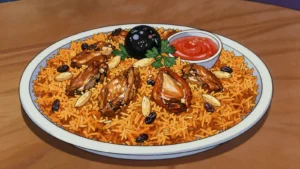
Hasawi rice is a main from Saudi Arabia: short red rice cooked with lamb, tomato and loomi in one pot. Grown in the oases of Al-Ahsa, this red rice is a protected local variety with a nutty, chewy grain.
How long does Hasawi rice take to make?
Hasawi rice takes 30 minutes plus soaking of preparation and 1 hour 45 minutes of cooking. The recipe makes serves 6. It is rated medium to make.
What can I substitute in Hasawi rice?
Yes, within limits. Any short grain red rice stands in, though the flavour differs from the Hasawi landrace. Chicken can replace lamb and needs considerably less cooking time.
What is the most important thing to get right in Hasawi rice?
Rinse the rice until the water runs clearer. Cover it with plenty of cold water. Soak it for at least four full hours. Drain it thoroughly before it goes in. Preparing the loomi takes a moment. Pierce each dried lime two or three times. Use a skewer or the point of a knife.