
Ingredients
Lentils
- 300 gbrown or green lentils
- 1.5 litreswater
- 2 teaspoonssalt
Pasta
- 150 gsmall square pasta
- or 150 g broken flat noodles
- or 150 g small soup pasta
Fried bread
- 2flatbreads, cut in squares
- oil, for frying
Fried onions
- 3onions, thinly sliced
- oil, for frying
The sauce
- 6garlic cloves, crushed
- 4 tablespoonspomegranate molasses
- 2 tablespoonstamarind paste
- 1 teaspoonground coriander
- a large handful of coriander, chopped
- juice of 1 lemon
- 3 tablespoonsoil
- salt and black pepper
To finish
- the seeds of 1 pomegranate
- extra chopped coriander
Directions
- Check the label for pomegranate as the main ingredient. Rinse the lentils in cold water thoroughly. Pick out any small stones or grit. Put them in a large pot with the water. Bring it up to a boil, then lower the heat. Let them simmer for about twenty-five minutes. The lentils should be tender but still whole.
- Start checking them after twenty minutes. Salt them only once they are tender. Salting them early keeps their skins tough. Add the pasta to the pot with the lentils. Add more water if it looks too thick. Cook it for the time given on the packet. Stir it every couple of minutes. Slice the onions as thinly as you can. Heat oil in a wide pan to a shallow depth.
- Add the onions in two or three batches. Do not crowd the pan at any point. Fry them slowly over a medium heat. Give each batch about twelve minutes. Stir them regularly so they colour evenly. They should be deep golden and crisp. Lift them out just before they look done. Drain them all on kitchen paper. Cut the flatbread into small squares.
- Fry them in the same oil until golden. Give them about two minutes only. Drain them on kitchen paper as well. Heat the oil in a small frying pan. Add the crushed garlic to the oil. Cook it gently for one minute only. It must not brown or it turns bitter. Add the ground coriander to the pan. Add the pomegranate molasses and tamarind.
- Let it bubble for about two minutes. Pour the sauce into the lentils and pasta. Stir it all through thoroughly. Add the chopped fresh coriander. Squeeze in all of the lemon juice. Season it with salt and black pepper.
- Stir in about half the fried bread. It should be thick and spoonable. Add hot water if it is too thick. Let it cook uncovered if it is too loose. Taste it and adjust the sourness first. Add more pomegranate molasses if it is flat. Add more lemon if it needs sharpening. It should be sour, savoury and rich together.
- Let it stand off the heat for ten minutes. Serving it is done warm or at room temperature. Spoon it into a wide shallow dish. Scatter the fried onions generously over it. Scatter the remaining fried bread over that. Add the pomegranate seeds over the top. Scatter extra chopped coriander over it all. It keeps two days refrigerated. Fry fresh onions and bread when reheating it.
Technique
- The name means he burned his finger, usually explained by a story about a cook burning a finger while tasting it; that account is traditional rather than documented but is part of the dish’s identity.
- The dish is deliberately and strongly sour, with pomegranate molasses supplying most of it, tamarind adding a deeper second sourness and lemon sharpening it at the end; a mild version misses the point.
- The fried bread is not a garnish: half is stirred through so it softens into the dish and the rest goes on top for crunch, a traditional way of using stale bread.
Substitutions
- Any small pasta shape works, including broken flat noodles or small soup pasta.
- Tamarind can be left out where it is hard to find, leaning on the pomegranate molasses alone.
Variations
- Some cooks add more tamarind and others rely on pomegranate molasses alone.
- A version with a garlic and coriander tempering poured over at the table is also made.
- Rishta and other lentil and pasta dishes are close relatives across the region.
History
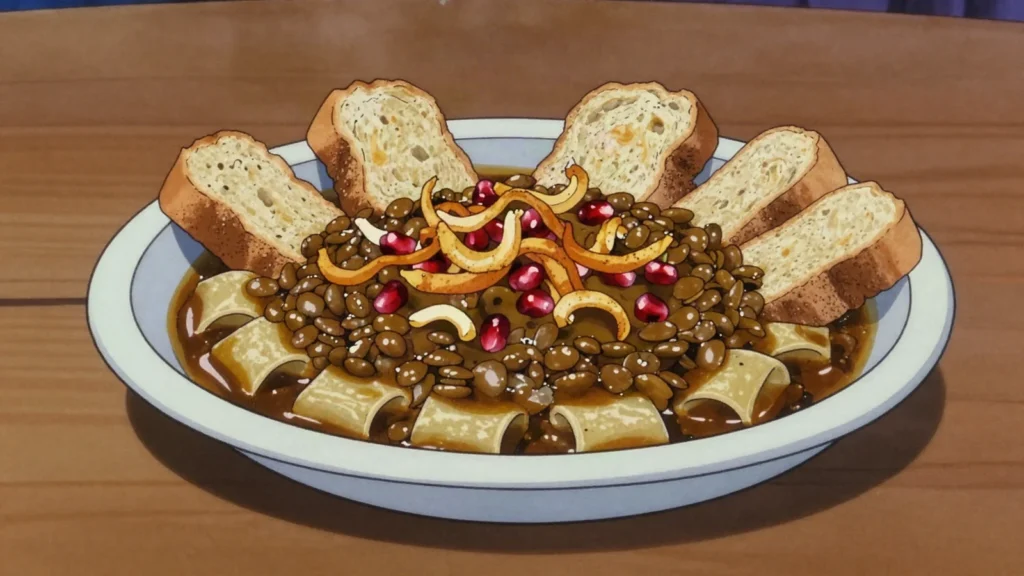
The name means he burned his finger; lentils and pasta with pomegranate molasses under fried bread.
Frequently asked questions
What is Harak osbao?
Harak osbao is a main from Syria: lentils and pasta with tamarind, pomegranate and fried onions; Damascene classic. The name means he burned his finger; lentils and pasta with pomegranate molasses under fried bread.
How long does Harak osbao take to make?
Harak osbao takes 40 minutes of preparation and 1 hour of cooking. The recipe makes serves 6. It is rated medium to make.
What can I substitute in Harak osbao?
Yes, within limits. Any small pasta shape works, including broken flat noodles or small soup pasta. Tamarind can be left out where it is hard to find, leaning on the pomegranate molasses alone.
What is the most important thing to get right in Harak osbao?
Add the onions in two or three batches. Do not crowd the pan at any point. Fry them slowly over a medium heat. Give each batch about twelve minutes. Stir them regularly so they colour evenly. They should be deep golden and crisp. Lift them out just before they look done. Drain them all on kitchen paper. Cut the flatbread into small squares.