
Ingredients
The seven fruits
- 100 ggreen raisins (kishmish-e sabz)
- 100 gred or black raisins
- 100 gsenjed (dried oleaster or Russian olive berries)
- 100 gdried apricots (qaisi), halved
- 80 gwalnut halves
- 80 gblanched almonds
- 80 gpistachios, unsalted
Soaking
- 1.5 litrescold water
- 2 tbspsugar (optional; many households add none)
To serve
- chilled bowls
- a few extra pistachios, slivered
Directions
- Blanch the almonds and pistachios in boiling water for 1 minute, then slip off their skins between finger and thumb; this is the fiddliest part and it is what gives the compote its clean white and green look.
- Cover the walnuts with boiling water and soak them 30 minutes, then peel off as much of the papery brown skin as will come away, so they do not turn the syrup bitter or grey.
- Rinse both kinds of raisin, the senjed and the apricots in cold water to wash off dust and any oil coating.
- Put all seven fruits and nuts into a large glass or ceramic jar; do not use metal, which reacts over a long steep.
- Pour over 1.5 litres of cold water, enough to cover everything by 4 cm, since the dried fruit will swell and drink a great deal of it. Add the sugar only if you want it sweet.
- Cover and leave at cool room temperature for 24 hours, then move it to the fridge for a further day or two, stirring once a day.
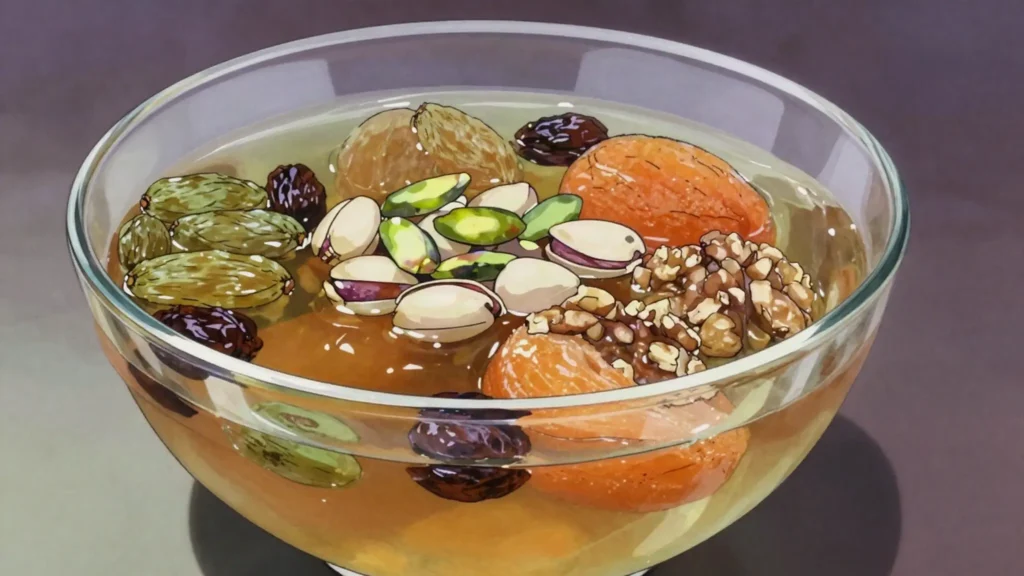
- By the second or third day the water will have turned into a pale amber syrup, sweetened entirely by the fruit, and the senjed will have softened from stone-hard to mealy and sweet.
- Taste before serving. It should be lightly sweet, faintly floral from the senjed, and the nuts should be plump and soft rather than crunchy.
- Serve cold in small bowls with plenty of the syrup, scattered with slivered pistachio; it is offered to every visitor through the Nowruz fortnight.
Technique
- Haft mewa means seven fruits and it is the Afghan counterpart to the Persian haft sin table, made for Nowruz on 21 March. The exact seven vary by region and by what the household can afford, but senjed and two colours of raisin are almost always among them.
- The syrup is not a cooked syrup. Nothing is heated at any point, and the sweetness comes from sugar leaching out of the dried fruit into the water, which is why it needs days rather than hours.
- Senjed is the ingredient people struggle to find outside Afghanistan and the one that gives the compote its particular dry, date-like perfume.
- Keep it refrigerated once the fruit has swelled; after four or five days it starts to ferment gently and turn fizzy.
Substitutions
- No senjed: use dried jujubes or a few pitted dates, which give a similar sweetness though not the same floral note. Hazelnuts are a common seventh element in the north.
Variations
- Some families use dried figs or prunes in place of the apricots.
- A richer Nowruz version stirs a little rosewater and a pinch of cardamom into the syrup on the last day.
History
Seven dried fruits and nuts soaked for days and eaten at Nowruz; the number echoes Iran’s haft-sin new year table.
Frequently asked questions
What is Haft Mewa?
Haft Mewa is a dessert from Afghanistan: nowruz compote of seven dried fruits and nuts soaked in syrup. Seven dried fruits and nuts soaked for days and eaten at Nowruz; the number echoes Iran’s haft-sin new year table.
How long does Haft Mewa take to make?
Haft Mewa takes 25 min plus 24 hr soaking and 2 days steeping of preparation and no cooking at all. The recipe makes 8 servings. It is rated easy to make.
What can I substitute in Haft Mewa?
Yes, within limits. No senjed: use dried jujubes or a few pitted dates, which give a similar sweetness though not the same floral note. Hazelnuts are a common seventh element in the north.
What is the most important thing to get right in Haft Mewa?
Cover the walnuts with boiling water and soak them 30 minutes, then peel off as much of the papery brown skin as will come away, so they do not turn the syrup bitter or grey.