
Ingredients
Kichiri
- 300 gshort or medium grain rice, rinsed
- 150 gsplit mung beans (mash dal), rinsed
- 1onion, finely chopped
- 3 tbspvegetable oil or ghee
- ½ tspturmeric
- 1 tspsalt
- 1.2 litreswater
Qeema (meat sauce)
- 300 gminced lamb or beef
- 1onion, finely chopped
- 2garlic cloves, crushed
- 2 tbsptomato puree
- 1 tspground coriander
- ½ tspturmeric
- ½ tspblack pepper
- 1 tspsalt
- 2 tbspoil
- 200 mlwater
Qurut sauce
- 150 gqurut balls, soaked and pounded, or 300 g thick strained yoghurt
- 150 mlwarm water
- 1garlic clove, crushed
- ½ tspsalt
To finish
- 2 tspdried mint, crushed
- 1 tspchilli flakes
- a spoonful of hot oil
Directions
- Soak the qurut balls in the warm water for at least an hour, then pound or blend them with the soaking water and the garlic to a smooth, sharply sour cream the thickness of double cream.
- Fry the chopped onion in the oil in a heavy pot over medium heat for 10 minutes, until soft and golden brown at the edges.
- Stir in the turmeric, then the mung beans, and turn them in the fat for 2 minutes.
- Add the water and salt, bring to a boil and simmer 20 minutes, until the beans are beginning to soften but still hold their shape.
- Add the rice, stir once, and cook uncovered at a gentle simmer for 25 to 30 minutes, stirring now and then, until both rice and beans are completely soft and the mixture is a thick, soupy porridge that just falls from a spoon. It should not be dry and separate like a pilau.
- While it cooks, brown the mince hard in the oil for 6 minutes, add the onion and cook 8 minutes, then the garlic, spices and tomato puree for 2 minutes, then the water and salt, and simmer 20 minutes to a thick, glossy sauce.
- Beat the kichiri hard at the end with a wooden spoon so the grains break down slightly and the porridge turns creamy; Afghan cooks mash it against the side of the pot.
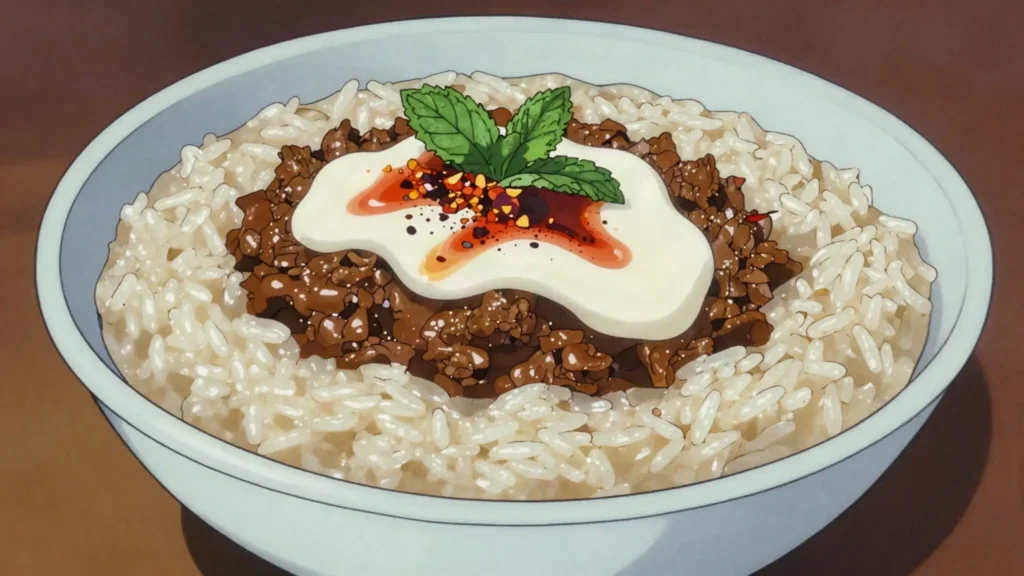
- Spread the kichiri in a wide bowl, hollow the middle and spoon the qeema into the well.
- Pour the qurut sauce over in a broad white ribbon, crush the dried mint over the top, add the chilli flakes and a spoon of hot oil, and serve immediately.
Technique
- Qurut, not yoghurt, is the authentic topping, and it is far more sour and salty than any yoghurt. If you use yoghurt, add a squeeze of lemon and extra salt to get near it.
- The texture is deliberately soft and porridgy, which is why this is fed to children, to the ill and to new mothers as well as being a winter family supper.
- Never boil the qurut sauce. Heat splits it into grains and oil; it goes on cold or barely warm, at the table.
Substitutions
- No mung dal: use split yellow peas, adding 15 minutes to the cooking. A meatless version, kichiri quroot-e sada, simply leaves off the qeema and adds more fried onion.
Variations
- Kabuli households often stir a spoonful of the qeema fat through the rice before serving.
- In the north the dish is made with whole mung beans, giving a coarser, chunkier texture.
Frequently asked questions
What is Kichiri Quroot?
Kichiri Quroot is a main from Afghanistan: mung bean and rice porridge topped with qurut sauce and minced meat.
How long does Kichiri Quroot take to make?
Kichiri Quroot takes 20 min of preparation and 1 hr 10 min of cooking. The recipe makes 4 servings. It is rated medium to make.
What can I substitute in Kichiri Quroot?
Yes, within limits. No mung dal: use split yellow peas, adding 15 minutes to the cooking. A meatless version, kichiri quroot-e sada, simply leaves off the qeema and adds more fried onion.
What is the most important thing to get right in Kichiri Quroot?
The texture is deliberately soft and porridgy, which is why this is fed to children, to the ill and to new mothers as well as being a winter family supper.