
Ingredients
Base
- 1.5 kgcassava, sweet variety
- or 1.2 kg frozen grated cassava
- 600 mlthick coconut milk
Caramel
- 400 gsugar
- 100 mlwater
To flavour
- 2 teaspoonsground cardamom
- 1 teaspoonground cinnamon
- 1 teaspoonvanilla
- 1/2 teaspoongrated nutmeg
- 1/2 teaspoonsalt
- the zest of 1 lime, optional
To finish
- a little coconut oil, for the tin
- grated coconut, to scatter
Directions
- Peel away the whole pink layer under the bark. Never taste the raw grated root. Cut the root into manageable lengths. Stand each length up on the board. Slice the skin off downwards in strips. A vegetable peeler is not strong enough. Take off the whole pink layer beneath. That core is fibrous and never softens.
- Grate the peeled cassava finely. Use the fine side of a box grater. It should come out as a wet pulp. Work quickly, since it discolours fast. Squeeze out some of the liquid. Do not squeeze it completely dry.
- Put the sugar and water in a heavy pan. Warm it until the sugar dissolves. Then stop stirring it entirely. Let it boil along quite steadily. Never touch it or taste it hot. Keep children away from the pan.
- Take it to a deep amber colour. It should smell nutty and slightly bitter. Take the pan off the heat at amber. Adding the coconut milk needs great care. Warm the coconut milk in a separate pan. Pour it into the caramel very slowly. Stand well back from it as you pour.
- Cool liquid on hot caramel erupts violently. Pour a little at a time, stirring. Warm it gently until they dissolve again. Put the grated cassava in a large bowl. Pour in the caramel and coconut milk. Add all of the ground spices to it.
- Add the vanilla and the salt to it. Add the lime zest if you want it. Mix it thoroughly into a thick batter. It should be thick but pourable. Add a little more coconut milk if stiff. Baking it takes a long slow time. Oil a tray or a shallow tin well. Pour the batter in and level it. Aim for about three centimetres deep.
- Heat the oven to 170C before baking. Bake it for about an hour and a quarter. Judging when it is done takes a test. Let it cool completely in the tin. It sets firm only as it cools. Cut it into squares with a wet knife. Scatter grated coconut over it. It keeps four days if wrapped.
Technique
- Godrogodro is made with grated cassava; some listings describe it as a rice flour cake, and rice flour versions exist, but the Mahajanga original uses cassava.
- The sugar is caramelised to a deep amber before it goes in, which gives the dark colour and bitter edge that define the cake; plain sugar gives a pale bland slab.
- Pour warmed coconut milk into hot caramel very slowly and stand well back, since cool liquid on hot caramel erupts violently, and caramel itself burns skin very badly.
Substitutions
- Frozen grated cassava is sold in African and Caribbean shops and saves peeling and grating.
- Rice flour versions of the cake exist as a variation on the cassava original.
Variations
- Some cooks add more cardamom and less cinnamon.
- A version with grated coconut mixed through is also made.
- Similar dense cassava and coconut cakes are baked across the Indian Ocean.
History
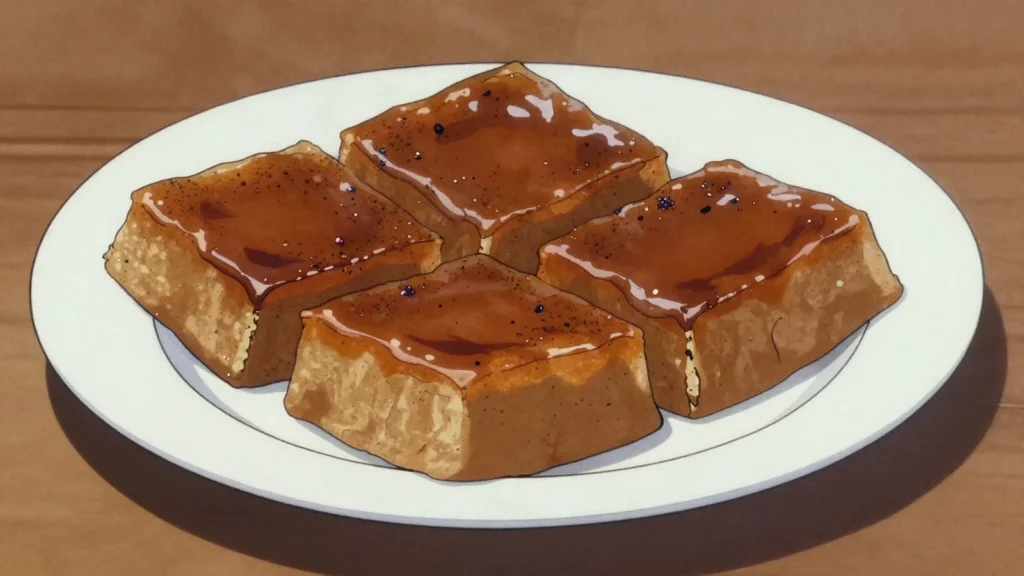
A sticky cassava, coconut milk and caramelised sugar slab from Mahajanga on the northwest coast, sold cut into squares.
Frequently asked questions
What is Godrogodro?
Godrogodro is a dessert from Madagascar: dense cassava and coconut-milk slab sweetened with caramelised sugar. A sticky cassava, coconut milk and caramelised sugar slab from Mahajanga on the northwest coast, sold cut into squares.
How long does Godrogodro take to make?
Godrogodro takes 40 minutes of preparation and 1 hour 15 minutes of cooking. The recipe makes one tray, 20 squares. It is rated medium to make.
What can I substitute in Godrogodro?
Yes, within limits. Frozen grated cassava is sold in African and Caribbean shops and saves peeling and grating. Rice flour versions of the cake exist as a variation on the cassava original.
What is the most important thing to get right in Godrogodro?
Peel away the whole pink layer under the bark. Never taste the raw grated root. Cut the root into manageable lengths. Stand each length up on the board. Slice the skin off downwards in strips. A vegetable peeler is not strong enough. Take off the whole pink layer beneath. That core is fibrous and never softens.