
Ingredients
Wine
- 750 mlred wine
- 200 mlport or dark rum
- 100 gsugar, or 100 ml blackcurrant syrup
Spice extract
- 1cinnamon stick
- 8cardamom pods, crushed
- 6cloves
- 3 slicesfresh ginger
- strips of peel from 1 orange
- 200 mlwater
In the glass
- 100 graisins
- 100 gblanched flaked almonds
To serve
- æbleskiver
- pebernødder
Directions
- Soak the raisins in the port or rum for at least an hour, and preferably overnight.
- Soaking them in the spirit is the Danish way and it does two things at once: the raisins swell and soften, and the spirit takes on their sweetness.
- Make a spice extract first. Simmer the cinnamon, crushed cardamom, cloves, ginger and orange peel in the water for 10 minutes, then leave it to infuse for 30 minutes and strain it.
- Drawing the spices in water rather than boiling them in the wine keeps the alcohol in the glass and gives a cleaner spice flavour besides.
- Pour the wine into a pan, add the strained spice extract and the sugar or blackcurrant syrup, and heat it gently.
- Never let it boil. Above about 78°C (172°F) the alcohol begins to leave, and boiled wine turns harsh and stewed as well.
- Bring it just to steaming, around 70°C (160°F), and hold it there.
- Take it off the heat and add the soaked raisins with their spirit, along with the flaked almonds.
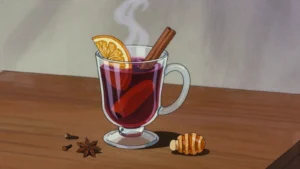
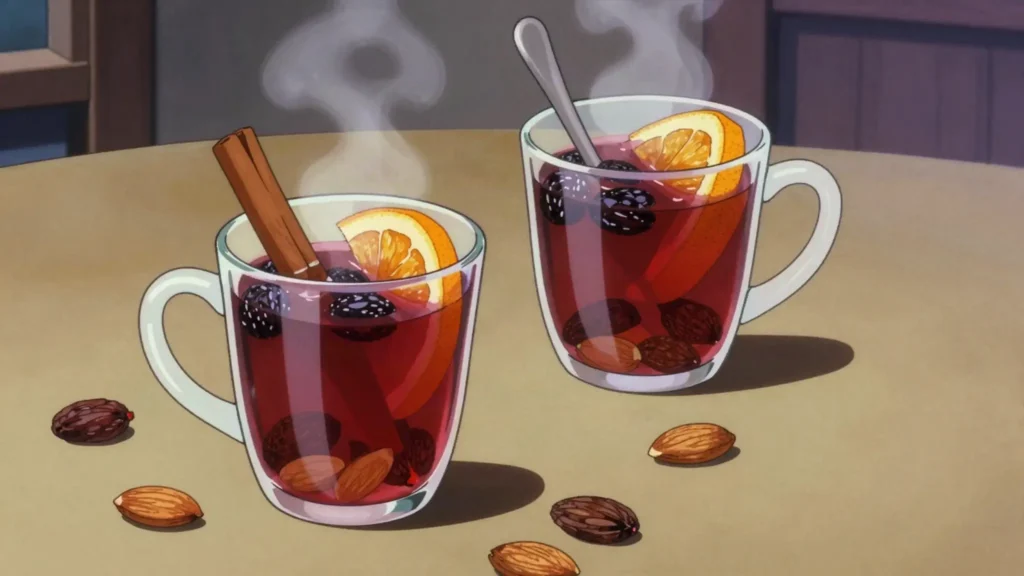
- Ladle it into glasses or cups, making sure everyone gets raisins and almonds in the bottom.
- A small spoon goes with each glass, because eating the soaked raisins and almonds at the end is part of the drink rather than an afterthought.
- Serve it with æbleskiver and pebernødder, which is how it is poured at Christmas markets and julefrokost lunches from late November onwards.
Technique
- It should not be syrupy. If it tastes like cordial, cut the sugar and lengthen the spice extract instead.
- Use plain, fruity red wine. Anything expensive is wasted under this much spice.
- Danish households often start from a bought gløggmix of spices and raisins, and the extract above is that same step done properly.
Substitutions
- Blackcurrant or apple juice for a non-alcoholic version, with everything else unchanged.
- Akvavit in place of the rum, which is very Danish.
Variations
- Glögi, the Finnish version, most often made without alcohol at all.
- Swedish glögg, usually stronger and sweeter.
- A white gløgg, built on white wine with more citrus.
History
Poured through the Danish December, drunk with æbleskiver at Christmas markets and julefrokost lunches.
Frequently asked questions
What is Gløgg?
Gløgg is a cocktail from Denmark: hot spiced red wine with raisins, almonds and a shot of spirit. Poured through the Danish December, drunk with æbleskiver at Christmas markets and julefrokost lunches.
How long does Gløgg take to make?
Gløgg takes 20 min plus 1 hr soaking of preparation and 20 min of cooking. The recipe makes 8 servings. It is rated easy to make.
What can I substitute in Gløgg?
Yes, within limits. Blackcurrant or apple juice for a non-alcoholic version, with everything else unchanged. Akvavit in place of the rum, which is very Danish.
What is the most important thing to get right in Gløgg?
Drawing the spices in water rather than boiling them in the wine keeps the alcohol in the glass and gives a cleaner spice flavour besides.