Ingredients
Sourdough starter
- 100 grye flour
- 100 mlwater, and daily refreshment
Soaker
- 150 gcracked rye or rye berries
- 300 mlwater
- 1 tbspsalt
Dough
- 400 gwholemeal rye flour
- 150 gstrong wheat flour
- 200 gactive rye sourdough
- 500 mlwater or buttermilk
- 2 tbspdark malt syrup or treacle
- 15 gsalt
Seeds
- 80 gsunflower seeds
- 80 gflax seeds
- 60 gpumpkin seeds
- 40 gsesame seeds
To serve
- as the base of smørrebrød
Directions
- Cover the cracked rye with boiling water, add the salt, and leave it overnight. Dry grain in the dough draws water out of the crumb and gives a dry loaf with hard nuggets in it.
- Stir it thoroughly with a strong spoon or a mixer paddle for 5 minutes. Stir rather than knead. There is nothing to develop, and it should end up like a very thick porridge. Fold all the seeds through the batter.
- Toast the seeds first if you like, which deepens their flavour considerably. Scrape the batter into a well-greased tall loaf tin and smooth the top with a wet spoon. Fill the tin no more than three-quarters, because it rises considerably. Wet the spoon or your hand to smooth the surface, since the batter sticks to everything dry.
- Bake at 200°C (390°F) for 15 minutes, then reduce to 160°C (320°F) for a further hour to an hour and a quarter. Cover the top loosely with foil if it darkens too quickly. It is done when the internal temperature reaches about 98°C (208°F).
- Use a thermometer, because a rye loaf gives no reliable hollow-sounding test and an underbaked one is gummy inside. Turn it out and cool it completely on a rack. Now wrap it in a cloth and leave it at least 24 hours before cutting, and 48 is better.
- Cut warm, rye bread is sticky and gummy; rested two days, it cuts into clean thin slices. The starch needs that time to set, and the flavour improves markedly as well. Cut it very thin with a sharp knife.
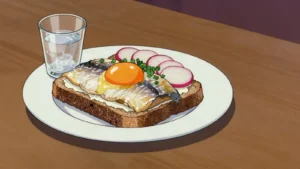
- Serve it as the base of smørrebrød, buttered and topped with herring, liver pâté, roast pork or shrimp. It keeps a week or more wrapped and it does not stale like wheat bread.
Technique
- The seed and grain mix varies by household and by bakery and there is no fixed formula.
- Buttermilk or beer in place of water is common and adds to the sourness.
- It freezes well sliced.
Substitutions
- A ready-made rye sourdough starter, which many bakeries will give away.
- Any mix of seeds and cracked grains.
Variations
- With beer in place of some of the water.
- With more cracked grain and fewer seeds.
- Made with a proportion of wheat for a lighter loaf.
History
Dense sourdough rye is the base of smørrebrød; rye grew reliably in the Danish climate where wheat did not.
Frequently asked questions
What is Rugbrød?
Rugbrød is a bread & pastry from Denmark: dense seeded sourdough rye, the base of smørrebrød. Dense sourdough rye is the base of smørrebrød; rye grew reliably in the Danish climate where wheat did not.
How long does Rugbrød take to make?
Rugbrød takes 30 min plus 5 days starter and 18 hr proving of preparation and 1 hr 30 min of cooking. The recipe makes 1 large loaf. It is rated hard to make.
What can I substitute in Rugbrød?
Yes, within limits. A ready-made rye sourdough starter, which many bakeries will give away. Any mix of seeds and cracked grains.
What is the most important thing to get right in Rugbrød?
Stir it thoroughly with a strong spoon or a mixer paddle for 5 minutes. Stir rather than knead. There is nothing to develop, and it should end up like a very thick porridge. Fold all the seeds through the batter.