
Ingredients
Beans
- 400 gdried small brown fava beans, or 2 x 400 g tins
- 1 tspbicarbonate of soda, for soaking
To cook
- 1onion, finely chopped
- 3garlic cloves, crushed
- 2tomatoes, chopped
- 1green chilli, chopped
- 2 tspground cumin
- 4 tbspolive oil
- salt
To finish
- 4 tbspplain yoghurt
- 1 tspberbere, or to taste
- 1small onion, finely chopped
- 1tomato, chopped
- 1green chilli, sliced
- olive oil, to pour over
To serve
- kitcha or flatbread, warm
Directions
- Rinse the dried beans and pick over them for stones, which are common. Cover them with plenty of cold water and add the bicarbonate of soda. Leave them to soak overnight, or for at least twelve hours.
- Drain and rinse them well the next day, since the soaking water is bitter. Put them in a deep pan and cover them with fresh cold water by five centimetres. Bring them to the boil and skim off the grey foam that rises in the first minutes. Lower the heat and simmer them for about two hours, until they crush easily.
- Top the pan up with hot water as needed, since they must stay covered throughout. Do not add salt until the beans are already soft, since it keeps the skins firm. Warm two tablespoons of olive oil in a frying pan over a medium heat. Add the chopped onion and cook it gently for about eight minutes, until soft and pale gold.
- Add the garlic and the green chilli and cook them for another minute. Stir in the ground cumin and let it fry for thirty seconds until it smells strong. Add the chopped tomatoes and cook them down for five minutes into a thick base.
- Season the base with salt, tasting it as you go. Now combining the two, which is done in the bean pan. Tip the tomato base into the cooked beans and stir it through. Let the whole pan simmer together for five minutes so the flavours meet. Now mashing, which should be partial rather than thorough. Crush the beans against the side of the pan with the back of a wooden spoon.
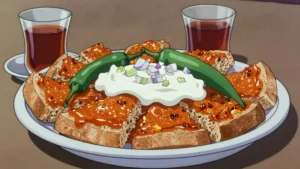
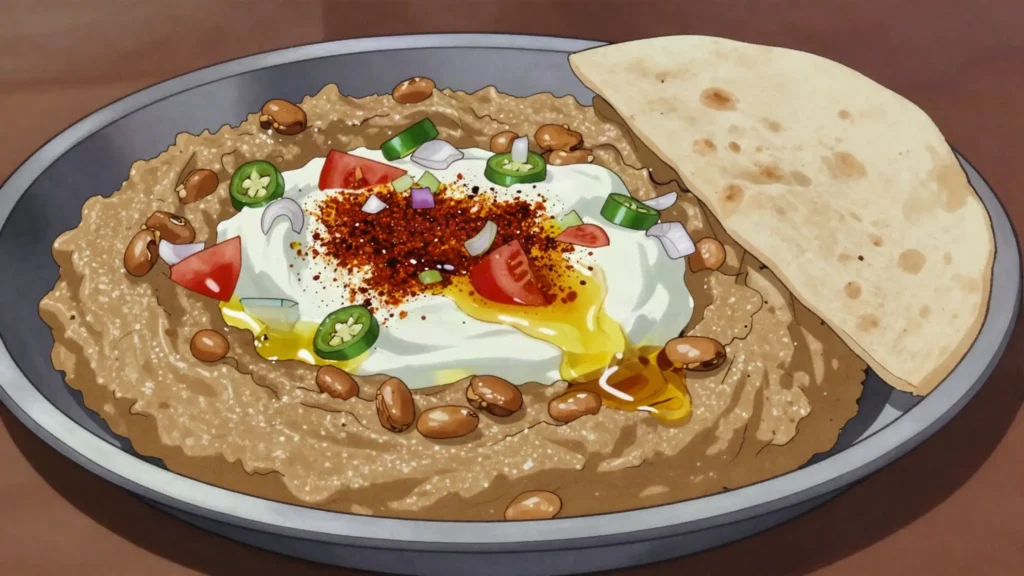
- Leave a good third of them whole, since a completely smooth ful is not wanted. The consistency should be thick and scoopable, not soupy and not stiff. Spoon the ful into a wide shallow dish and flatten the surface with the spoon. Spoon the yoghurt into the centre in a single white pool. Sprinkle the berbere over the yoghurt so it bleeds red into the white.
- Scatter the raw chopped onion, tomato and green chilli over the whole surface. Pour a generous swirl of olive oil over everything at the very end. Do not stir any of it in, since each spoonful is mixed as it is scooped. Serve it hot with warm kitcha or flatbread torn into pieces.
Technique
- Use small brown fava beans, not large green broad beans.
- Salt only once the beans are soft, since early salt keeps the skins tough.
- Leave a third of the beans whole, since a smooth puree is not the texture wanted.
Substitutions
- Tinned ful medames, which is what most cafés use anyway.
- Chilli powder with a pinch of ground ginger, if berbere is unavailable.
Variations
- With crumbled white cheese over the top.
- With a fried or hard-boiled egg on top.
- Egyptian style, with tahini stirred through and no yoghurt.
History
An Egyptian broad-bean breakfast that travelled down the Red Sea coast; Asmara cafés serve it mashed with tomato, chili, yoghurt and bread.
Frequently asked questions
What is Ful?
Ful is a breakfast from Eritrea: mashed fava beans with tomato, onion and cumin, scooped with bread. An Egyptian broad-bean breakfast that travelled down the Red Sea coast; Asmara cafés serve it mashed with tomato, chili, yoghurt and bread.
How long does Ful take to make?
Ful takes 10 min plus overnight soaking of preparation and 2 hours, or 15 min from tinned of cooking. The recipe makes 4 servings. It is rated easy to make.
What can I substitute in Ful?
Yes, within limits. Tinned ful medames, which is what most cafés use anyway. Chilli powder with a pinch of ground ginger, if berbere is unavailable.
What is the most important thing to get right in Ful?
Top the pan up with hot water as needed, since they must stay covered throughout. Do not add salt until the beans are already soft, since it keeps the skins firm. Warm two tablespoons of olive oil in a frying pan over a medium heat. Add the chopped onion and cook it gently for about eight minutes, until soft and pale gold.