
Ingredients
Batter
- 500 gplain flour
- 2eggs
- 250 mlmilk
- 60 gsugar
- 7 ginstant yeast
- 3 tbsprum
- 1 tbspbrandy
- zest of 1 lemon and 1 orange
- ½ tspsalt
Fruit
- 100 graisins, soaked in rum
To fry
- 1 litreoil
- icing sugar, to dust
Directions
- Soak the raisins in rum for at least an hour, or overnight if you can plan that far.
- Warm the milk to blood heat, whisk in the yeast and sugar, and leave it for 10 minutes.
- Beat in the eggs, zests, rum, brandy and salt, then whisk in the flour to make a thick sticky batter rather than a dough.
- It should be too soft to handle and too thick to pour, which is exactly the consistency that lets fritule form round without any rolling or cutting.
- Fold in the drained raisins, keeping back the rum they soaked in to add if the batter needs loosening.
- Cover and prove for 1 hour, until visibly risen and bubbly.
- Heat the oil to 170°C (340°F).
- Drop in small spoonfuls, dipping the spoon into the hot oil first so the batter slides off cleanly.
- Fry for 3 to 4 minutes, turning them as they bob about, until deep golden all round.
- They should turn themselves over in the oil. If they sit stubbornly on one side, the batter is too stiff and needs a splash more milk.
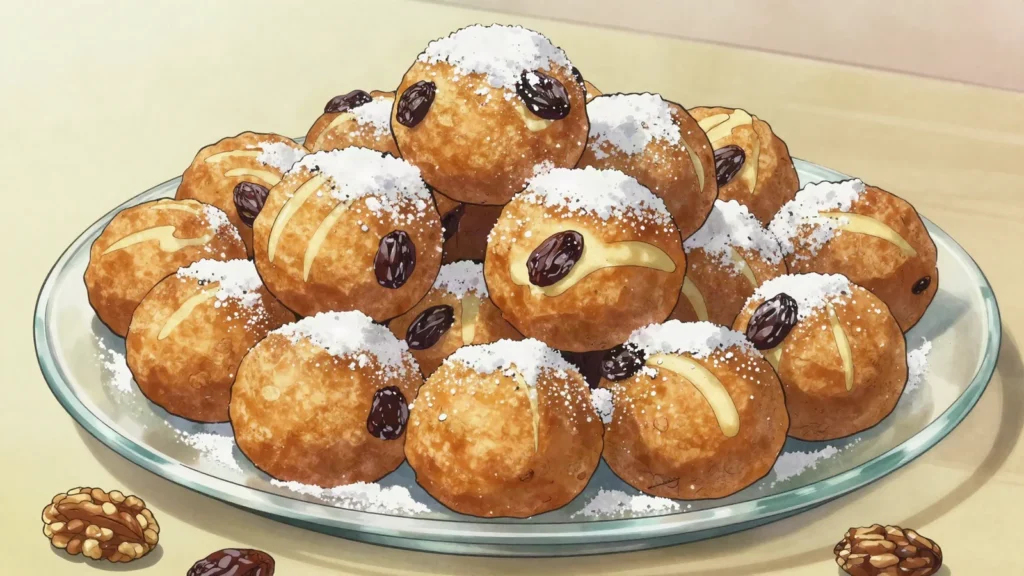
- Drain on a rack and dust heavily with icing sugar while still warm.
- Eat them the same day. They are fried across Dalmatia and Istria right through Advent.
Technique
- The rum is doing flavour work rather than technical work here, and it is generous by design.
- Small is correct. A large fritule stays raw in the middle at this oil temperature.
- They are made by the hundred at Christmas and handed round to anyone who visits.
Substitutions
- Brandy or grappa in place of rum.
- Chopped dried figs or apple in place of raisins.
Variations
- With grated apple folded through the batter.
- Dipped in chocolate, which is a modern habit.
- Made without alcohol, with orange juice instead.
History
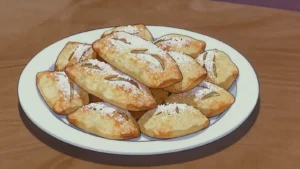
Small, deep-fried dough balls, often flavoured with citrus zest, rum and raisins, then dusted with powdered sugar, closely associated with Croatia’s Dalmatian and Istrian coastal regions, particularly around Christmas and New Year celebrations, when households traditionally fry large batches for holiday gatherings and guests. Their light, airy texture comes from a yeasted or otherwise leavened batter, and the specific combination of citrus and rum flavouring reflects Croatia’s Mediterranean coastal culinary character, distinguishing fritule somewhat from plainer inland Croatian fried dough traditions. Fritule remain a fixture specifically of Croatian coastal holiday baking, closely tied to the region’s broader Mediterranean and Venetian-influenced culinary history along the Adriatic coast.
Frequently asked questions
What is Fritule?
Fritule is a dessert from Croatia: rum-scented mini doughnuts with raisins, festive treat. Small, deep-fried dough balls, often flavoured with citrus zest, rum and raisins, then dusted with powdered sugar, closely associated with Croatia’s Dalmatian and Istrian coastal regions, particularly around Christmas and New Year celebrations, when households traditionally fry large batches for holiday gatherings and guests. Their light, airy texture comes from a yeasted or otherwise leavened batter, and the specific combination of citrus and rum flavouring reflects Croatia’s Mediterranean coastal culinary character, distinguishing fritule somewhat from plainer inland Croatian fried dough traditions. Fritule remain a fixture specifically of Croatian coastal holiday baking, closely tied to the region’s broader Mediterranean and Venetian-influenced culinary history along the Adriatic coast.
How long does Fritule take to make?
Fritule takes 20 min plus 1 hr rising of preparation and 25 min of cooking. The recipe makes 40 fritters. It is rated easy to make.
What can I substitute in Fritule?
Yes, within limits. Brandy or grappa in place of rum. Chopped dried figs or apple in place of raisins.
What is the most important thing to get right in Fritule?
Beat in the eggs, zests, rum, brandy and salt, then whisk in the flour to make a thick sticky batter rather than a dough.