
Ingredients
The base
- 1 kgpulaka, swamp taro
- or 1 kg taro
- or 8 ripe bananas
The pot
- 600 mlthick coconut cream
- 200 gsugar
- or 200 ml coconut syrup, kamaimai
- 1/2 teaspoonsalt
Sometimes added
- grated coconut, to finish
- a little water, to loosen
To wrap, optional
- banana leaves
- or foil
Directions
- Peel the corm thickly with gloves on. Remove all the rough outer skin. Remove any discoloured flesh beneath. Rinse it thoroughly under cold water.
- Cut it into large even chunks. Put the chunks in a pot of water. Bring the whole pot to a boil. Let it cook for about forty minutes. Pulaka takes longer than ordinary taro.
- Drain it thoroughly afterwards. Let it cool enough to handle safely. Grate it coarsely on a box grater. It should come out in short strands.
- Mash them roughly with a fork. Leave some lumps rather than pureeing. Put the coconut cream in a heavy pan. Add the sugar or the kamaimai syrup. Add the salt to the pan as well.
- Warm it gently over a low heat. Never let coconut cream boil hard. Add the grated pulaka to the pan. Stir it through the coconut cream. Keep the heat low all the way through. Let it cook for about twenty-five minutes.
- Stir it well every few minutes. It should be thick and sticky. Add water if it becomes too stiff. Wrapping it in banana leaves is also done.
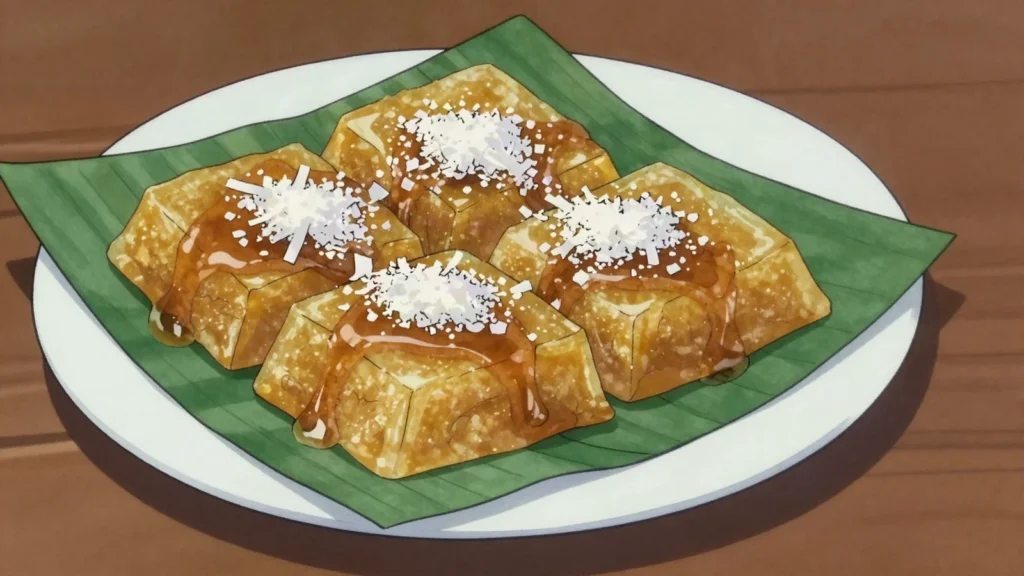
- Spoon it into bowls or cut it into squares. Scatter grated coconut over the top. It keeps three days refrigerated.
Technique
- Pulaka is giant swamp taro, Cyrtosperma merkusii, grown in pits dug down through the coral to the freshwater lens and filled with composted leaves built up by families over generations.
- Those pits depend on that freshwater lens, and rising sea levels, saltwater intrusion and storm surges damage the crop, which Tuvaluan communities have documented as a real and current concern.
- Cyrtosperma contains calcium oxalate crystals in high concentration and needs longer thorough cooking than ordinary taro, so it must never be tasted raw or undercooked.
Substitutions
- Ordinary taro or very ripe bananas both stand in for pulaka and are far easier to obtain.
- Sugar replaces kamaimai, the coconut toddy syrup, though the syrup gives a deeper flavour.
Variations
- A banana version is quicker, sweeter and equally called fekei.
- Some cooks press it into a tray and cut it into squares.
- Similar coconut and root puddings are made across the Pacific.
History
Made for church gatherings and island celebrations, using the pit-grown pulaka that Tuvaluan families tend across generations.
Frequently asked questions
What is Fekei?
Fekei is a dessert from Tuvalu: sticky pudding of grated pulaka or banana cooked with coconut cream and syrup. Made for church gatherings and island celebrations, using the pit-grown pulaka that Tuvaluan families tend across generations.
How long does Fekei take to make?
Fekei takes 40 minutes of preparation and 40 minutes of cooking. The recipe makes serves 8. It is rated medium to make.
What can I substitute in Fekei?
Yes, within limits. Ordinary taro or very ripe bananas both stand in for pulaka and are far easier to obtain. Sugar replaces kamaimai, the coconut toddy syrup, though the syrup gives a deeper flavour.
What is the most important thing to get right in Fekei?
Cut it into large even chunks. Put the chunks in a pot of water. Bring the whole pot to a boil. Let it cook for about forty minutes. Pulaka takes longer than ordinary taro.