
Ingredients
Dough
- 600 gplain flour
- 1 tspbaking powder
- 1 tspsalt
- 2 tbspoil
- about 350 ml warm water
Filling
- 300 gyellow split peas, soaked 4 hr
- 6 clovesgarlic
- 1 tspground cumin, geera
- 1 tspground turmeric
- 1green chilli, optional
- 1 tspsalt
- 1 tspmasala or curry powder
To cook
- oil or ghee for brushing
- a tawa or heavy flat pan
To serve
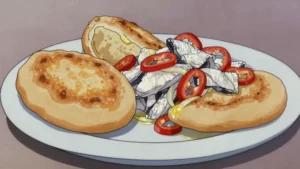
- wrapped around curried chicken, potato or pumpkin
- with mango sour or pepper sauce
Directions
- Boil them for about twenty minutes and test frequently. A pea should crush between finger and thumb with slight pressure but still hold its shape. Drain the peas thoroughly and spread them out to dry. Any moisture left in them gives a wet filling, and a wet filling makes the dough tear when rolled.
- Grind the dried peas with garlic, cumin and turmeric into a fine dry powder. It must be a powder, not a paste, and it should feel like coarse flour. Sieve it and regrind anything coarse. Season it firmly, since the plain dough around it carries nothing.
- Make a soft dough with flour, baking powder, salt, oil and warm water. It should be noticeably soft, softer than a chapati dough, since it must stretch around the filling. Knead it for eight to ten minutes until smooth and elastic. Cover it and rest it for at least two hours. Divide the dough and roll each piece into a ball.
- Flatten a ball into a disc and cup it in your palm, forming a hollow. Spoon in a generous amount of the ground pea powder. Seal it thoroughly, since any gap lets the filling out when you roll. Twist off any excess dough at the top and press the seam flat.
- Set the filled balls seam side down and rest them for fifteen minutes. Flatten the ball gently with your palm first, then roll from the centre outward. Roll gently and evenly, turning the bread as you go, using very little pressure. If a small tear appears, patch it with a pinch of dough and carry on.
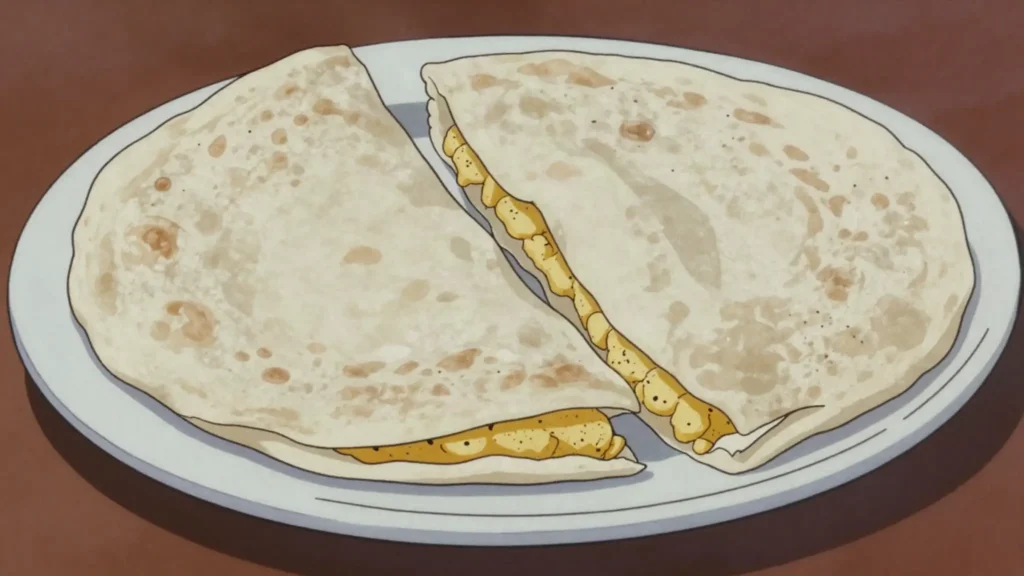
- Roll it out to about twenty centimetres, thin enough that the yellow filling shows faintly through. Roll on a lightly floured surface, dusting as needed. Too much flour makes the bread dry and it burns on the tawa.
- Heat a tawa or heavy flat pan over a medium heat. Lay the puri on and cook for about a minute until the surface bubbles. Brush the top with oil, turn it, and brush the other side. Cook each side for another minute or so until pale golden with brown spots. Now the colour they should be.
- Keep the heat moderate throughout. That loosens the layers and keeps it soft and pliable. Stack them in a clean cloth or a covered container as they come off. The trapped steam keeps them soft, and left uncovered they go stiff within minutes. Serve them warm, wrapped around curried chicken, potato, pumpkin or chana. They keep a day wrapped and are reheated briefly on a dry pan.
Technique
- Indian indentured labourers began arriving in British Guiana in 1838.
- The split peas must be dried and ground to a powder, not a paste.
- Roll gently, since heavy pressure forces the filling through the dough.
Substitutions
- Chana dal in place of yellow split peas.
- Ready-ground split pea filling, sold in some Caribbean shops.
Variations
- Made with ground chana, as chana puri.
- Plain roti without filling, called sada roti.
- Made with more chilli in the filling.
History
Flatbread stuffed with ground seasoned split peas, brought by Indian indentured labourers who began arriving in British Guiana in 1838.
Frequently asked questions
What is Dhal puri?
Dhal puri is a bread & pastry from Guyana: split-pea-stuffed flatbread wrapped around curries. Flatbread stuffed with ground seasoned split peas, brought by Indian indentured labourers who began arriving in British Guiana in 1838.
How long does Dhal puri take to make?
Dhal puri takes 1 hr plus 2 hr resting of preparation and 40 min of cooking. The recipe makes 8 breads. It is rated hard to make.
What can I substitute in Dhal puri?
Yes, within limits. Chana dal in place of yellow split peas. Ready-ground split pea filling, sold in some Caribbean shops.
What is the most important thing to get right in Dhal puri?
Grind the dried peas with garlic, cumin and turmeric into a fine dry powder. It must be a powder, not a paste, and it should feel like coarse flour. Sieve it and regrind anything coarse. Season it firmly, since the plain dough around it carries nothing.