
Ingredients
Shellfish
- 2 kgmussels
- 1 kgclams
- 500 grazor clams
Meat
- 500 gpork ribs
- 300 gsmoked pork
- 4longaniza sausages
- 1chicken, jointed
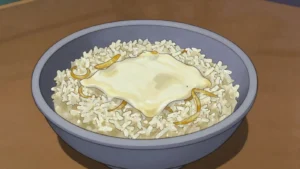
Milcao
- 500 graw potato, grated
- 300 gmashed potato
- 100 gpork crackling, chopped
- salt
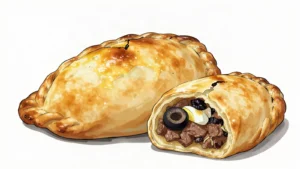
Chapaleles
- 300 gmashed potato
- 200 gplain flour
- salt
Also
- 1 kgpotatoes
- 1 kgpeas or broad beans
- nalca or cabbage leaves
- 500 mlwhite wine
Directions
- Line the base with cabbage or nalca leaves and pour in the white wine.
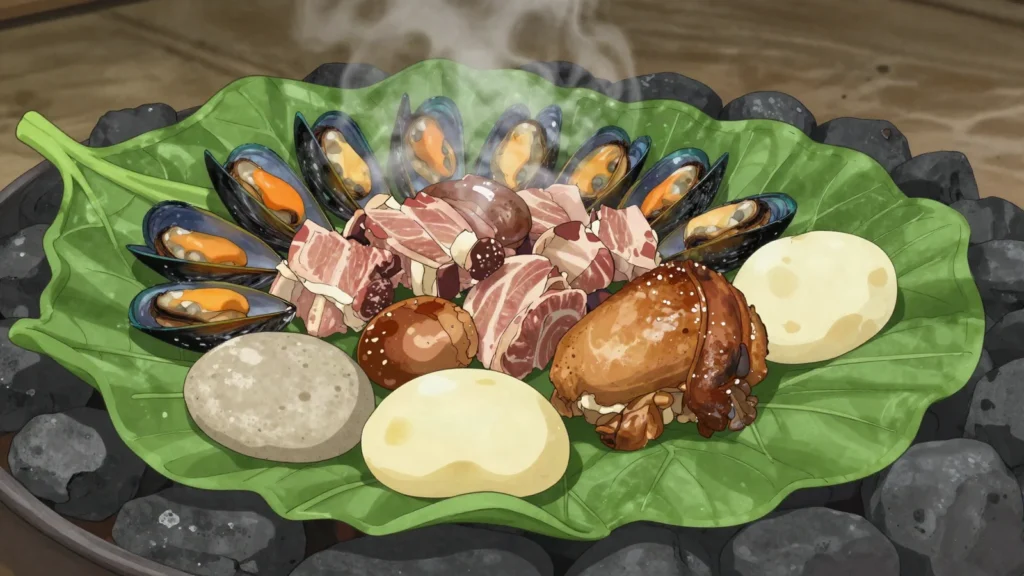
- Layer in the same order the pit uses: shellfish first, then the pork ribs, smoked pork, chicken and sausages, then the potatoes and peas. For the milcao, squeeze the grated raw potato dry in a cloth, keeping the starch that settles out of the liquid, then mix it with the mashed potato, the reserved starch, salt and chopped crackling and shape flat cakes.
- Lay the milcao and chapaleles on top of everything, cover with more leaves, put the lid on tightly and seal the rim with a damp cloth or a strip of dough.
- Cook over a medium heat for 1 hour 30 minutes without lifting the lid once.
- Serve straight from the pot in layers, ladle the broth into cups to drink alongside, and put a bowl of pebre on the table.
Technique
- It is an Indigenous technique of the Chiloé archipelago and the pit version is still done for gatherings, which is what it is really for.
- The broth at the bottom is the best thing in the pot. Do not throw it away.
- Discard any shellfish that were open before cooking and any that stay shut afterwards.
Substitutions
- Cabbage or chard leaves in place of nalca, which is a Chilean giant rhubarb relative.
- Any firm sausage in place of longaniza.
Variations
- Pulmay, the name used for the pot version in much of Chile.
- With fish added as a further layer.
- Without the potato breads, which is a common shortcut and a real loss.
History
A method of cooking a large mixed platter of shellfish, meat, potato and chapalele bread together over heated stones in a covered earthen pit, developed by the Indigenous Mapuche and Huilliche peoples of southern Chile’s Chiloé Archipelago long before Spanish colonization, using a cooking technique documented archaeologically in the region for well over a thousand years. Nalca or other large local leaves are traditionally used to cover the pit and seal in steam, a role now sometimes filled by canvas tarps in more modern preparations, and curanto remains closely tied to communal gatherings in Chiloé specifically, since preparing the pit, gathering ingredients and cooking typically requires collective effort from multiple households rather than being practical for one family alone.
Frequently asked questions
What is Curanto?
Curanto is a main from Chile: chiloé pit-cooked shellfish, meats and potato breads over hot stones. A method of cooking a large mixed platter of shellfish, meat, potato and chapalele bread together over heated stones in a covered earthen pit, developed by the Indigenous Mapuche and Huilliche peoples of southern Chile’s Chiloé Archipelago long before Spanish colonization, using a cooking technique documented archaeologically in the region for well over a thousand years. Nalca or other large local leaves are traditionally used to cover the pit and seal in steam, a role now sometimes filled by canvas tarps in more modern preparations, and curanto remains closely tied to communal gatherings in Chiloé specifically, since preparing the pit, gathering ingredients and cooking typically requires collective effort from multiple households rather than being practical for one family alone.
How long does Curanto take to make?
Curanto takes 1 hr 30 min of preparation and 1 hr 30 min of cooking. The recipe makes 10 servings. It is rated hard to make.
What can I substitute in Curanto?
Yes, within limits. Cabbage or chard leaves in place of nalca, which is a Chilean giant rhubarb relative. Any firm sausage in place of longaniza.
What is the most important thing to get right in Curanto?
The broth at the bottom is the best thing in the pot. Do not throw it away.