
Ingredients
Sausage
- 1 kgpork shoulder, coarsely minced
- 200 gpork back fat, chopped small
- 1whole head garlic, crushed to a paste
- 2 tbspground merkén or smoked paprika
- 1 tbspground cumin
- 2 tspdried oregano
- 2 tspsalt
- 1 tspblack pepper
- 100 mldry white wine
- 2m natural hog casing, rinsed and soaked
To serve
- 12marraqueta rolls, or sopaipillas
- pebre — chopped tomato, onion, coriander, chilli, oil and vinegar
Directions
- Mix the pork, fat, garlic, merkén, cumin, oregano, salt, pepper and wine with your hands until it is evenly combined and feels slightly tacky. Cover and refrigerate overnight — Chillán longaniza is defined by how much garlic it carries, and the garlic needs a night to spread through the meat rather than sitting in hot pockets.
- Fry a spoonful the next day and taste for salt and garlic before you fill anything.
- Fill the soaked casing loosely and twist into sausages about 12 cm long, tying the ends. Prick each once so it does not burst.
- Leave the linked sausages uncovered in the fridge for a few hours so the surface dries. A dry skin browns; a wet one steams grey.
- Grill over medium coals or fry over medium heat, turning often, for 20 to 25 minutes until browned all over and cooked through. Keep the heat moderate — high heat blackens the paprika before the middle is done.
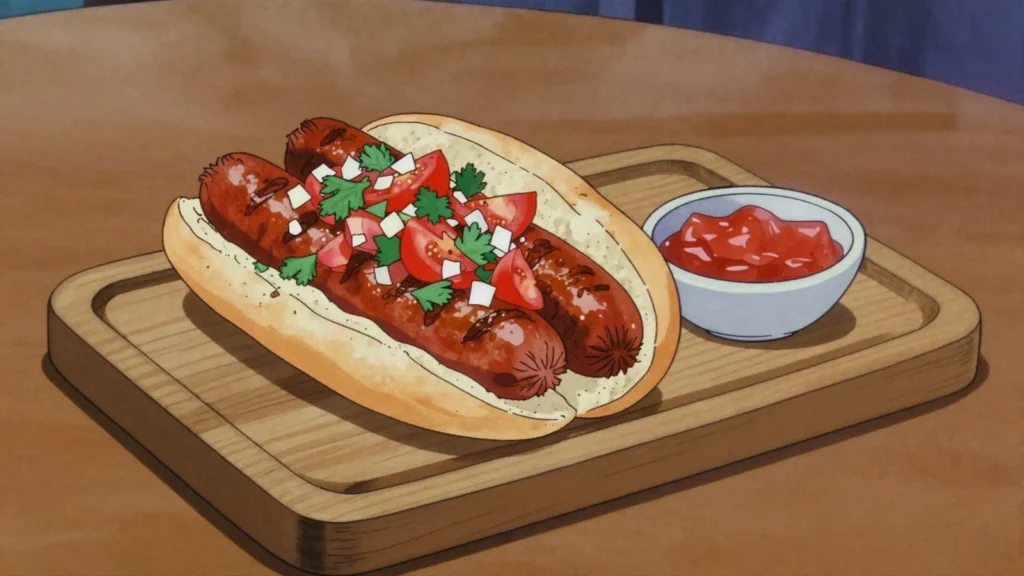
- Rest five minutes, then split a roll, lay in a whole sausage and spoon over plenty of pebre.
Technique
- A whole head of garlic sounds absurd and is correct. Chillán sausages are sold on their garlic and a cautious version tastes of nothing in particular.
- This is a fresh sausage, refrigerated and eaten within two days or frozen. It is not a cured longaniza.
- Hand-cut the fat rather than mincing it, so it stays in distinct pieces and keeps the sausage juicy.
Substitutions
- Smoked paprika with a pinch of cayenne for merkén, which is a smoked Chilean chilli and hard to find outside the country.
- Beef for a third of the pork, which some makers do.
- Red wine for white, giving a darker, heavier sausage.
Variations
- Sliced into charquicán or a bean stew rather than eaten in bread.
- The choripán version splits the sausage lengthwise and grills it cut-side down.
History
The Nuble city’s sausage makers have sold it since the 19th century; eaten as choripan or with sopaipillas and pebre.
Frequently asked questions
What is Longaniza de Chillán?
Longaniza de Chillán is a charcuterie & cured from Chile: garlicky pork sausage from Chillan, grilled or served in a roll. The Nuble city’s sausage makers have sold it since the 19th century; eaten as choripan or with sopaipillas and pebre.
How long does Longaniza de Chillán take to make?
Longaniza de Chillán takes 40 min plus overnight resting of preparation and 25 min of cooking. The recipe makes makes 12 sausages, serves 6. It is rated medium to make.
What can I substitute in Longaniza de Chillán?
Yes, within limits. Smoked paprika with a pinch of cayenne for merkén, which is a smoked Chilean chilli and hard to find outside the country. Beef for a third of the pork, which some makers do. Red wine for white, giving a darker, heavier sausage.
What is the most important thing to get right in Longaniza de Chillán?
Mix the pork, fat, garlic, merkén, cumin, oregano, salt, pepper and wine with your hands until it is evenly combined and feels slightly tacky. Cover and refrigerate overnight — Chillán longaniza is defined by how much garlic it carries, and the garlic needs a night to spread through the meat rather than sitting in hot pockets.