
Ingredients
Marinade
- 1cockerel or large free-range chicken (2.5 kg), jointed into 8–10 pieces
- 1 bottle(750 ml) red Burgundy
- 1onion, sliced
- 1carrot, sliced
- 2garlic cloves, crushed
- 1bouquet garni
- 10black peppercorns
Braise
- 150 gsmoked lardons
- 40 gbutter
- 1 tbspoil
- 3 tbspplain flour
- 3 tbspmarc de Bourgogne or brandy
- 2 tbsptomato puree
- 400 mlchicken stock
- salt and pepper
Garniture
- 250 gpickling onions, peeled
- 250 gbutton mushrooms
- 20 gbutter
- 1 tspsugar
To finish
- 100 mlblood from the bird or from the butcher, mixed with 1 tbsp vinegar (classical, optional)
- 1 tbspcold butter
- chopped parsley
- croutons fried in butter and rubbed with garlic
Directions
- Marinate the jointed bird with the wine, onion, carrot, garlic, bouquet garni and peppercorns in the fridge for 12–24 hours.
- Lift out and dry every piece thoroughly, straining and reserving the wine and the vegetables separately.
- Boil the reserved wine for 5 minutes, skimming off the grey scum, and set aside; this removes the raw alcohol edge that would otherwise dominate.
- Render the lardons in a heavy casserole and lift them out, then brown the chicken in the fat with the butter and oil over medium-high heat, 5 minutes a side, until properly golden.
- Warm the marc, pour it over, stand back and flame it, shaking the pan until the flames die down.
- Dust with the flour and turn the pieces for 3 minutes, then add the tomato puree, the boiled wine, the marinade vegetables and enough stock to barely cover.
- Bring to a bare simmer, cover and braise at 150°C (300°F): about 2 hours for a true cockerel, 50–60 minutes for a supermarket chicken, until the meat comes away from the bone.
- Meanwhile glaze the onions in butter, sugar and a splash of water in a covered pan for 15 minutes until tender and shining, and sear the mushrooms in butter over high heat until golden.
- Lift out the chicken, strain the sauce and discard the spent vegetables, then reduce the sauce hard until it coats a spoon. For the classical finish, whisk the blood and vinegar into the sauce off the boil and warm to 80°C (175°F) without simmering; it thickens and darkens almost to black.
- Return the chicken and the garniture to the pot, warm through, swirl in the cold butter, and serve with parsley, garlic croutons and boiled potatoes.
Technique
- A coq is what the dish is named for: an old cockerel, tough and deeply flavoured, which needs two hours and the acidity of wine to become tender. A young chicken makes a good dish but a quicker, milder one.
- The blood liaison is the classical finish and is what makes coq au vin dark and velvety rather than merely brown. Most restaurants now leave it out.
- Flaming the marc burns off the raw spirit; if you would rather not flame it, boil it down in a small pan instead.
- Regional versions exist wherever there is local wine: coq au vin jaune in the Jura, coq au Riesling in Alsace, coq au Chambertin in Burgundy.
Substitutions
- Blood is hard to buy. A beurre manie of 20 g butter mashed with 20 g flour, whisked in at the end, thickens the sauce instead, though the colour stays lighter and the texture less silky.
Variations
- Coq au vin jaune et morilles from the Jura, made with vin jaune and dried morels and finished with cream.
- Coq au Riesling from Alsace, a paler version with cream and no blood.
History
A rooster or tough old chicken, braised for hours in red wine until the meat falls apart, a technique long attributed in French culinary folklore to Gaulish or even Roman-era cooking, though no document actually confirms a history that old, and food historians treat the ancient-origin story with real skepticism. What is documented is that dishes braising poultry in wine appear in French regional cooking by at least the 1800s, tied to Burgundy in particular, a major wine-producing region where using local wine for cooking was practical rather than symbolic. The dish only became broadly known outside France, and outside professional kitchens, in the mid-1900s, significantly boosted internationally by Julia Child’s 1961 cookbook introducing it to American home cooks.
Frequently asked questions
What is Coq au vin?
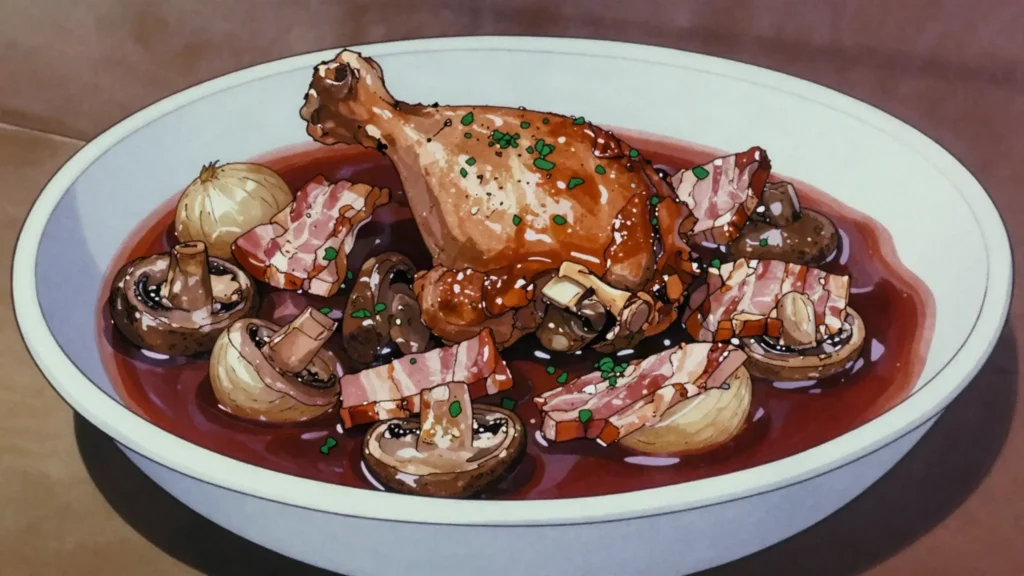
Coq au vin is a main from France: chicken braised in red wine with lardons, mushrooms, onions. A rooster or tough old chicken, braised for hours in red wine until the meat falls apart, a technique long attributed in French culinary folklore to Gaulish or even Roman-era cooking, though no document actually confirms a history that old, and food historians treat the ancient-origin story with real skepticism. What is documented is that dishes braising poultry in wine appear in French regional cooking by at least the 1800s, tied to Burgundy in particular, a major wine-producing region where using local wine for cooking was practical rather than symbolic. The dish only became broadly known outside France, and outside professional kitchens, in the mid-1900s, significantly boosted internationally by Julia Child’s 1961 cookbook introducing it to American home cooks.
How long does Coq au vin take to make?
Coq au vin takes 40 min of preparation and 2 hr 30 min plus overnight marinade of cooking. The recipe makes 6 servings. It is rated medium to make.
What can I substitute in Coq au vin?
Yes, within limits. Blood is hard to buy. A beurre manie of 20 g butter mashed with 20 g flour, whisked in at the end, thickens the sauce instead, though the colour stays lighter and the texture less silky.
What is the most important thing to get right in Coq au vin?
Boil the reserved wine for 5 minutes, skimming off the grey scum, and set aside; this removes the raw alcohol edge that would otherwise dominate.