
Ingredients
Batter
- 400 grice, soaked overnight
- about 500 ml water
- 1 tspsalt
Sometimes
- 3 tbspcooked rice, to help the ferment
- a pinch of bicarbonate of soda
To serve
- shutki bhorta, dried fish paste
- or mustard paste, shorshe bata
- or date palm jaggery and milk, for a sweet version
Equipment
- a small clay pot with a lid, or a small heavy pan with a domed lid
Directions
- Soak the rice overnight in plenty of cold water. It must be fully soaked, since undersoaked rice grinds into a gritty batter that never smooths out. Blend the drained rice with water into a completely smooth batter.
- Blend it thoroughly and for longer than seems necessary, since any grittiness will be obvious in the finished cake. Traditionally it is ground wet on a stone.
- Cover the batter loosely and leave it at room temperature for six to twelve hours. In warm weather it ferments quickly, and in a cold kitchen it takes considerably longer.
- Stir it gently before using and do not knock all the bubbles out. Add the salt after fermenting rather than before.
- Salt inhibits the fermentation, so adding it at the start slows the whole process considerably. Clay holds and distributes heat gently and it gives the characteristic soft base.
- Heat the pot over a medium heat until genuinely hot. Wipe it with a little oil, or use it dry if it is well seasoned. Pour a ladleful into the hot pot and immediately cover it with the lid. Do not spread it out, since a thin loose batter finds its own level and should be left alone.
- Cook for four to six minutes over a medium heat. It is done when the top is set and dry-looking and holes have appeared across the surface. Serve them hot, since they go firm as they cool.
Technique
- The batter is fermented, which gives the sourness and the holes.
- The lid traps the steam that cooks the top of the cake.
- They should stay pale rather than browning.
Substitutions
- Rice flour with water and a little yoghurt, as a quicker batter.
- A small non-stick pan with a domed lid.
Variations
- Dudh chitoi, soaked in sweetened milk with jaggery.
- Served with mustard paste rather than dried fish.
- Made with a little coconut in the batter.
History
A winter cake of Bangladeshi villages, cooked in clay moulds and paired with dried-fish or mustard pastes.
Frequently asked questions
What is Chitoi Pitha?
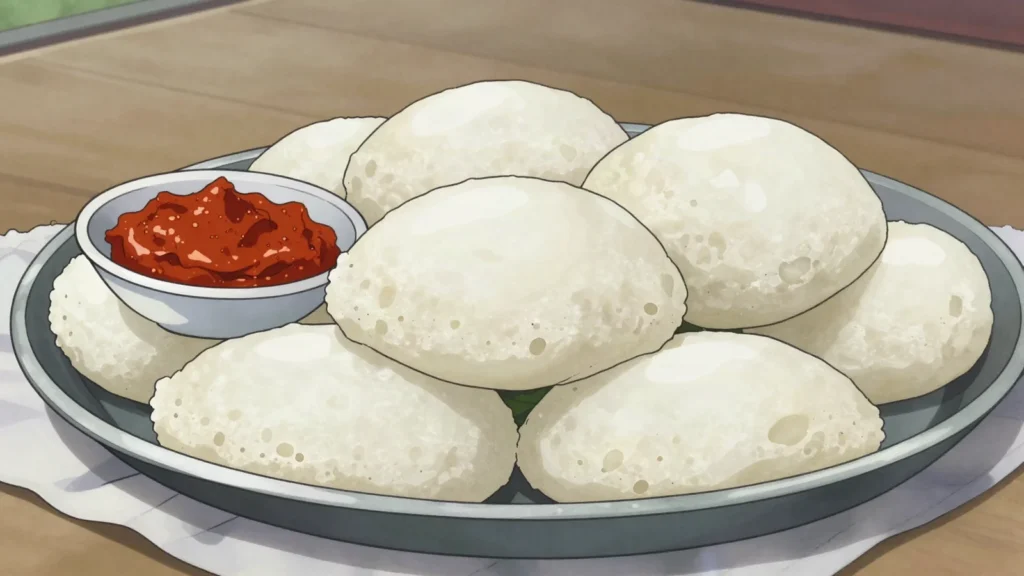
Chitoi Pitha is a breakfast from Bangladesh: plain steamed rice cakes from a loose fermented batter, eaten with fiery bhorta. A winter cake of Bangladeshi villages, cooked in clay moulds and paired with dried-fish or mustard pastes.
How long does Chitoi Pitha take to make?
Chitoi Pitha takes 20 min plus overnight soaking and fermenting of preparation and 30 min of cooking. The recipe makes about 12 cakes. It is rated medium to make.
What can I substitute in Chitoi Pitha?
Yes, within limits. Rice flour with water and a little yoghurt, as a quicker batter. A small non-stick pan with a domed lid.
What is the most important thing to get right in Chitoi Pitha?
Soak the rice overnight in plenty of cold water. It must be fully soaked, since undersoaked rice grinds into a gritty batter that never smooths out. Blend the drained rice with water into a completely smooth batter.