
Ingredients
Beans
- 400 gazuki beans, digir
- water, for soaking
- 1.5 litreswater, for cooking
- 1 teaspoonsalt
To finish
- 80 gbutter or ghee
- or subag, Somali spiced clarified butter
- 4 tablespoonssugar
- or sesame oil, for the savoury version
Sometimes added
- 200 grice, cooked separately
- 1/2 teaspoonground cardamom
- a pinch of salt
To serve
- deep bowls
- a spoon
Directions
- Butter and sugar are stirred through at the end. Rinse the beans and pick out any stones. Put them in a bowl and cover with plenty of water. Leave them overnight or for at least eight hours. They swell to about twice their size.
- Drain them and rinse them before cooking. Put the drained beans in a large heavy pot. Cover them with fresh cold water. Bring it to a boil and skim off the foam. Cover the pot partly with a lid. Let them cook for about two hours. Check the water level every half hour.
- Top it up with hot water if it drops. The beans should stay covered throughout. Add the salt only once the beans are soft. Judging when they are ready takes a taste.
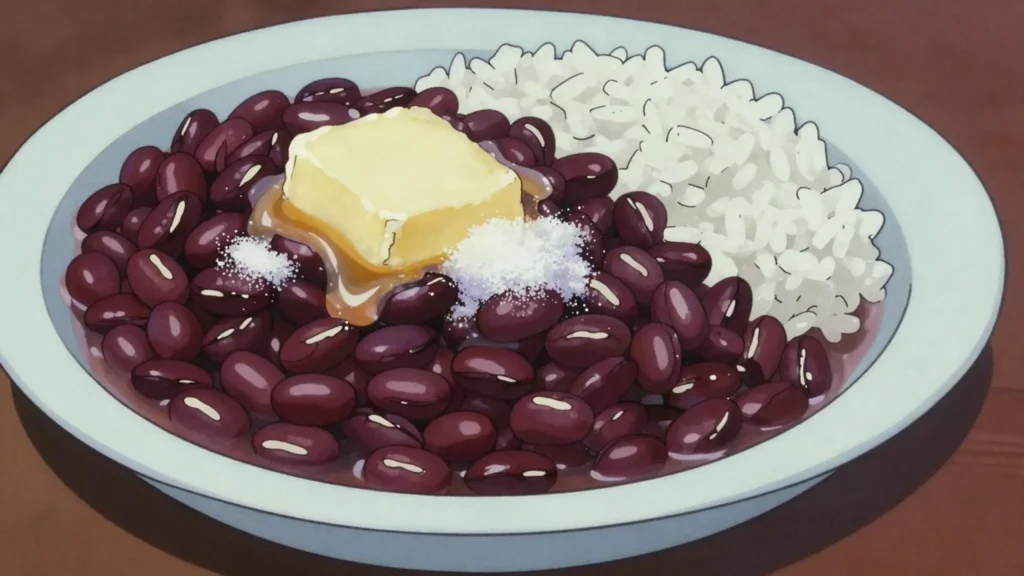
- Take the pot off the heat entirely. Add the butter or ghee and stir it through. It melts into the hot beans at once.
- Add the sugar and stir until it dissolves. Taste it and adjust the sugar to suit you. It should be gently sweet rather than a dessert. Add the cardamom if you are using it. Use it here if you can find or make it. Leave the sugar out of it entirely.
- Finish it with sesame oil instead of butter. Add a good pinch of salt instead. Adding rice is done in some households. Cook plain white rice separately.
- Stir it through the beans at the end. Serving it is done hot in deep bowls. Spoon it out while it is still steaming. Add an extra knob of butter on top. It keeps three days in the refrigerator.
Technique
- Azuki beans are called digir in Somali and are the same bean used in East Asian sweet pastes.
- Subag is Somali clarified butter simmered with fenugreek and cardamom, used as a finishing fat across Somali cooking.
Substitutions
- Plain butter or ghee stands in for subag if it is not available.
- Sesame oil and salt replace the butter and sugar for the savoury version.
Variations
- Cambuulo iyo bariis has rice stirred through the beans.
- A savoury version finished with sesame oil and salt is equally common.
- The same beans are cooked into a thicker mash in some households.
History
The small red beans, called digir, simmer for hours; the dish is traditionally the last meal of the day in Somali households.
Frequently asked questions
What is Cambuulo?
Cambuulo is a main from Djibouti: slow-cooked azuki beans finished with butter and sugar, eaten at supper. The small red beans, called digir, simmer for hours; the dish is traditionally the last meal of the day in Somali households.
How long does Cambuulo take to make?
Cambuulo takes 10 minutes plus soaking of preparation and 2 hours of cooking. The recipe makes serves 6. It is rated easy to make.
What can I substitute in Cambuulo?
Yes, within limits. Plain butter or ghee stands in for subag if it is not available. Sesame oil and salt replace the butter and sugar for the savoury version.
What is the most important thing to get right in Cambuulo?
Add the sugar and stir until it dissolves. Taste it and adjust the sugar to suit you. It should be gently sweet rather than a dessert. Add the cardamom if you are using it. Use it here if you can find or make it. Leave the sugar out of it entirely.