
Ingredients
Tapping
- 1coconut palm with unopened flower spathes
- 1sharp toddy knife
- coconut-fibre cord, for binding the spathe
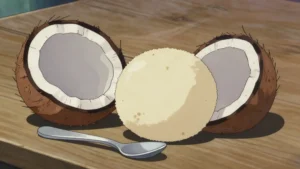
- 1clean coconut shell bottle or plastic container per spathe, smoked or rinsed with lime water
Products
- fresh karewe, drunk sweet within hours
- kamaimai, made by boiling 4 litres of fresh toddy down to about 500 ml of dark syrup
- soured karewe, left to ferment 1–3 days
Directions
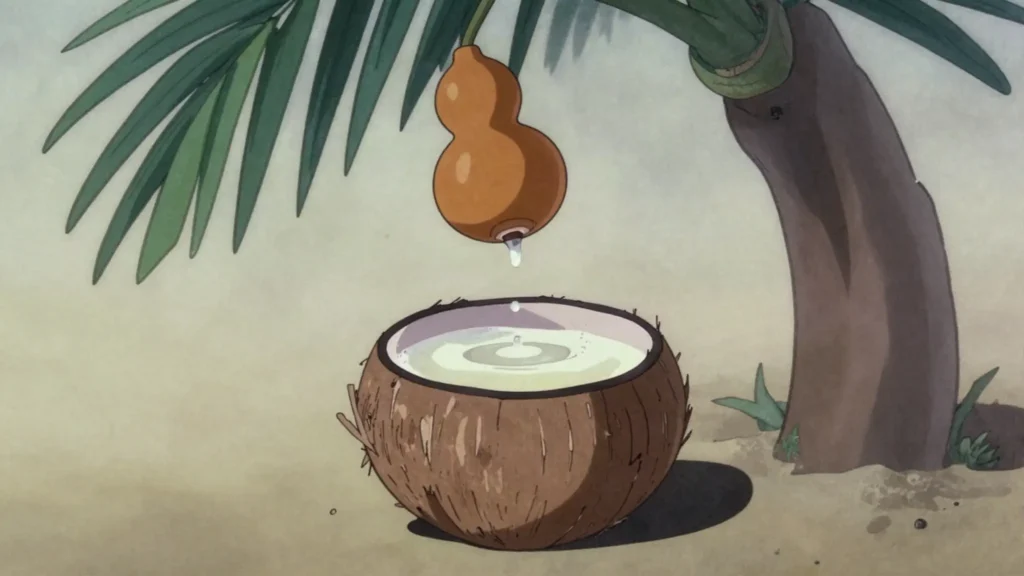
- Tie the collecting vessel under the cut so the sap drips in, and shade the mouth of it with a leaf.
- Return at dusk, take another thin shaving, empty the container and hang a clean one.
- Rinse the container with lime water or smoke it before rehanging. Drink the fresh karewe within a few hours.
- Serve fresh toddy in a coconut shell cup, cold if you can chill it, and use the soured toddy only where a fermented drink is wanted.
Technique
- One palm gives roughly a litre a day per tapped spathe, and a household with a few palms is never short of sugar. Toddy, coconut and reef fed the Gilbert Islands for centuries with almost no soil to farm.
- Fermentation begins on its own within hours in atoll heat. Sweet karewe cannot be stored, which is why it is either drunk immediately or boiled to kamaimai the same day.
- Soured toddy is a real social problem in Kiribati and several island councils restrict or ban it. It is potent, cheap and effectively unregulated.
- Tapping is dangerous work: the climb is unroped, repeated twice a day, and falls are a leading cause of serious injury on the islands.
Substitutions
- No palm to tap: fresh unpasteurised palm sap sold as neera in South Asia, or fresh sugarcane juice, ferments in the same way, though the flavour is different.
- Kamaimai can be substituted with dark palm sugar syrup or molasses in any recipe calling for it.
Variations
- Kamaimai, the boiled syrup, poured over babai, breadfruit and pancakes.
- Karewe mixed with water as a daily drink for children, and warmed with lime for a cold.
- The soured toddy of the outer islands, drunk at gatherings and increasingly restricted by local ordinance.
History
A sweet, syrupy sap harvested from the flower stalk of the coconut palm, either drunk fresh or fermented into an alcoholic beverage called toddy, documented across Kiribati and the wider Pacific Islands region for many generations as a significant traditional beverage, reflecting the coconut palm’s central importance across Pacific Islander agriculture and daily life. Harvesting the sap requires a specific technique of carefully cutting and binding the flower stalk to encourage a slow, steady flow of sap over an extended period, a skill traditionally passed down within Kiribati communities. Karewe remains an important traditional beverage and food source across Kiribati, valued both fresh as a sweet drink and fermented as a mildly alcoholic beverage for social occasions.
Frequently asked questions
What is Karewe?
Karewe is a drink from Kiribati: fresh coconut-palm toddy tapped twice daily, sweet and lightly fermenting. A sweet, syrupy sap harvested from the flower stalk of the coconut palm, either drunk fresh or fermented into an alcoholic beverage called toddy, documented across Kiribati and the wider Pacific Islands region for many generations as a significant traditional beverage, reflecting the coconut palm’s central importance across Pacific Islander agriculture and daily life. Harvesting the sap requires a specific technique of carefully cutting and binding the flower stalk to encourage a slow, steady flow of sap over an extended period, a skill traditionally passed down within Kiribati communities. Karewe remains an important traditional beverage and food source across Kiribati, valued both fresh as a sweet drink and fermented as a mildly alcoholic beverage for social occasions.
How long does Karewe take to make?
Karewe takes 20 min a day of preparation and tapped twice daily, indefinitely of cooking. The recipe makes about 2 litres a day from one palm. It is rated medium to make.
What can I substitute in Karewe?
Yes, within limits. No palm to tap: fresh unpasteurised palm sap sold as neera in South Asia, or fresh sugarcane juice, ferments in the same way, though the flavour is different. Kamaimai can be substituted with dark palm sugar syrup or molasses in any recipe calling for it.
What is the most important thing to get right in Karewe?
One palm gives roughly a litre a day per tapped spathe, and a household with a few palms is never short of sugar. Toddy, coconut and reef fed the Gilbert Islands for centuries with almost no soil to farm.