
Ingredients
Rice and beans
- 250 gdried black-eyed beans or cowpeas, soaked 4 hours
- 300 glong-grain rice, rinsed until the water runs clear
- 1onion, quartered
- 1 tspsalt
- 1.2 litreswater
- 2 tbspred palm oil
Sauce (dessi)
- 5 tbspred palm oil
- 2large onions, finely chopped
- 5garlic cloves, crushed
- 6ripe tomatoes, blended, or 400 g tinned tomatoes
- 3 tbsptomato paste
- 4–6dried red chillies, soaked and blended, or 2 tbsp chilli powder
- 1 tbspground dried ginger
- 2bay leaves
- 2 tspsalt
- 1vegetable stock cube
To serve
- 100 ggari (toasted cassava granules)
- 2ripe plantains, sliced and fried
- 1avocado, sliced
Directions
- Boil the drained beans in the water with the quartered onion for 35–45 minutes until the skins wrinkle and a bean crushes easily between finger and thumb but still holds its shape.
- Add the salt, palm oil and the rinsed rice. There should be about 2 cm of liquid above the grains – top up with boiling water if not.
- Cook uncovered over medium heat 8 minutes until the water has dropped to the level of the rice and small craters appear on the surface.
- Cover tightly, drop to the lowest heat and steam 15 minutes, then rest off the heat 10 minutes without lifting the lid. Fork through – grains should be separate and stained faintly pink by the palm oil.
- For the sauce, heat the palm oil in a heavy pan until it turns from red to clear and stops smelling raw, about 2 minutes over medium heat – never let it smoke.
- Fry the onions 8 minutes until deep golden, add the garlic and cook 1 minute, then the tomato paste and fry 4 minutes until it darkens to brick red.
- Add the blended tomatoes, chillies, ginger, bay leaves, salt and crumbled stock cube. Simmer uncovered 25–30 minutes, stirring now and then, until the sauce is thick and the oil floats clear on top – that separation is the sign it is cooked.
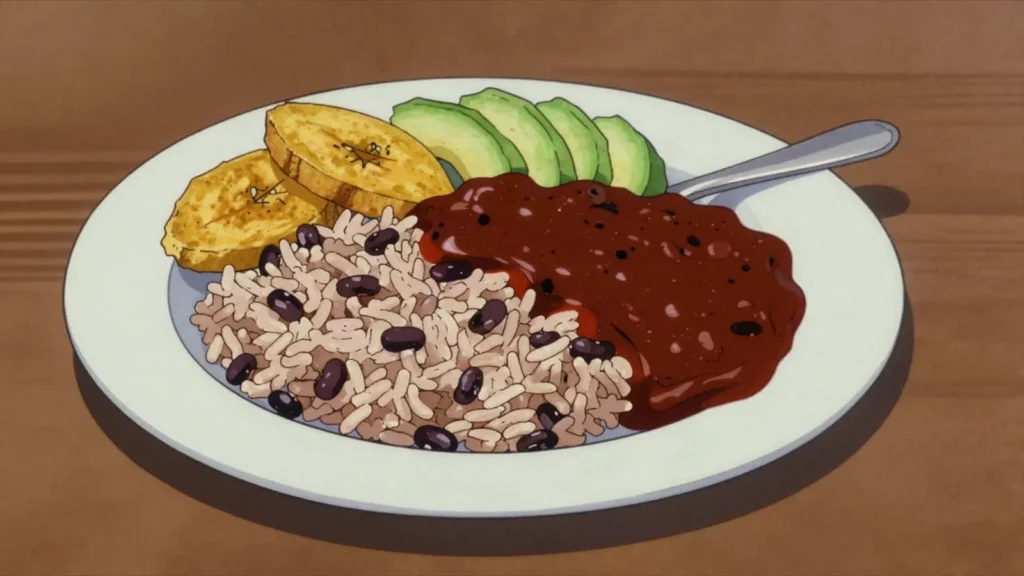
- Serve a mound of ayimolou with a ladle of the dark sauce over one side, a spoon of gari on top for crunch, and fried plantain and avocado alongside.
Technique
- The floating oil is not a fault. In West African sauces you cook until the oil separates, which means the raw tomato and onion have broken down completely.
- Rice and beans go into one pot at staggered times, never cooked separately and mixed. The rice absorbs the bean liquor and that is where the flavour lives.
- Bleaching palm oil (heating it until clear) softens its heavy, waxy raw taste. Overheat it and it turns acrid and stains everything it touches.
Substitutions
- Red palm oil can be replaced with groundnut oil plus 1 tsp sweet paprika for colour, though the flavour is noticeably lighter.
- Any brown bean works – pinto, red kidney or bambara groundnuts are all used depending on the market.
Variations
- Ayimolou with a hard-boiled egg and spaghetti heaped on top, the way street vendors in Lomé build a full plate.
- Watche or waakye style, coloured deep red-brown by dried sorghum leaves boiled with the beans.
History
A dish of black-eyed peas and rice cooked together with palm oil, considered a significant traditional dish across Togo, reflecting the broader West African tradition of combining rice and legumes into one filling, protein-rich meal, closely related to similar rice-and-bean combinations found under different regional names across neighboring West African countries. Its use of palm oil, extracted from the oil palm native to West and Central Africa, gives ayimolou its characteristic rich flavour and colour, consistent with palm oil’s central role across a very wide swath of West African cooking more broadly. Ayimolou remains a common, everyday dish across Togo, valued as an accessible, filling combination of staple grain and legume.
Frequently asked questions
What is Ayimolou?
Ayimolou is a street food from Togo: rice and beans with dark pepper sauce, everyday street lunch. A dish of black-eyed peas and rice cooked together with palm oil, considered a significant traditional dish across Togo, reflecting the broader West African tradition of combining rice and legumes into one filling, protein-rich meal, closely related to similar rice-and-bean combinations found under different regional names across neighboring West African countries. Its use of palm oil, extracted from the oil palm native to West and Central Africa, gives ayimolou its characteristic rich flavour and colour, consistent with palm oil’s central role across a very wide swath of West African cooking more broadly. Ayimolou remains a common, everyday dish across Togo, valued as an accessible, filling combination of staple grain and legume.
How long does Ayimolou take to make?
Ayimolou takes 20 min of preparation and 1 hr 10 min of cooking. The recipe makes 4 servings. It is rated easy to make.
What can I substitute in Ayimolou?
Yes, within limits. Red palm oil can be replaced with groundnut oil plus 1 tsp sweet paprika for colour, though the flavour is noticeably lighter. Any brown bean works – pinto, red kidney or bambara groundnuts are all used depending on the market.
What is the most important thing to get right in Ayimolou?
For the sauce, heat the palm oil in a heavy pan until it turns from red to clear and stops smelling raw, about 2 minutes over medium heat – never let it smoke.