
Ingredients
Leaves
- 600 gjute mallow leaves, ademe
- or 600 g frozen molokhia leaves
Base
- 3 tablespoonsred palm oil
- 2onions, chopped
- 3tomatoes, blended
- 2 tablespoonstomato paste
- 4garlic cloves, chopped
- 1hot chilli, chopped
Protein
- 300 gsmoked fish, flaked
- or 400 g fresh fish, in pieces
- 2 tablespoonsground crayfish or dried shrimp
- 1stock cube
To finish
- salt to taste
- a little kanwa or bicarbonate of soda, optional
To serve
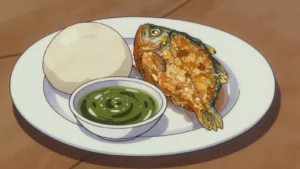
- akoume, maize dough staple
- or fufu or rice
Directions
- Pick the leaves off the woody stems. Discard any yellowed or damaged leaves. Wash them thoroughly in several changes of water. Chop them very finely with a sharp knife. Heat the palm oil in a heavy pot. Warm it gently rather than fiercely.
- Add the chopped onions to the pot. Fry them until soft and golden. Give them about eight minutes. Add the garlic and the chilli. Cook them for about one minute. Stir in all of the tomato paste. Fry it for two minutes to cook out the raw taste.
- Pour in the blended fresh tomato. Let it cook down for ten minutes. The oil should separate at the edges.
- Add the flaked smoked fish now. Check it carefully for bones as you go. Add the ground crayfish and the stock cube. Pour in about 400 ml of water. Bring the whole pot up to a simmer. Let it cook for about ten minutes.
- Taste it and season it very well. The base should be strongly flavoured. Stir the chopped leaves into the simmering sauce. Stir them right through thoroughly.
- Simmer them for about ten minutes. Do not cover the pot at this stage. Use only a small pinch if you use it at all. Too much of it gives a soapy taste.
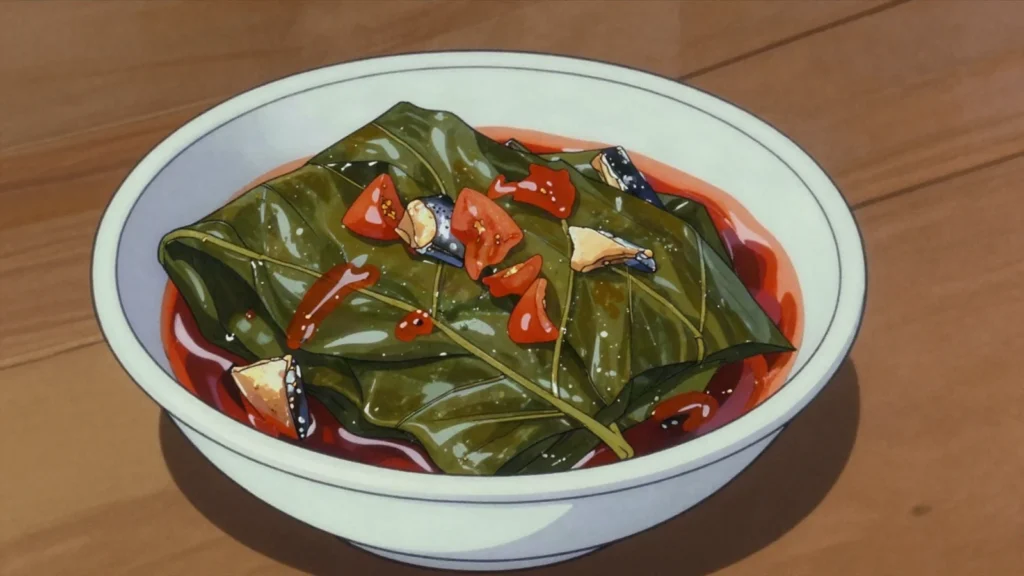
- Add hot water if it is too thick. Simmer it briefly if it is too thin. Taste it and adjust the salt again. Serving it is always done hot. Ladle it into a communal bowl. Serve hot akoume alongside it. Pinch off a piece and use it to scoop the sauce. It keeps two days refrigerated.
Technique
- Jute mallow is eaten across a wide belt from West Africa to the Middle East, under names including ademe, molokhia, ewedu and krain krain.
- The preparations differ considerably but all rely on the same slippery quality.
Substitutions
- Frozen chopped molokhia is the practical option outside West Africa.
- Smoked mackerel stands in well for African smoked fish.
Variations
- Nigerian ewedu is made from the same leaf but is plainer and served with other soups.
- Egyptian molokhia adds a garlic and coriander tempering at the end.
- Some Togolese households add okra alongside the jute leaves.
History
Made from jute mallow leaves, the same plant eaten as molokhia in Egypt, grown along the Togolese coast and cooked to a slippery sauce.
Frequently asked questions
What is Adémè dessi?
Adémè dessi is a soup & stew from Togo: silky jute-leaf sauce eaten with akoumé. Made from jute mallow leaves, the same plant eaten as molokhia in Egypt, grown along the Togolese coast and cooked to a slippery sauce.
How long does Adémè dessi take to make?
Adémè dessi takes 30 minutes of preparation and 40 minutes of cooking. The recipe makes serves 6. It is rated medium to make.
What can I substitute in Adémè dessi?
Yes, within limits. Frozen chopped molokhia is the practical option outside West Africa. Smoked mackerel stands in well for African smoked fish.
What is the most important thing to get right in Adémè dessi?
Pick the leaves off the woody stems. Discard any yellowed or damaged leaves. Wash them thoroughly in several changes of water. Chop them very finely with a sharp knife. Heat the palm oil in a heavy pot. Warm it gently rather than fiercely.