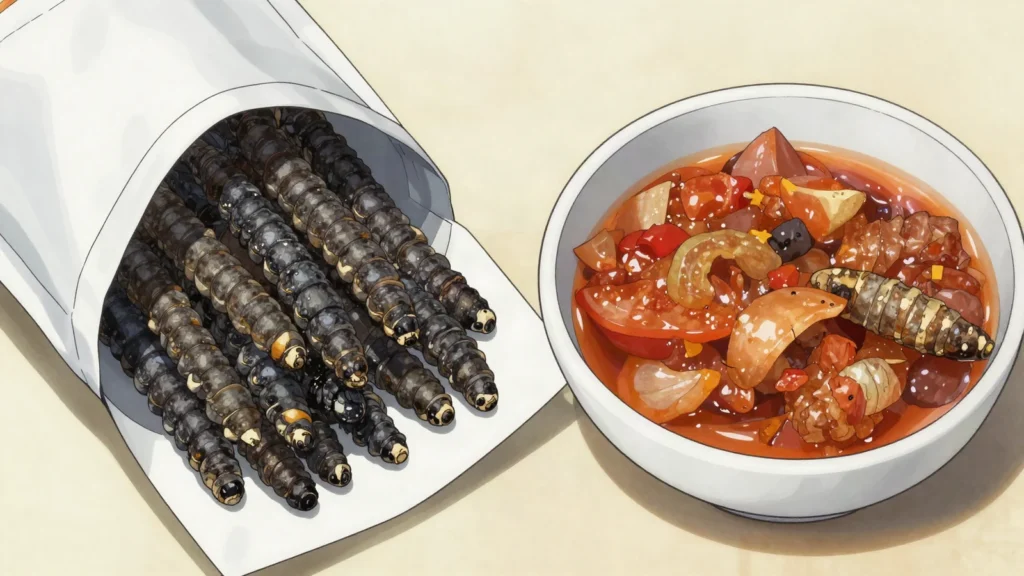

Ingredients
Base
- 150 gdried mopane worms (phane)
- 800 mlwarm water, for soaking
Stew
- 3 tbspsunflower oil
- 2onions, sliced
- 3tomatoes, chopped
- 3garlic cloves, chopped
- 1green chilli, chopped
- 1 tspsalt
- ½ tspblack pepper
- 150 mlwater
To serve
- Stiff maize meal pap (phaletshe) or bogobe
Directions
- Rinse the dried phane in two changes of cold water, rubbing them between your palms to remove grit and any loose dry skin.
- Soak in warm water for 30 minutes until they swell and soften to the texture of dried mushroom. Drain, keeping 150 ml of the soaking water.
- For the crisp version, stop here: pat them dry, then dry-fry in a hot pan with a little oil and salt for 5 to 6 minutes until they crackle and snap when squeezed. Eat by the handful.
- For the stew, heat the oil in a heavy pan over medium heat and fry the onion 6 to 8 minutes until soft and just browning at the edges.
- Add the garlic and chilli and cook 1 minute, then the tomatoes, and cook 8 minutes until they break down into a thick, oily sauce.
- Stir in the drained worms, the reserved soaking liquid, salt and pepper. Cover and simmer gently 15 to 20 minutes.
- Uncover and cook off the remaining liquid until the sauce clings and the phane are tender but still chewy with a nutty bite — they never go soft.
- Serve hot with stiff maize pap, using the pap to scoop up the worms and sauce.
Technique
- Phane are the caterpillars of the emperor moth, harvested off mopane trees, squeezed to remove the gut, boiled in salted water and sun-dried on the spot. Everything sold commercially has already had this done, which is why the dried product is safe and shelf-stable.
- Nutritionally this is a serious protein food, not a novelty: roughly half the dry weight is protein, and it is a significant iron source in rural Botswana.
- Do not over-soak. Left in water for hours they go slimy and lose the firm, dry-roasted texture people actually want.
Substitutions
- No phane available: the same tomato-and-onion stew is made in Botswana with dried mushrooms or Kalahari truffles, giving a similar earthy chew, though not the nuttiness.
Variations
- In the eastern districts they are stewed with peanut powder, which thickens the sauce and doubles the nuttiness.
- Roadside sellers offer them simply fried dry with salt and chilli powder, eaten like crisps.
History
Called phane, the caterpillars are stripped from mopane trees, squeezed, boiled and dried; the harvest is a major seasonal income for rural households.
Frequently asked questions
What is Mopane worms?
Mopane worms is a snack from Botswana: dried mopane caterpillars eaten crisp or stewed. Called phane, the caterpillars are stripped from mopane trees, squeezed, boiled and dried; the harvest is a major seasonal income for rural households.
How long does Mopane worms take to make?
Mopane worms takes 20 min of preparation and 40 min of cooking. The recipe makes 4 servings. It is rated easy to make.
What can I substitute in Mopane worms?
Yes, within limits. No phane available: the same tomato-and-onion stew is made in Botswana with dried mushrooms or Kalahari truffles, giving a similar earthy chew, though not the nuttiness.
What is the most important thing to get right in Mopane worms?
Uncover and cook off the remaining liquid until the sauce clings and the phane are tender but still chewy with a nutty bite — they never go soft.