
Ingredients
What it is made from
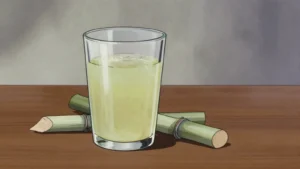
- Sap of the Oxytenanthera abyssinica bamboo, tapped from young shoots in the rainy season, roughly December to March
- Wild yeasts and lactic bacteria already present on the shoot and in the collecting gourd
- Nothing else: no added sugar, no added yeast, no water
Tapping kit
- a sharp panga or knife
- a clean gourd, plastic bottle or bamboo joint as the receiver, 2 litres
- a length of banana fibre or twine, to tie the receiver in place
- a leaf or cloth cap, to keep insects and rain out
To serve
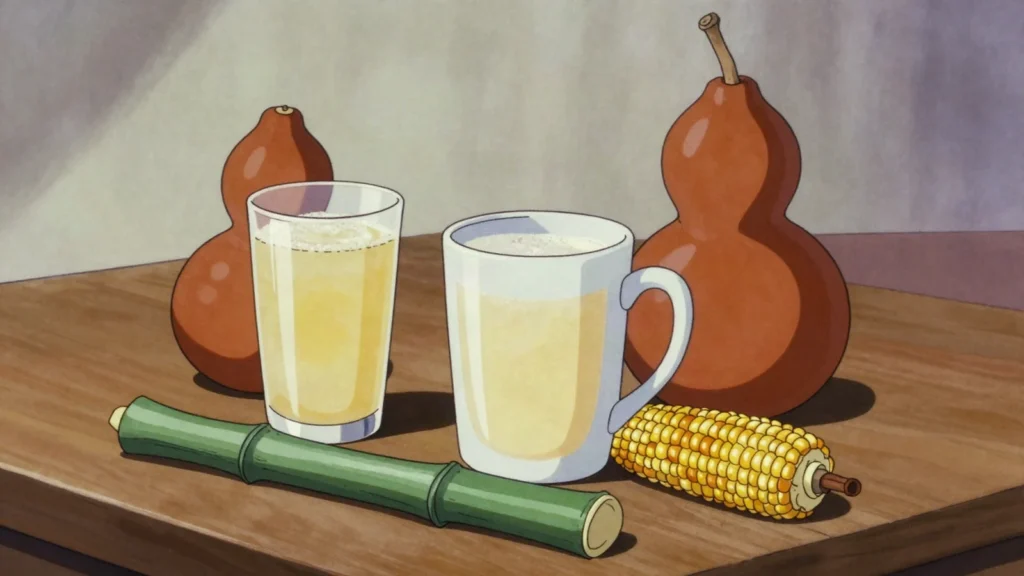
- 1 litrefresh ulanzi, unfiltered and cloudy
- plastic mugs, the standard vessel at a village bar
- roasted maize cobs on the side
- alcohol by volume: 1 to 3 percent in the morning, rising past 5 percent by evening
Directions
- Cut the top off the shoot cleanly at an angle so that sap can run freely from the cut surface.
- Tie a clean gourd or bottle under the cut so the dripping sap runs into it, and cap it loosely with a leaf against rain and insects.
- Leave it overnight. Fresh sap is clear, sweet and barely alcoholic, and it is already fermenting: wild yeasts on the shoot and in the gourd start work within an hour of the sap running.
- Serve it as it is, unfiltered and unchilled or lightly cooled, poured from the gourd into mugs, and drink it the same day it was tapped.
Technique
- Ulanzi cannot really be bought fresh outside its region, because it does not keep. There is no stabilisation and no bottling: the fermentation simply carries on until it turns to vinegar.
- The tapping is skilled work and it is seasonal and local. It is also economically important in Njombe, where families tap bamboo stands for cash income through the rains.
- Because fermentation is spontaneous and the vessels are reused, hygiene of the gourd matters. A dirty receiver gives a sour, off-tasting batch quickly, and cleanliness is what separates a good tapper from a bad one.
Substitutions
- Outside Tanzania there is no true substitute, since it depends on a specific bamboo. Fresh palm wine from a West or Central African supplier ferments the same way and drinks in the same register.
- For an approximation of the sweet morning stage, some people ferment lightly sweetened bamboo shoot infusion for a few hours, but it is a different drink and should not be sold as ulanzi.
Variations
- Morning ulanzi, sweet and barely fermented, drunk almost as a soft drink.
- Evening ulanzi, sour, fizzy and much stronger.
- Ulanzi kept a further day and used as a souring agent in cooking, or allowed to become vinegar.
History
Tapped from Njombe and Mbeya bamboo shoots between December and April; the sap ferments within hours, so it is drunk the day it is collected.
Frequently asked questions
What is Ulanzi?
Ulanzi is a wine & spirit from Tanzania: sweet fizzy wine from bamboo sap, tapped fresh in the rainy season. Tapped from Njombe and Mbeya bamboo shoots between December and April; the sap ferments within hours, so it is drunk the day it is collected.
How long does Ulanzi take to make?
Ulanzi takes 20 min at the bamboo of preparation and 6 to 24 hr spontaneous fermentation of cooking. The recipe makes about 2 litres, tapped over one night. It is rated medium to make.
What can I substitute in Ulanzi?
Yes, within limits. Outside Tanzania there is no true substitute, since it depends on a specific bamboo. Fresh palm wine from a West or Central African supplier ferments the same way and drinks in the same register. For an approximation of the sweet morning stage, some people ferment lightly sweetened bamboo shoot infusion for a few hours, but it is a different drink and should not be sold as ulanzi.