
Ingredients
- 600 gslippery cabbage leaves (aibika or island cabbage), stalks stripped, leaves torn
- 400 mlcoconut milk
- 150 mlthick coconut cream
- 1onion, thinly sliced
- 2garlic cloves, sliced (optional)
- 1small green chilli, split
- 1 tspsalt
- 1 tbsplime juice, or 1 slice of lime leaf
To serve
- boiled cassava, taro or rice
Directions
- Strip the thick central stalk out of every leaf; the stalks stay stringy no matter how long you cook them.
- Tear or roughly shred the leaves into large pieces. They collapse to about a quarter of their volume, so a large heap is correct.
- Warm the coconut milk in a wide pan with the onion, garlic, chilli and salt over medium heat until it steams and the onion softens, 4–5 minutes.
- Add the leaves in handfuls, pushing each batch under the milk before adding the next, until all of them are submerged.
- Simmer uncovered, never at a boil, for 8–10 minutes. The leaves turn dark green and silky and the milk visibly thickens as the natural mucilage in the leaves is released.
- Stir in the thick coconut cream and cook a further 2 minutes, just until it glosses the leaves. The sauce should coat a spoon and feel faintly slippery, which is the whole character of the dish.
- Sharpen with lime juice off the heat and check the salt; island cooks keep the seasoning plain so the coconut carries the dish.
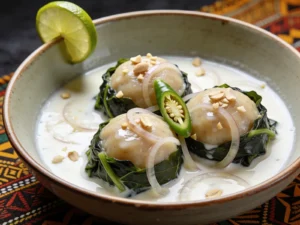
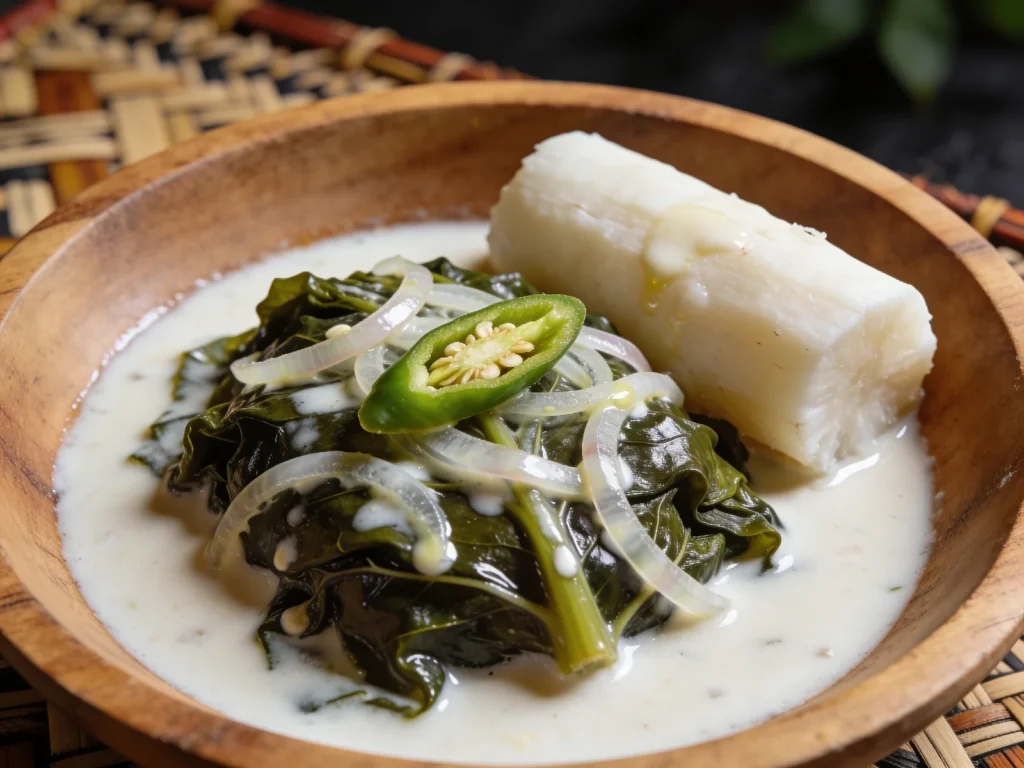
- Serve hot in a shallow bowl beside boiled cassava, taro or rice, with the sauce spooned over the starch.
Technique
- Slippery cabbage (Abelmoschus manihot) is a hibiscus relative and is not a cabbage at all. The mucilage that gives it its name is the point, so do not rinse or drain it away.
- Boiling hard splits the coconut milk into oil and solids. Keep the pan at a lazy simmer the whole time.
- This is the daily green across the Solomon Islands, eaten with almost every meal, and it is usually cooked plain: onion, salt, coconut and nothing else.
Substitutions
- No aibika: use young spinach, Malabar spinach or chard, and add 1 tsp of finely chopped okra to the pan to mimic the natural slipperiness.
- Tinned coconut milk works: use the thin liquid for simmering and reserve the thick cream from the top for the last two minutes.
Variations
- Cooked in a bamboo tube or leaf parcel on the coals, so the leaves steam in their own coconut liquor.
- Finished with slices of ripe pawpaw or pumpkin cooked in the same coconut milk.
History
A dish of slippery cabbage, a leafy green vegetable common across Melanesia, cooked simply with coconut milk, developed in Solomon Islands home cooking as an everyday vegetable dish reflecting the country’s access to locally grown greens well suited to its tropical climate. Its name describes the vegetable’s distinctively slippery, mucilaginous texture once cooked, a quality shared with several other leafy greens found across tropical growing regions worldwide. Slippery kabis remains a common, everyday dish across Solomon Islands households, typically served alongside a starchy staple like rice, taro or sweet potato as part of a complete meal, reflecting a straightforward, practical approach to incorporating fresh greens into the daily diet.
Frequently asked questions
What is Slippery Kabis?
Slippery Kabis is a salad & side from Solomon Islands: island cabbage cooked in coconut milk, the everyday green. A dish of slippery cabbage, a leafy green vegetable common across Melanesia, cooked simply with coconut milk, developed in Solomon Islands home cooking as an everyday vegetable dish reflecting the country’s access to locally grown greens well suited to its tropical climate. Its name describes the vegetable’s distinctively slippery, mucilaginous texture once cooked, a quality shared with several other leafy greens found across tropical growing regions worldwide. Slippery kabis remains a common, everyday dish across Solomon Islands households, typically served alongside a starchy staple like rice, taro or sweet potato as part of a complete meal, reflecting a straightforward, practical approach to incorporating fresh greens into the daily diet.
How long does Slippery Kabis take to make?
Slippery Kabis takes 10 min of preparation and 15 min of cooking. The recipe makes 4 servings as a side. It is rated easy to make.
What can I substitute in Slippery Kabis?
Yes, within limits. No aibika: use young spinach, Malabar spinach or chard, and add 1 tsp of finely chopped okra to the pan to mimic the natural slipperiness. Tinned coconut milk works: use the thin liquid for simmering and reserve the thick cream from the top for the last two minutes.
What is the most important thing to get right in Slippery Kabis?
Simmer uncovered, never at a boil, for 8–10 minutes. The leaves turn dark green and silky and the milk visibly thickens as the natural mucilage in the leaves is released.