
Ingredients
Fish
- 6thick steaks of hilsa (ilish), about 800 g, scaled and cleaned
- 1 tspground turmeric
- 1½ tsp salt
Mustard paste
- 3 tbspyellow mustard seeds
- 1 tbspblack mustard seeds
- 2green chillies
- ½ tspsalt
- 60 mlwater
Gravy
- 6 tbspcold-pressed mustard oil
- ½ tspnigella seeds (kalojeere)
- ½ tspground turmeric
- 4whole green chillies, slit
- 1 tspsugar (optional)
- 200 mlwarm water
- salt to taste
To serve
- steamed rice
- 2 tbspcoriander leaf (optional)
Directions
- Soak both mustard seeds in warm water for 20 minutes, drain, then grind with the green chillies, salt and 60 ml fresh water to a fine, smooth paste. Soaking and salting are what keep mustard from turning bitter.
- Rub the hilsa steaks with turmeric and salt and leave 15 minutes. Handle them gently; hilsa flesh is soft and falls apart easily.
- Strain the mustard paste through a coarse sieve if it feels gritty, pressing hard, and slacken with a little water to a pouring consistency.
- Heat the mustard oil in a wide pan until it just smokes, then take it off the heat for 30 seconds to calm — raw mustard oil must be smoked before use or it tastes acrid.
- Return to medium heat, add the nigella seeds and slit green chillies and let them crackle for 20 seconds.
- Lower the heat, add the turmeric and the mustard paste, and cook 2–3 minutes, stirring, until the raw smell lifts and the oil begins to separate at the edges. Never let mustard paste boil hard or it goes bitter.
- Add the warm water and the sugar if using, bring to a bare simmer, then slide in the fish steaks in a single layer and spoon the gravy over them.
- Cover and cook 8–10 minutes, turning each steak once with a spatula, until the flesh is opaque and lifts from the many fine bones. The gravy should be thick enough to coat, glossy with separated oil.
- Finish with a raw teaspoon of mustard oil poured over off the heat and rest 5 minutes before serving with plain steamed rice.
Technique
- Hilsa is the national fish of Bangladesh and this is its most celebrated preparation, especially at Pohela Boishakh, the Bengali new year.
- The fine bones are part of the experience and cannot be removed; the fish is eaten carefully by hand.
- Two mustards matter: yellow for body and black for pungency. All black is punishingly sharp, all yellow is flat.
- A steamed version, bhapa ilish, sets the same paste and fish in a sealed tiffin box inside a pot of boiling water for 20 minutes — many Bengalis consider it the purer form.
Substitutions
- Fresh hilsa is hard to buy outside South Asia; frozen whole hilsa is widely sold and is the accepted substitute. Failing that, use mackerel or shad, which are similarly oily.
- If mustard oil is sold as ‘for external use only’ where you live, use half rapeseed oil plus 1 tsp of English mustard powder stirred into the paste.
Variations
- Ilish bhapa: the fish and paste steamed in a sealed container with mustard oil and green chillies, no added water.
- Ilish paturi, wrapped in banana leaf with the same mustard paste and grilled over coals.
History
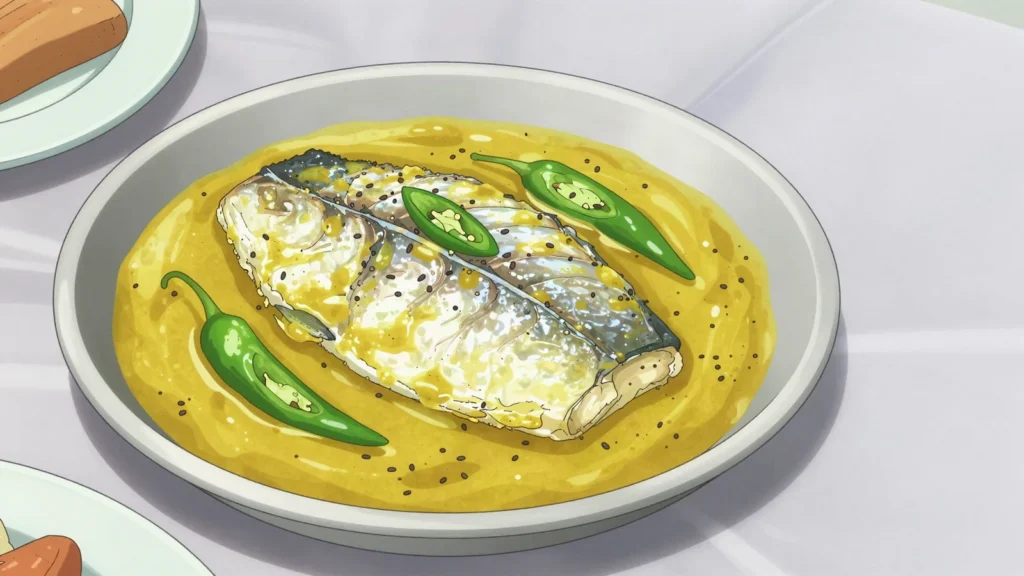
Hilsa fish, a species central to Bengali cuisine and culture, cooked in a pungent mustard seed paste and sauce, developed within Bengali culinary tradition using hilsa, a fish that migrates from the sea into Bengali rivers to spawn and has been prized in Bengali cooking for many centuries, closely tied to the region’s river-and-delta geography across what is now Bangladesh and eastern India. Mustard, ground into a paste that gives the dish its characteristic sharp, pungent flavour and pale yellow colour, reflects a broader Bengali culinary preference for mustard oil and mustard paste as defining regional flavouring agents, distinguishing Bengali cooking’s flavour from many other Indian regional cuisines. Hilsa itself holds such cultural significance that it is often referred to as Bangladesh’s national fish, and shorshe ilish remains one of the most celebrated dishes built around it.
Frequently asked questions
What is Shorshe Ilish?
Shorshe Ilish is a main from Bangladesh: national hilsa fish cooked in pungent mustard sauce. Hilsa fish, a species central to Bengali cuisine and culture, cooked in a pungent mustard seed paste and sauce, developed within Bengali culinary tradition using hilsa, a fish that migrates from the sea into Bengali rivers to spawn and has been prized in Bengali cooking for many centuries, closely tied to the region’s river-and-delta geography across what is now Bangladesh and eastern India. Mustard, ground into a paste that gives the dish its characteristic sharp, pungent flavour and pale yellow colour, reflects a broader Bengali culinary preference for mustard oil and mustard paste as defining regional flavouring agents, distinguishing Bengali cooking’s flavour from many other Indian regional cuisines. Hilsa itself holds such cultural significance that it is often referred to as Bangladesh’s national fish, and shorshe ilish remains one of the most celebrated dishes built around it.
How long does Shorshe Ilish take to make?
Shorshe Ilish takes 25 min of preparation and 25 min of cooking. The recipe makes 4 servings. It is rated medium to make.
What can I substitute in Shorshe Ilish?
Yes, within limits. Fresh hilsa is hard to buy outside South Asia; frozen whole hilsa is widely sold and is the accepted substitute. Failing that, use mackerel or shad, which are similarly oily. If mustard oil is sold as ‘for external use only’ where you live, use half rapeseed oil plus 1 tsp of English mustard powder stirred into the paste.
What is the most important thing to get right in Shorshe Ilish?
Heat the mustard oil in a wide pan until it just smokes, then take it off the heat for 30 seconds to calm — raw mustard oil must be smoked before use or it tastes acrid.