
Ingredients
The dough
- 500 gplain flour
- 100 gsugar
- or to taste
- 7 gsachet fast-action dried yeast
- half a teaspoon salt
- half a teaspoon grated nutmeg
- optional
The liquid
- about 300 ml warm water
- or warm milk
- for a richer dough
- 1egg, beaten
- optional
- 2 tablespoonsmelted butter
- or oil, optional
Sometimes added
- 1ripe banana, mashed
- a little vanilla
- grated orange zest
- a pinch of cinnamon
For frying
- 1 litrevegetable oil
- or groundnut oil
- or enough for 6 cm depth
To serve
- hot, in a paper cone
- sugar, to dust, optional
- sweet tea or coffee
Directions
- Flour, sugar, yeast and oil keep well. None of them needs refrigeration. Put the flour into a large bowl. Add the sugar and yeast to one side. Add the salt to the opposite side. Keep salt and yeast apart until mixing. Add the nutmeg if you are using it. Stir the dry ingredients together. Now add the warm liquid gradually.
- Add the beaten egg if using it. Add the melted butter if using it. Mix it with a wooden spoon or by hand. Now beat it hard for a few minutes. Add more liquid if it is too stiff. Add more flour if it runs too freely. Cover the bowl with a damp cloth.
- Leave it somewhere warm for two hours. It should double and be visibly bubbly. Add mashed banana now if using it. Fold it in gently after the rise. Now heat the oil ready for frying.
- Use a deep heavy pan or a pot. Fill it no more than one third full. Oil bubbles up sharply when batter goes in. Never leave hot oil unattended at all. Keep a well fitting lid within reach. If the oil catches fire, turn off the heat. Heat the oil to one hundred and seventy degrees. These balls are thick and need time inside.
- Scoop with one and push off with the other. Take a handful and squeeze through your fist. Scoop it off with a wet spoon. It takes practice and it is genuinely quick. Turn them so they colour evenly. Fry them for about five minutes. They should be deep golden all over.
- Break it open and look at the centre. It should be cooked through and airy. Lift them out with a slotted spoon. Drain them on a rack over kitchen paper. A rack keeps them far less greasy.
- Dust them with sugar if you like. Do that while they are still hot. Let the oil recover between batches. Now serve them while they are hot.
Technique
- The name means, literally, white person’s dough ball — yovo for European, doko for a ball of dough — and it records the influence of European fried dough brought to what was then the French colony of Dahomey. The atlas records the name and its meaning rather than softening it. Yovo is an ordinary and widely used word in Benin, called out at foreign visitors in the street and used in a well-known children’s song; some visitors find that uncomfortable and it is not usually meant as hostile. The atlas notes the context without telling anyone how to feel about it.
- This is a wet yeasted batter, not a firm dough. It should drop thickly from a spoon rather than be shapeable, and that wetness is what makes the balls light.
- Fry at 170 degrees, cooler than for many fried foods. These are thick and need time inside; hotter oil browns the outside while the centre stays raw and doughy, which is the commonest failure. Break the first one open and check before frying the rest.
- Deep-frying rules apply: fill the pan no more than a third, never leave it unattended, keep a lid within reach, and if the oil catches fire turn off the heat and smother it. Never throw water on burning oil.
- Beat the batter hard for a few minutes before proving. That develops structure and whips air in, and both show in the finished ball.
- The traditional shaping method squeezes batter through a fist so a ball emerges between thumb and forefinger, scooped off with a wet spoon. It takes practice, is quick once learned, and gives rounder more even balls than two spoons.
- Drain on a rack rather than on paper alone, or the balls sit in absorbed oil and go greasy.
- Sweet fried dough runs right across West Africa — puff puff, bofrot, beignets — and some versions were shaped by European contact while others predate it entirely. Both are true, and the atlas adjudicates no origin claim.
Substitutions
- Warm milk replaces water for a richer dough.
- An egg and a little melted butter both enrich the batter; neither is essential.
- Nutmeg is the usual spice; cinnamon, vanilla or orange zest are all used.
- A mashed ripe banana folded in after the rise makes them sweeter and moister.
- Groundnut oil is traditional for frying; any neutral high-smoke-point oil works.
- The sugar can be reduced considerably for a plainer version eaten with savoury food.
Variations
- Puff puff in Nigeria and bofrot in Ghana are the closest relatives and are made almost identically.
- Beignets across francophone West Africa belong to the same family.
- A banana version is a common household variation.
- Some sellers make them very large, sold as a single filling snack.
- Massa, made with fermented rice or millet batter, is the older West African fried cake and predates European contact.
- Vitumbuwa in Zambia is the eastern and southern African relative, with a name borrowed from the Swahili coast.
History
The Gun name means white people’s dough ball, a nod to the European fried-dough recipes that inspired this sweet street snack.
Frequently asked questions
What is Yovo doko?
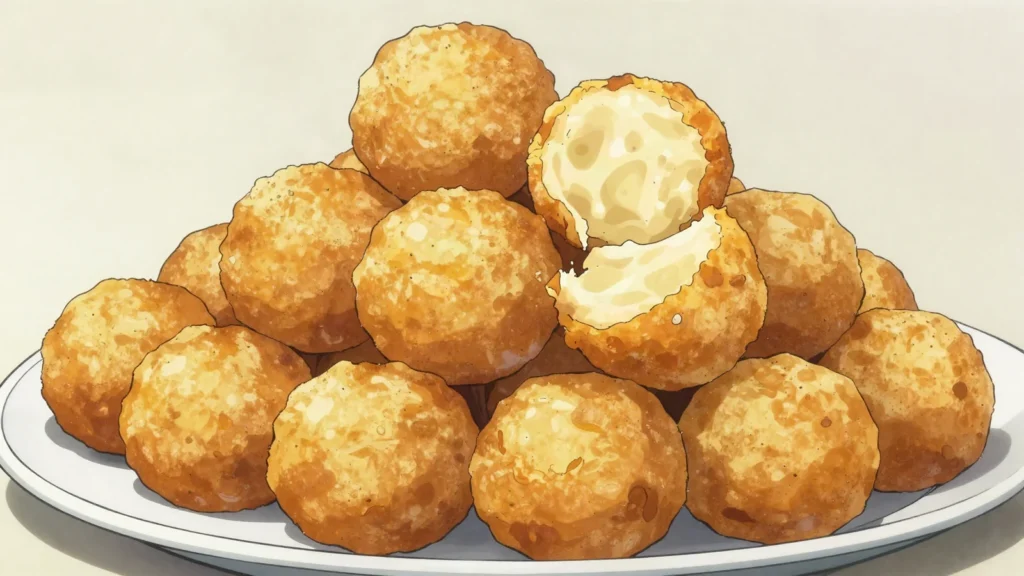
Yovo doko is a snack from Benin: sweet fried dough balls sold roadside. The Gun name means white people’s dough ball, a nod to the European fried-dough recipes that inspired this sweet street snack.
How long does Yovo doko take to make?
Yovo doko takes 20 minutes plus 2 hours rising of preparation and 25 minutes of cooking. The recipe makes makes about 30. It is rated easy to make.
What can I substitute in Yovo doko?
Yes, within limits. Warm milk replaces water for a richer dough. An egg and a little melted butter both enrich the batter; neither is essential. Nutmeg is the usual spice; cinnamon, vanilla or orange zest are all used. A mashed ripe banana folded in after the rise makes them sweeter and moister. Groundnut oil is traditional for frying; any neutral high-smoke-point oil works. The sugar can be reduced considerably for a plainer version eaten with savoury food.
What is the most important thing to get right in Yovo doko?
Use a deep heavy pan or a pot. Fill it no more than one third full. Oil bubbles up sharply when batter goes in. Never leave hot oil unattended at all. Keep a well fitting lid within reach. If the oil catches fire, turn off the heat. Heat the oil to one hundred and seventy degrees. These balls are thick and need time inside.