
Ingredients
What goes into the still (artisanal production)
- raw palm sap tapped from felled oil palm or raffia palm, about 100 litres
- wild yeasts naturally present on the palm and in the collecting gourd
- a wood-fired copper or oil-drum pot still with a cooling coil run through water
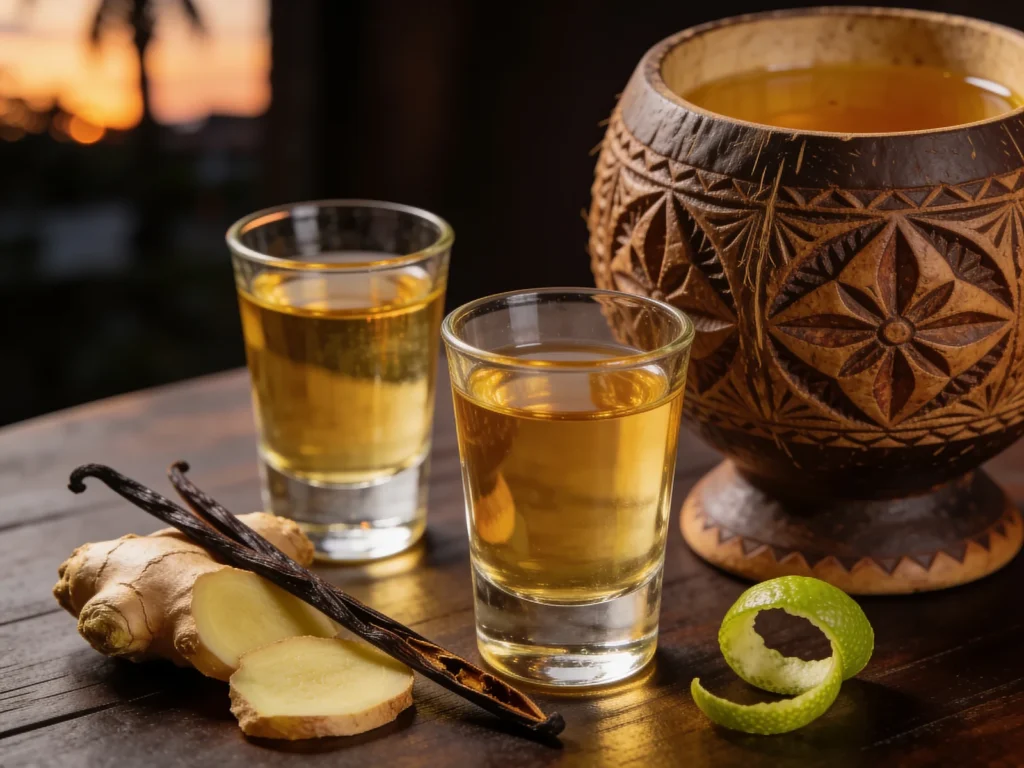
Infused sodabi, the common home preparation
- 700 mlsodabi (about 45–50% ABV)
- 3 tbsphoney
- 1vanilla pod, split
- 20 gfresh ginger, sliced
- 2cloves
- 1 stickcinnamon
- peel of 1 lime, no pith
To serve
- small shot glasses or a calabash cup
- no ice, no mixer
Directions
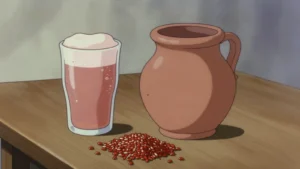
- Understand the raw material: sodabi is distilled palm wine, not a grain or cane spirit. Tappers cut the palm and collect the sap, which begins fermenting on its own within hours from the wild yeasts already on it.
- The sap is left in gourds or drums for two to five days, becoming palm wine of roughly 3–5 percent, milky and slightly sour.
- The palm wine is then distilled in artisanal wood-fired pot stills, usually made from oil drums with a copper coil condenser run through a water bath.
- The distiller cuts the run by taste and by feel: the first spirit off the still is discarded, the middle heart is collected at roughly 45–55 percent, and the weak tails are set aside for redistillation. Getting these cuts wrong is why badly made sodabi can be dangerous.
- The drink is named for the Sodabi brothers of Abomey, who are credited with bringing distilling technique back to Dahomey after serving in France in the First World War, around 1930.
- To infuse a bottle at home, put the honey, vanilla, ginger, cloves, cinnamon and lime peel into a clean jar with the sodabi, seal, and leave in a dark cupboard 7–14 days, shaking daily.
- Strain through muslin into a bottle. The result is amber, sweetly spiced and much softer than the raw spirit.
- Serve at room temperature in small glasses, neat. In Benin it is poured for guests, drunk at weddings and funerals, and offered as a libation in vodun ceremony — the first measure is traditionally tipped onto the ground for the ancestors before anyone drinks.
Technique
- Do not attempt to distil this at home. Unlicensed distilling is illegal in most countries, and improperly cut spirit carries a genuine risk of methanol poisoning — the reason Benin has periodically tried to regulate artisanal sodabi production.
- Quality varies enormously between producers. Good sodabi is clean, faintly fruity and smells of the palm; harsh, solvent-smelling sodabi has been badly cut and should not be drunk.
- Sodabi is culturally central, not merely alcoholic: it functions in vodun practice as the drink shared between the living and the ancestors, and refusing a poured measure can be read as an insult.
- Tapping for sodabi generally kills the palm, which is why the drink has an ambivalent economic reputation in producing regions.
Substitutions
- Sodabi is rarely exported. A clean unaged cane spirit such as a rhum agricole blanc or a good cachaça is the nearest widely available approximation for the infusions.
- Honey can be replaced with 3 tbsp of palm sugar syrup, which is closer to the local sweetener.
Variations
- Sodabi infused with baobab fruit, tamarind or hibiscus, sold in bottles along the Cotonou-Porto Novo road.
- A premium filtered and bottled sodabi is now produced commercially in Benin and served as a sipping spirit.
History
Benin’s national spirit, distilled from palm wine and poured as libation in Vodun ceremony; it is named after the man credited with introducing distillation.
Frequently asked questions
What is Sodabi?
Sodabi is a wine & spirit from Benin: artisanal palm liquor born in Benin, poured at ceremonies. Benin’s national spirit, distilled from palm wine and poured as libation in Vodun ceremony; it is named after the man credited with introducing distillation.
How long does Sodabi take to make?
Sodabi takes 10 min of preparation and 3–5 days fermenting, then distilling of cooking. The recipe makes 1 bottle to serve many, plus 1 serve. It is rated hard to make.
What can I substitute in Sodabi?
Yes, within limits. Sodabi is rarely exported. A clean unaged cane spirit such as a rhum agricole blanc or a good cachaça is the nearest widely available approximation for the infusions. Honey can be replaced with 3 tbsp of palm sugar syrup, which is closer to the local sweetener.
What is the most important thing to get right in Sodabi?
Do not attempt to distil this at home. Unlicensed distilling is illegal in most countries, and improperly cut spirit carries a genuine risk of methanol poisoning — the reason Benin has periodically tried to regulate artisanal sodabi production.