
Ingredients
The meat
- 1garrobo
- black spiny-tailed iguana
- cleaned and jointed
- or 1 kg rabbit
- or free-range chicken
The broth
- 2onions, chopped
- 1 headof garlic, halved
- 1sweet pepper, chopped
- 3tomatoes, chopped
- 2bay leaves
- 1 teaspoonground cumin
- coriander stalks
- 2.5 litreswater
The vegetables
- 2chayotes, cubed
- 3carrots, sliced
- 2corn cobs, in rounds
- 2green plantains, in chunks
- 3potatoes, halved
To finish
- juice of 2 limes
- chopped coriander
- hot sauce, optional
- with white rice
- and tortillas
Directions
- Check your own local law before doing anything. Wash hands thoroughly after any contact with it. Use a board and knives kept only for raw meat. Wash everything in very hot soapy water afterward. Do not let it touch anything eaten raw.
- Joint the meat into serving pieces. Cut it into eight or ten pieces on the bone. Use a dedicated board and a sharp heavy knife. Wash everything thoroughly afterward. Rinse the pieces under cold running water.
- Trim away any remaining membrane or skin. Pat them dry with disposable paper. Discard that paper straight away. Boil the meat briefly and discard that water. Bring it to a boil for about five minutes. Drain it and discard that water entirely.
- Put the blanched meat in a pot with fresh water. Cover it by about five centimetres of water. Keep hot water ready to top the pot up. The meat should stay covered throughout. Add the onion, garlic, bay and coriander stalks. Leave the garlic head halved rather than peeled.
- Use the coriander stalks rather than the leaves. Keep the leaves back for finishing the bowls. Simmer the meat gently for about an hour. It should become genuinely tender in that time.
- Keep it at a bare simmer rather than a boil. Adjust the heat until it sits steadily there. Skim the foam during the first half hour. Lift it off with a spoon and discard it. Keep checking the surface as it cooks. Add the tomato and sweet pepper partway through.
- Add them about forty minutes into the cooking. Forty minutes of cooking suits them well. Add the plantain and carrot for the last forty minutes. Green plantain takes a good while to soften. Cut them into large chunks rather than small. Add the chayote, corn and potato for the last half hour. Thirty minutes cooks them right through.
- Cut the cobs into rounds about four centimetres thick. Use a heavy knife and a firm steady board. Take genuine care with that particular cutting. Season the broth with salt, pepper and cumin. Taste it carefully near the end of the cooking. A large pot of broth needs plenty of salt. Add it gradually and keep tasting as you go. A teaspoon for this quantity is about right.
- Add it along with the vegetables so it cooks in. Skim any fat from the surface before serving. Lift it off with a ladle or a shallow spoon. Leave a little, since it carries flavour. Squeeze the lime juice in off the heat. Add it gradually and taste as you go.
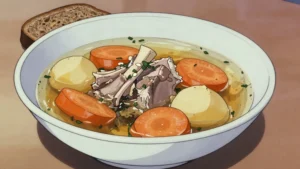
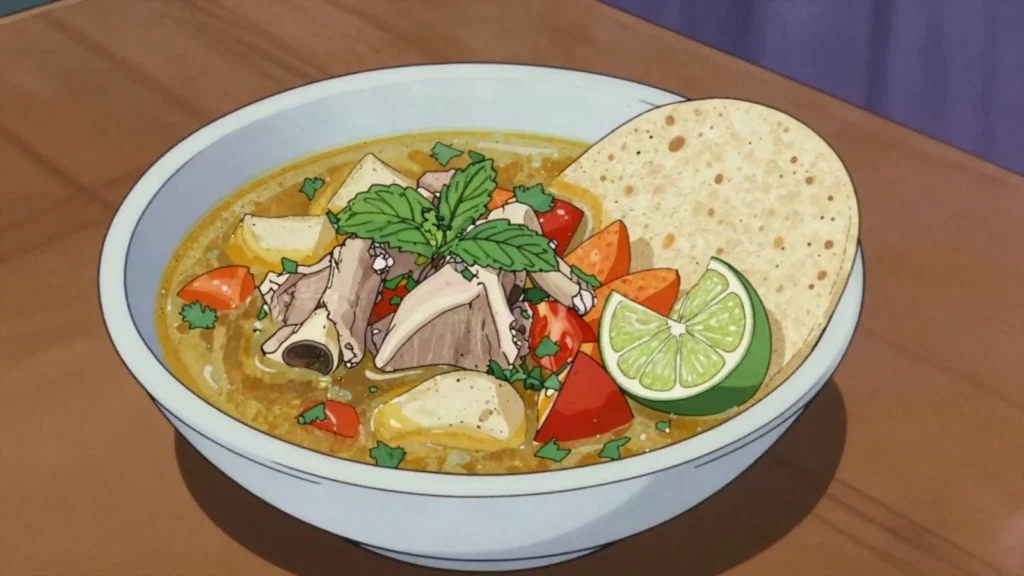
- Ladle broth, meat and vegetables into deep bowls. Add a share of each vegetable as well. Serve white rice alongside the bowls. Scatter chopped coriander over each bowl. Use the leaves kept back from the stalks.
- Add them at the last moment before serving. They wilt immediately in the hot broth. Put lime wedges and hot sauce on the table. Warm tortillas go alongside as well. It keeps three days refrigerated in a covered bowl. Add fresh lime and coriander when reheating.
Technique
- Reptiles very commonly carry salmonella, which is genuinely well documented rather than rare, on the skin and in the gut — handling raw reptile meat is a real infection route. Use a board and knives kept only for raw meat, wash hands and everything else in very hot soapy water afterward, never let it touch anything eaten raw, and cook it right through. This soup simmers well past any point of concern.
- The black spiny-tailed iguana is Ctenosaura similis, and Ctenosaura species are listed on CITES Appendix II, which regulates international trade; domestic hunting rules vary entirely by country, so check your own local law. Iguanas are hunted heavily during Lent, which coincides with their breeding season, and gravid females are taken for the eggs inside them — a genuine conservation concern documented by Central American conservation groups, with some countries introducing closed seasons. The atlas records the dish as it is genuinely made and records the conservation situation accurately; both are true at once, and it does not encourage hunting iguanas anywhere.
- The soup has a local reputation as a restorative tonic with various health claims attached. The atlas records that as the traditional framing without endorsing any of it as fact.
Substitutions
- Rabbit is the closest substitute in texture and a free-range hen also works reasonably well; both give a genuinely good soup by this same method, and the atlas offers them as honest alternatives.
- Iguana eggs are eaten in some traditional versions, taken from gravid females in the season — exactly the practice raising conservation concern. The atlas records that without giving a method for it. Iguana was historically treated as a Lenten food not counted as meat in local practice, which the atlas records as folk classification rather than doctrine.
Variations
- Blanch the meat for five minutes and discard that water with its grey scum before building the soup — it gives a far cleaner broth. Iguana is lean, pale and firm, often compared to chicken but carrying more sinew, so long slow simmering is what it genuinely needs.
- Add the vegetables in stages: tomato and sweet pepper about forty minutes in, plantain and carrot for the last forty minutes, and chayote, corn and potato for the last thirty. Cut everything into large chunks, and take real care cutting the corn cobs into rounds since they are hard and the knife can slip.
- Squeeze the lime in off the heat rather than during cooking: boiled lime juice goes dull and slightly bitter, while lime added off the heat stays sharp and lifts the whole heavy soup. Keep it at a bare simmer throughout, since hard boiling makes the broth cloudy and the meat stringy.
History
Eaten in the dry season and Lent in Nicaragua’s Pacific region; the iguana is hunted seasonally and the soup has a reputation as a tonic.
Frequently asked questions
What is Sopa de garrobo?
Sopa de garrobo is a soup & stew from Nicaragua: soup of black spiny-tailed iguana with vegetables and lime. Eaten in the dry season and Lent in Nicaragua’s Pacific region; the iguana is hunted seasonally and the soup has a reputation as a tonic.
How long does Sopa de garrobo take to make?
Sopa de garrobo takes 30 minutes of preparation and 1 hour 30 minutes of cooking. The recipe makes serves 6. It is rated medium to make.
What can I substitute in Sopa de garrobo?
Yes, within limits. Rabbit is the closest substitute in texture and a free-range hen also works reasonably well; both give a genuinely good soup by this same method, and the atlas offers them as honest alternatives. Iguana eggs are eaten in some traditional versions, taken from gravid females in the season — exactly the practice raising conservation concern. The atlas records that without giving a method for it. Iguana was historically treated as a Lenten food not counted as meat in local practice, which the atlas records as folk classification rather than doctrine.
What is the most important thing to get right in Sopa de garrobo?
Check your own local law before doing anything. Wash hands thoroughly after any contact with it. Use a board and knives kept only for raw meat. Wash everything in very hot soapy water afterward. Do not let it touch anything eaten raw.