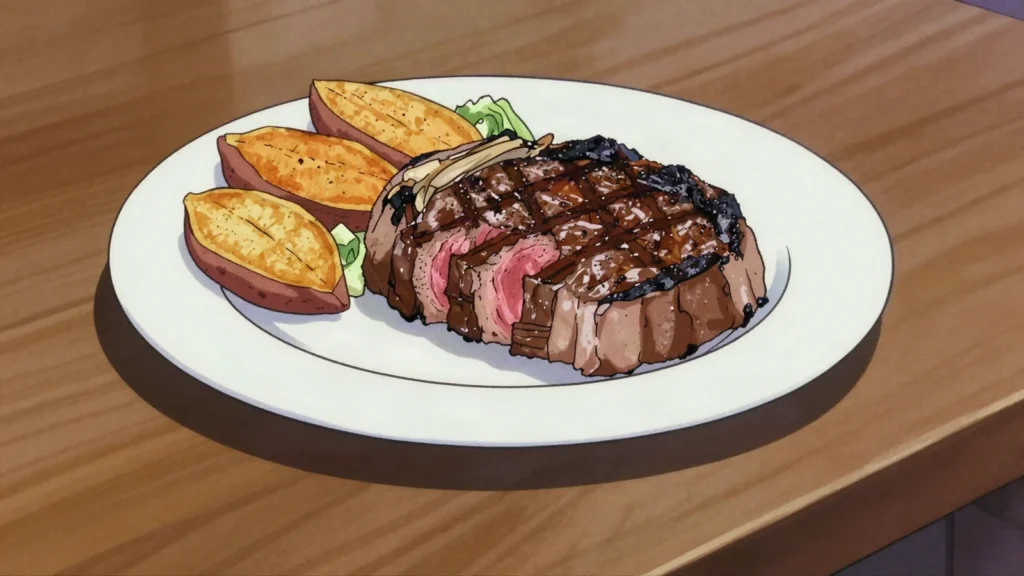

Ingredients
The beef
- 4steaks
- sirloin or rump
- about 250 g each
- grass-fed, about 2 cm thick
- salt and black pepper
To cook
- 2 tablespoonsoil
- with a high smoke point
- a knob of butter
- optional
- 2garlic cloves, bruised
- a sprig of thyme
Sometimes served with
- a squeeze of lime
- chopped chilli
- soy sauce
- island tomato salad
To serve
- rice or root vegetables
- island greens
- at a family meal
Directions
- Cook it less than you would grain-fed. Well done makes it genuinely tough. Take it off earlier than feels right. The steak keeps cooking after it comes off. Rest it about as long as it cooked. Five to eight minutes is usual.
- Cover it over loosely with foil. Do not wrap it tightly at all. Take it out an hour beforehand. Cold meat cooks very unevenly.
- Take the steaks out an hour early. Let them come to room temperature. Cover them loosely while they sit. Pat the steaks completely dry. Steam prevents browning entirely. Pat them dry with kitchen paper. Season them generously with salt.
- Season just before they go in the pan. Or season them a full hour ahead. Salt draws moisture to the surface. Given minutes it just sits there wet. Heat a heavy pan until genuinely hot. It should be smoking very slightly.
- Use an oil with a high smoke point. Use a neutral oil for it instead. Lay the steaks in the hot pan. Lay them in away from yourself. That stops hot oil splashing back. Turn them over once with tongs. Use tongs rather than a metal fork. Add butter, garlic and thyme near the end. Add them in the last minute only. Butter burns quickly at high heat.
- Spoon it over repeatedly for a minute. Judging it takes a proper check. Press the steak with a finger. Rare feels soft and quite yielding. Take it off a few degrees below target. Move the steaks to a warm plate. Rest them for five to eight minutes. Cover them over loosely with foil. The steak stays perfectly warm.
- Pour them over before serving. Do not throw those juices away. Slice against the grain if you slice it. Cut across them rather than along. Serving it is always done hot. Serve it with rice or root vegetables. Leftovers keep two days refrigerated. Slice cold steak thinly for salads.
Technique
- Grass-fed beef has far less marbling than grain-fed, and that intramuscular fat is what keeps a steak moist — so lean beef dries out and toughens very quickly. Cook it less than you would grain-fed, aim for medium rare, and take it off earlier than feels right since it carries over several degrees as it rests.
- Rest the steak about as long as it cooked, five to eight minutes, covered loosely with foil so the juices redistribute — cutting straight away floods the board and dries the meat. Loose rather than tight foil, since tight foil traps steam and softens the crust.
- Whole cuts of beef can be served pink because bacteria live on the surface only and searing deals with them, which is why steak differs from mince — mincing spreads surface bacteria right through. Vulnerable people, including anyone pregnant, very young or with low immunity, should still have it well done.
Substitutions
- Season either just before the pan or a full hour ahead, since the middle timing is worst: salt draws moisture to the surface, and given an hour it is reabsorbed, but given minutes it just sits there wet and prevents browning.
- Butter, bruised garlic and thyme added in the last minute and spooned over as they foam flavours and browns the surface — but butter burns quickly at high heat, and garlic must be bruised rather than chopped since chopped garlic burns immediately.
Variations
- Pat the steaks completely dry and get a heavy pan genuinely hot and slightly smoking: surface moisture becomes steam, which prevents browning entirely, and a thin or cool pan lets the meat stew. Use a neutral oil with a high smoke point, since olive oil burns bitter at this heat.
- Do not move the steaks at all at first — they stick until a crust forms and release themselves when ready — and turn them with tongs rather than a fork, which pierces and releases the juices.
- Cattle were grazed under colonial coconut plantations, keeping the undergrowth down while the palms gave copra, and the herds expanded after American forces left Espiritu Santo in 1945; Vanuatu beef is now genuinely exported and valued as grass-fed.
History
Cattle grazed under colonial coconut plantations multiplied after American forces left Espiritu Santo in 1945, and beef is now a Vanuatu export.
Frequently asked questions
What is Santo Beef?
Santo Beef is a main from Vanuatu: grass-fed steak from Espiritu Santo cattle, lean and cheap by island standards. Cattle grazed under colonial coconut plantations multiplied after American forces left Espiritu Santo in 1945, and beef is now a Vanuatu export.
How long does Santo Beef take to make?
Santo Beef takes 20 minutes plus resting of preparation and 15 minutes of cooking. The recipe makes serves 4. It is rated easy to make.
What can I substitute in Santo Beef?
Yes, within limits. Season either just before the pan or a full hour ahead, since the middle timing is worst: salt draws moisture to the surface, and given an hour it is reabsorbed, but given minutes it just sits there wet and prevents browning. Butter, bruised garlic and thyme added in the last minute and spooned over as they foam flavours and browns the surface — but butter burns quickly at high heat, and garlic must be bruised rather than chopped since chopped garlic burns immediately.
What is the most important thing to get right in Santo Beef?
Cover it over loosely with foil. Do not wrap it tightly at all. Take it out an hour beforehand. Cold meat cooks very unevenly.