
Ingredients
Dough
- 400 gplain flour
- 60 gfine cornmeal or semolina
- 7 gdried yeast
- 1 tspsugar
- 2 tspsalt
- 100 gbutter, melted, or 80 ml oil
- about 280 ml warm water
Cheese
- 500 glow-moisture mozzarella, in slices
Sauce
- 800 gtinned plum tomatoes, hand crushed and drained
- 3 clovesgarlic
- 1 tspdried oregano
- 1 tspsugar
- 2 tbspolive oil
- salt
- a few basil leaves
Sometimes
- Italian sausage, in patties
- green pepper, onion, mushroom
To finish
- grated parmesan
Equipment
- a deep round cake tin or a proper deep-dish pan, about 25 cm
Directions
- Mix the flour, cornmeal, yeast, sugar and salt, then add the melted butter and warm water. Knead for eight minutes until smooth, though it does not need the development a bread dough would.
- Let it rise until roughly doubled, about an hour and a half. After the first rise, roll the dough out, spread it with soft butter, roll it into a log, then coil it and let it rest. Use a deep round tin at least five centimetres deep. Oil it generously, including the sides, which is what fries the crust as it bakes.
- Press the dough into the pan and up the sides to the full depth. Press it evenly, since a thick patch at the corner stays raw. Let it rest for fifteen minutes if it springs back, then press it again. Use low-moisture mozzarella in slices rather than grated.
- Lay the slices to cover the base completely and slightly up the sides. Now the sausage, if you use it. Press it thin so it cooks through, and it goes in raw since the long bake cooks it. Now the sauce, and the crucial rule about it.
- Drain the tomatoes thoroughly and crush them by hand rather than blending. Hand-crushed tomatoes give the chunky texture that deep-dish sauce should have, and a smooth blended sauce is wrong for it. Drain the tomatoes in a sieve and press them, and use the juice for something else. The sauce is generally used raw or barely cooked, since it cooks for forty minutes in the oven.
- Spread the drained crushed tomato over the cheese and any toppings. Scatter grated parmesan over the top. Now baking it in a very hot oven. Bake at 220°C for thirty to forty minutes. It is done when the crust is deep golden brown at the edges and the sauce is bubbling.
- Check the crust by lifting an edge with a knife: it should be firm and browned underneath, not pale and soft. Let it stand for ten to fifteen minutes before cutting. Cut immediately, the molten cheese runs out and the slice collapses entirely. That rest lets it set enough to hold together on the plate. Cut it into wedges and lift them out with a wide spatula.
Technique
- The cheese goes under the sauce so it does not burn during the long bake.
- The restaurant and date are certain; the individual inventor is disputed.
- Drain the tomatoes thoroughly, since excess water makes the crust soggy.
Substitutions
- A deep cake tin in place of a proper deep-dish pan.
- Semolina in place of cornmeal in the dough.
Variations
- Stuffed pizza, with a second layer of dough under the sauce.
- With Italian sausage laid as a flat patty.
- Made with a laminated buttered crust.
History
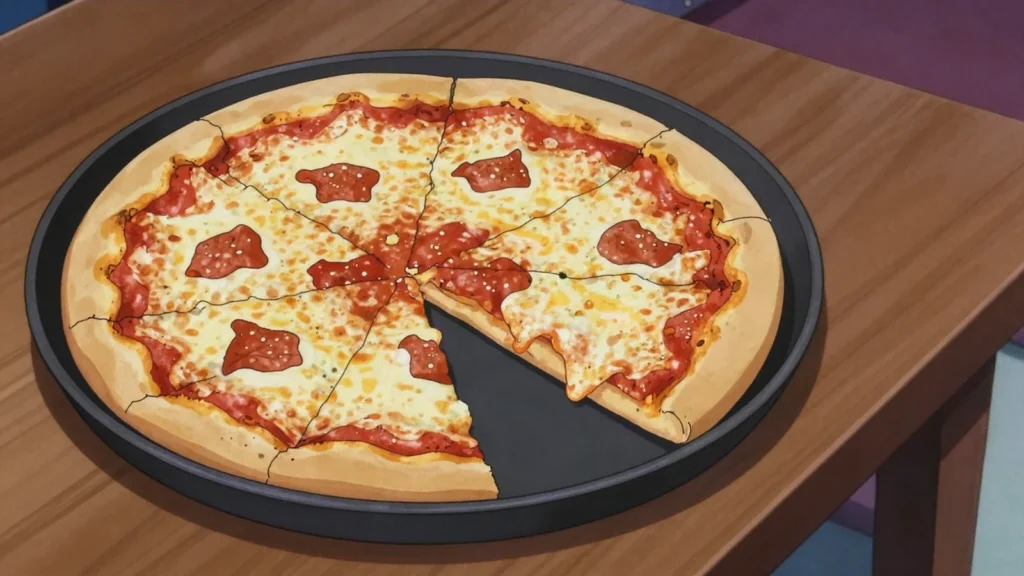
A thick-crust pizza, baked in a deep, round steel pan with the cheese layered beneath the tomato sauce rather than on top, developed in Chicago in the 1940s, generally credited to Pizzeria Uno, a Chicago restaurant that developed the dish as a heartier, more substantial variation distinct from the thin-crust pizza traditions found elsewhere in the United States and in Italy. Its distinctive inverted layering, with cheese placed directly on the crust and sauce spooned on top to prevent the crust from becoming soggy during its longer baking time, reflects a specifically Chicago culinary innovation developed to accommodate the dish’s much greater thickness and correspondingly extended cooking time. Chicago deep-dish pizza remains closely and specifically associated with Chicago’s distinct regional culinary identity within the United States.
Frequently asked questions
What is Chicago deep-dish pizza?
Chicago deep-dish pizza is a main from United States: tall buttery crust layered with cheese and chunky tomato. A thick-crust pizza, baked in a deep, round steel pan with the cheese layered beneath the tomato sauce rather than on top, developed in Chicago in the 1940s, generally credited to Pizzeria Uno, a Chicago restaurant that developed the dish as a heartier, more substantial variation distinct from the thin-crust pizza traditions found elsewhere in the United States and in Italy. Its distinctive inverted layering, with cheese placed directly on the crust and sauce spooned on top to prevent the crust from becoming soggy during its longer baking time, reflects a specifically Chicago culinary innovation developed to accommodate the dish’s much greater thickness and correspondingly extended cooking time. Chicago deep-dish pizza remains closely and specifically associated with Chicago’s distinct regional culinary identity within the United States.
How long does Chicago deep-dish pizza take to make?
Chicago deep-dish pizza takes 40 min plus 2 hr rising of preparation and 40 min of cooking. The recipe makes 1 large pizza. It is rated hard to make.
What can I substitute in Chicago deep-dish pizza?
Yes, within limits. A deep cake tin in place of a proper deep-dish pan. Semolina in place of cornmeal in the dough.
What is the most important thing to get right in Chicago deep-dish pizza?
Press the dough into the pan and up the sides to the full depth. Press it evenly, since a thick patch at the corner stays raw. Let it rest for fifteen minutes if it springs back, then press it again. Use low-moisture mozzarella in slices rather than grated.