
Ingredients
The chillies
- 15red chillies
- fresh, stems removed
- or a mix of red and bird’s eye
- to taste
The belacan
- 2 tablespoonsbelacan
- fermented shrimp paste
- in a block
- toasted, see the notes
To finish
- juice of 2 limes
- or calamansi
- 1 teaspoonsugar
- 1 teaspoonsalt
- or to taste
Sometimes added
- 3shallots
- 2garlic cloves
- a little tamarind
Directions
- Salt and time break the shrimp down. Belacan must be toasted before use. Heat drives off the harshest notes. It lingers for hours afterward. Use an extractor fan if you have one. Do not be put off by the process.
- Wash with soap and plenty of water. Pounding also splashes it about. Work in a well ventilated space. Do not lean out over the mortar. Make only small quantities of it. Cut the block into small pieces. Cut it with a heavy sharp knife. About a centimetre across is right. Wrap the pieces up in kitchen foil. Fold the foil into a flat packet. Seal the edges reasonably well.
- Put the packet in a dry hot pan. Give it about three minutes a side. Press it down with a flat spatula. It should smell strongly through the foil. Toast it in a dry pan directly. Break it up as it heats through. Give it about four minutes total. Take it off as soon as it crumbles. Pull the stems off the chillies.
- Pull the green stems right off. Leave them in for a hot sambal. Remove them all for a milder one. Adjust the ratio to your taste. Chop all the chillies roughly. Whole chillies take far longer. Chop them into short even lengths.
- Put the chillies in a large mortar. Add a good pinch of salt to them. Salt acts as an abrasive here. It helps break the chillies down. Add the salt right at the start. Pound the chillies into a coarse paste. Use a firm downward pounding motion. Grind against the sides as you go. Work right around the whole mortar. It takes several minutes of work.
- Crumble the toasted belacan in. Crumble it between your fingers. It should break up easily now. Pound it through the chillies. Start with less of it and taste it. Pound the shallots and garlic in. Some versions use them and some do not.
- Squeeze all the lime juice in. Add the lime in right at the end. Stir it right through thoroughly. Stir a little sugar into all of it. It should not taste sweet at all. Taste it and then adjust the salt.
- Taste before adding any more salt. It often needs very little indeed. Taste a tiny amount at a time. This relish is genuinely very hot. Taste a fingertip rather than a spoonful. Have rice or water ready to hand. Put it in a small bowl on the table. People take a little onto their plate. Make it fresh wherever you can.
Technique
- Belacan is made entirely from fermented shrimp and is invisible in the finished relish, which looks like a plain chilli paste sitting on the table for everyone — say clearly what is in it, since shellfish allergy can be severe.
- Belacan must be toasted before use, since raw it tastes harsh and flat where toasting makes it nutty and deeply aromatic and dries it to a crumbly form that pounds better. Toasting it smells extremely strong, fills the house and lingers for hours — open every window, use an extractor, or toast it outdoors. Wrapping it in a foil packet contains most of the smell while it still toasts perfectly inside. The finished sambal smells far milder, so do not be put off by the process.
- Fifteen chillies is a lot of capsaicin, which transfers readily to hands and then to eyes and skin, and pounding also releases it into the air where it irritates eyes and throat. Wear gloves, work in a ventilated space, do not lean over the mortar, and wash with soap and plenty of water since water alone does not remove it.
Substitutions
- A blender works acceptably if pulsed rather than run, which keeps some texture; pounding in a mortar crushes rather than chops, releasing far more oil and aroma and giving the coarse rough texture that is characteristic.
- Shallots and garlic pounded in add sweetness and body and mellow the raw chilli; some versions use them and some do not, the plain version being chilli and belacan alone. Tamarind, lemongrass and torch ginger all appear in regional variations.
Variations
- Toast until the belacan is dry and crumbles easily rather than staying soft and sticky, but never until blackened — burnt belacan is acrid and bitter with no rescuing it.
- Add a pinch of salt to the mortar at the start, which acts as an abrasive to help break the chillies down as well as seasoning; chop the chillies roughly first, since whole ones take far longer to pound.
- Taste a fingertip rather than a spoonful, since this is genuinely very hot and builds as you keep tasting, and have rice or water to hand. Taste before adding any salt at all, since belacan is already extremely salty and it often needs very little.
History
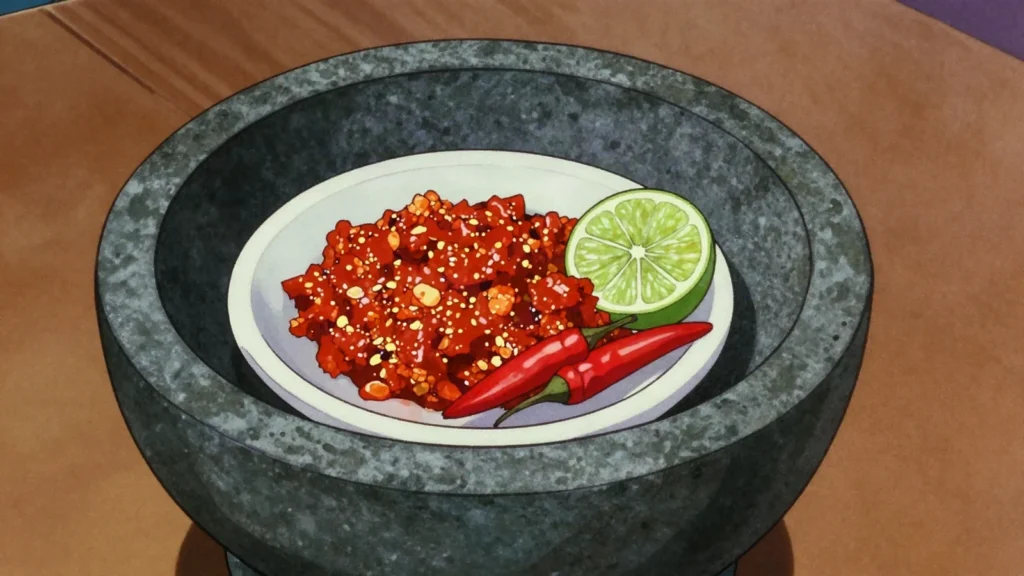
Chillies pounded with toasted fermented shrimp paste and lime juice, the default relish on a Malay table.
Frequently asked questions
What is Sambal Belacan?
Sambal Belacan is a sauce & condiment from Malaysia: pounded chili and toasted shrimp-paste relish with lime. Chillies pounded with toasted fermented shrimp paste and lime juice, the default relish on a Malay table.
How long does Sambal Belacan take to make?
Sambal Belacan takes 20 minutes of preparation and 10 minutes of cooking. The recipe makes about 200 g. It is rated medium to make.
What can I substitute in Sambal Belacan?
Yes, within limits. A blender works acceptably if pulsed rather than run, which keeps some texture; pounding in a mortar crushes rather than chops, releasing far more oil and aroma and giving the coarse rough texture that is characteristic. Shallots and garlic pounded in add sweetness and body and mellow the raw chilli; some versions use them and some do not, the plain version being chilli and belacan alone. Tamarind, lemongrass and torch ginger all appear in regional variations.
What is the most important thing to get right in Sambal Belacan?
Salt and time break the shrimp down. Belacan must be toasted before use. Heat drives off the harshest notes. It lingers for hours afterward. Use an extractor fan if you have one. Do not be put off by the process.