
Ingredients
The dough
- 500 gplain flour
- 200 ghoney
- or golden syrup
- 150 gsugar
- 150 gbutter
- 1egg
- 1 teaspoonbicarbonate of soda
- a pinch of salt
The spice mix
- 2 teaspoonsground cinnamon
- 1 teaspoonground ginger
- 1 teaspoonground cloves
- 1 teaspoonground cardamom
- 1/2 teaspoonground black pepper
- 1/2 teaspoonground nutmeg
- grated zest of 1 orange
The icing
- 1egg white
- about 200 g icing sugar
- a few drops of lemon juice
To bake
- a hot oven
- lined trays
- cutters
Directions
- Use pasteurised white if any will eat it. Do not substitute baking powder. Warm the honey, sugar and butter together. Do not let it come up to a boil. Warm it only until it is smooth. Stir all the spices into the warm mixture. Warm honey draws out the spice aroma. Let the mixture cool considerably. Hot mixture scrambles the egg.
- Let it cool right down to just warm. Mixing the dry is the next step. Put the flour in a large bowl. Add the bicarbonate and the salt. Add the grated orange zest to them.
- Whisk them together thoroughly. The bicarbonate must be evenly spread. Whisk the dry mixture properly. Beat the egg into the cooled honey. Pour that into the flour mixture. Bring it together into a dough. It is a soft sticky dough at first.
- Knead it just until it turns smooth. Do not overwork the dough at all. Wrap the dough well and refrigerate it. Rest it as long as you can manage. Wrap it tightly so it does not dry. Keep it wrapped in the refrigerator. It keeps for weeks kept that way.
- Take out what you need at a time. Take the dough out to soften a little. Roll it out on a floured surface. Roll it about two millimetres thick. Roll it as thin as you can manage. Thin dough tears and sticks readily. Flour the whole surface generously. Work in small pieces at a time.
- Keep the rest of it refrigerated. Understanding the cold dough is worth explaining. Let it sit out for twenty minutes. Do not warm the dough in an oven. Cut shapes out with the cutters. Set them on lined baking trays.
- Leave small gaps between them. A small gap between them is enough. Heat the oven to one hundred and eighty degrees. Bake them for about seven minutes. Thin gingerbread bakes extremely fast. Set a timer and watch them bake. Judging them takes a careful look.
- Take them out of the oven slightly early. Lift them out onto a wire rack. Let all of them cool completely. They are soft straight from the oven. Whisk the egg white until frothy. Add the icing sugar gradually. Add the sugar a spoonful at a time. Whisk every addition in fully. That prevents any lumps entirely. Add lemon juice to thin it down.
- Add icing sugar to thicken it. Put the icing in a piping bag. Use a very fine piping nozzle. Let all of the icing dry completely. Give it several hours to set hard. Let it set genuinely hard first. Keep them all in a sealed tin. Layer them up with baking paper. They keep crisp in a sealed tin. Set them all out on a serving plate. They keep for many weeks sealed.
Technique
- The atlas also carries piparkūkas from Latvia, the same biscuit under a Latvian name — the two are near-identical and the names share a root, pipar meaning pepper in both. Black pepper genuinely goes into the dough in a small quantity, adding warmth rather than heat, and the name records it. Czech Pardubický perník shares the long-resting tradition; spiced honey doughs run right across Europe.
- The dough is traditionally rested for weeks and sometimes a month, which mellows and combines the spices, softens the dough and deepens the flavour. A day or two helps a great deal and a week more still; the atlas gives the shorter route while saying plainly what the tradition is. Wrap it tightly and it keeps in the refrigerator for weeks, taking out what you need.
- Royal icing uses raw egg white, which carries a small salmonella risk that drying does not remove — the icing sets hard but the egg is never cooked. Pasteurised egg white or dried albumen removes it, and should be used if anyone pregnant, very young or with low immunity will eat them.
Substitutions
- Golden syrup stands in for honey; bicarbonate of soda rather than baking powder is the raising agent, reacting with the acid in the honey to give both lift and the dark colour.
- Add lemon juice to thin the icing and icing sugar to thicken it — too thin and it runs off the biscuit, too thick and it will not pipe.
Variations
- Roll the dough about two millimetres thick, thinner than seems possible: these snap rather than bend, and that thinness is the defining feature. Work in small pieces with the rest kept cold, since thin dough tears and sticks.
- They bake in about seven minutes and honey caramelises very fast, going from done to burnt in a minute — watch them from five minutes and take them out slightly soft, since they crisp further on cooling and overbaked ones taste bitter.
- Let the mixture of warmed honey, sugar and butter cool to just warm before the egg goes in, since a hot mixture scrambles it and activates the bicarbonate early.
History
An Estonian Advent tradition baked from dough rested for weeks and decorated at the family table.
Frequently asked questions
What is Piparkoogid?
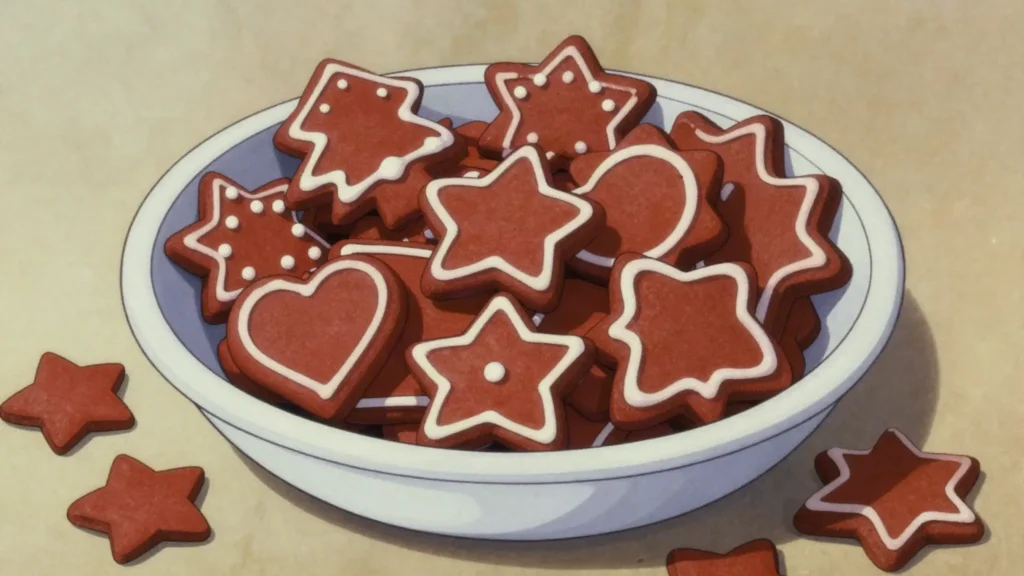
Piparkoogid is a snack from Estonia: thin spiced gingerbread cut into shapes and iced at Christmas. An Estonian Advent tradition baked from dough rested for weeks and decorated at the family table.
How long does Piparkoogid take to make?
Piparkoogid takes 40 minutes plus resting of preparation and 10 minutes of cooking. The recipe makes about 80 biscuits. It is rated medium to make.
What can I substitute in Piparkoogid?
Yes, within limits. Golden syrup stands in for honey; bicarbonate of soda rather than baking powder is the raising agent, reacting with the acid in the honey to give both lift and the dark colour. Add lemon juice to thin the icing and icing sugar to thicken it — too thin and it runs off the biscuit, too thick and it will not pipe.
What is the most important thing to get right in Piparkoogid?
Use pasteurised white if any will eat it. Do not substitute baking powder. Warm the honey, sugar and butter together. Do not let it come up to a boil. Warm it only until it is smooth. Stir all the spices into the warm mixture. Warm honey draws out the spice aroma. Let the mixture cool considerably. Hot mixture scrambles the egg.