
Ingredients
The grubs
- about 30 sago palm grubs
- larvae of the sago palm weevil
- live or freshly harvested
- or frozen, from a supplier
- see the safety notes
For grilling
- bamboo or metal skewers
- soaked if wooden
- a pinch of salt
- a squeeze of lime, optional
Sometimes added
- 1hot chilli, chopped
- 2 clovesgarlic, crushed
- a little turmeric
- a splash of oil
- papeda or sago porridge
- to serve alongside
To serve
- hot from the fire
- with sago or rice
- sambal on the side
- or eaten on their own
Directions
- Rinse them gently in clean water. Drain them well and pat them dry. They are soft and they burst easily.
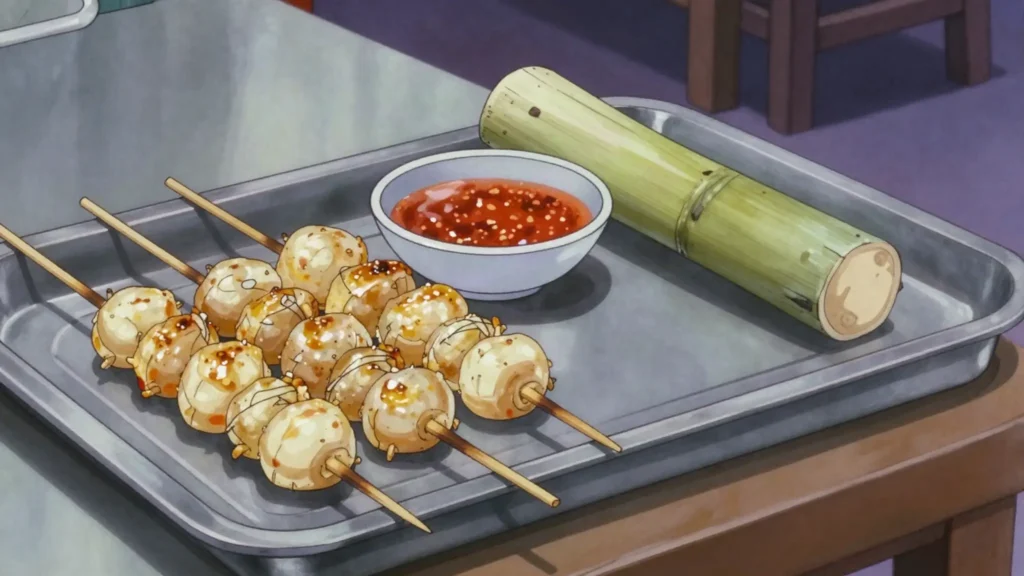
- Thread them onto skewers through the body. Soak wooden skewers first so they do not burn.
- Season them with a little salt. Both are done and neither is wrong.
- Grill them over hot coals or a griddle.
- Grill outdoors in open air only. Never use a charcoal grill indoors. Grill them for about five minutes.
- Turn them over every minute or so. They puff up and then firm as they cook.
- Cook them through but no further. Others compare them to soft cheese.
Technique
- Traditionally these grubs are eaten raw and live, straight from the split trunk, and the atlas records that accurately. It does not recommend it: the grubs live in rotting palm pith, which is not a sterile environment, and raw insects can carry bacteria and parasites that cooking reliably deals with. Local practice rests on knowing the source and the palm, which a reader elsewhere does not have.
- Edible insects share tropomyosin with crustaceans and dust mites and cross-reactivity is documented. Anyone with a shellfish allergy or a severe dust-mite allergy should ask a doctor before eating them.
- Buy from an edible-insect food supplier, never a pet shop. Pet-feed insects are not raised or handled to food-safety standards.
- Do not overcook them. The fat renders out and you are left with dry husks, and that fat is exactly where the flavour is. Five minutes over coals, turning often, is enough.
- Charcoal produces carbon monoxide, which has no colour, smell or taste and kills in enclosed spaces. Grill outdoors only; a griddle pan works indoors.
- Starch and protein come from the same felled tree. Sago pith feeds people and the weevil lays its eggs in the cut trunk, where the larvae fatten on the rotting pith. Sago is almost pure carbohydrate with very little fat or protein, and the grubs supply precisely what it lacks. The pairing is not accidental.
- The insect is Rhynchophorus ferrugineus, the red palm weevil, which is a serious invasive pest of date and coconut palms outside its native range and the target of eradication programmes. In its native range it is food. Both are true at once.
Substitutions
- Frozen sago grubs from an edible-insect supplier replace live ones and are the only realistic route outside the region.
- Other edible palm weevil larvae are eaten across West Africa, Southeast Asia and South America and cook the same way.
- Grilling over coals, pan-frying in a dry pan, or skewering and griddling all work.
- Salt alone is the plainest seasoning and probably the most common; chilli, garlic and turmeric are all used.
- Papeda, sago porridge, is the traditional accompaniment; plain rice does the same job.
Variations
- Eaten raw and live is the traditional method and remains common in Papua and the Moluccas.
- A version wrapped in leaves and cooked in embers is made in some communities.
- Skewered and grilled over coals is the most common cooked form and is sold at markets.
- Some cooks fry them in their own rendered fat with chilli and shallot into a sambal.
- Related palm weevil grubs are eaten in Nigeria, Cameroon, Thailand and across the Amazon under local names.
- A version stirred into sago porridge, so the fat enriches the starch, is made in some households.
History
Harvested from felled sago palms in Papua and the Moluccas, where sago is the staple starch and the grubs a valued protein.
Frequently asked questions
What is Ulat Sagu?
Ulat Sagu is a snack from Indonesia: live sago palm grubs eaten raw or skewered and grilled, rich and buttery. Harvested from felled sago palms in Papua and the Moluccas, where sago is the staple starch and the grubs a valued protein.
How long does Ulat Sagu take to make?
Ulat Sagu takes 15 minutes of preparation and 10 minutes of cooking. The recipe makes serves 4 as a snack. It is rated easy to make.
What can I substitute in Ulat Sagu?
Yes, within limits. Frozen sago grubs from an edible-insect supplier replace live ones and are the only realistic route outside the region. Other edible palm weevil larvae are eaten across West Africa, Southeast Asia and South America and cook the same way. Grilling over coals, pan-frying in a dry pan, or skewering and griddling all work. Salt alone is the plainest seasoning and probably the most common; chilli, garlic and turmeric are all used. Papeda, sago porridge, is the traditional accompaniment; plain rice does the same job.
What is the most important thing to get right in Ulat Sagu?
Thread them onto skewers through the body. Soak wooden skewers first so they do not burn.