
Ingredients
The chicken
- 1.5 kgchicken
- thighs and drumsticks, on the bone
- skin on or off
- 1 teaspoonsalt
- half a teaspoon black pepper
The ají sauce
- 6 tablespoonsají colorado paste
- or ají panca paste
- or 10 dried red ají chillies
- soaked and blended
- see the note
- 2large onions, finely chopped
- 6 clovesgarlic, crushed
- 1 tablespoonground cumin
- 1 teaspoondried oregano
- 4 tablespoonsoil
- or lard
- about 700 ml chicken stock
- salt, to taste
Sometimes added
- 1 teaspoonground black pepper
- 2tomatoes, chopped
- 1 tablespoonflour
- to thicken
- a pinch of sugar
To serve
- chuño, freeze-dried potato
- soaked and boiled
- or boiled potatoes
- white rice
- sarza criolla
- onion and tomato with lime
- llajua, the chilli sauce
Directions
- Remove the stems and shake out most seeds. Cover them with hot water. Soak them for thirty minutes. Blend them with a little of the soaking water. Blend to a smooth paste. Push the paste through a sieve if you want it smooth. Wash with soap, then oil, then soap again. Do not lean over the blender when opening it.
- Use thighs and drumsticks on the bone. Skin does not crisp in a wet sauce. Use a separate board and wash everything after. Season it with salt and pepper.
- Let it sit twenty minutes. Heat the oil in a heavy pot. Brown the chicken in batches. Do not crowd the pot. Brown it properly in two batches. Set it aside with its juices. Add the chopped onions to the pot. Cook them for fifteen minutes. They should soften completely and go golden. Fry the ají paste in the oil for a full five minutes.
- Stir it constantly. An unfried paste tastes harsh and thin. Keep the heat moderate and keep stirring. Add a splash of stock if it threatens to stick. Now add the dry spices. Add the cumin and oregano. Use more than feels right.
- Rub it between your palms as you add it. Return the chicken and its juices. Add the stock. Bring it to a simmer. Season with salt. Cover it and simmer for about forty minutes. The chicken should be tender and cooked through. Pierce the thickest part near the bone. The juices should run clear. Uncover it for the last fifteen minutes. Some cooks do that and some do not.
- Reduce the chillies if you need to. They freeze overnight in the cold. Soak chuño overnight in water. Then boil it for about thirty minutes. Serve the chicken with plenty of sauce. Serve white rice alongside. Serve chuño or boiled potatoes.
- Serve sarza criolla and llajua. Cooking at sea level takes less time. Add stock if it has thickened too much. Cooked chuño keeps two days refrigerated.
Technique
- Fry the ají paste in the oil for a full five minutes, stirring constantly. That removes its raw sharpness, deepens the colour and develops the flavour entirely — an unfried paste tastes harsh and thin, and this step is the difference between good and mediocre. Keep the heat moderate, since burnt chilli is bitter and unusable.
- Cook the onions a full fifteen minutes until soft and golden. They are the body of this sauce, and under-cooked onion leaves it sharp.
- Brown the chicken in two batches without crowding the pot. Crowded chicken steams instead of browning.
- Use thighs and drumsticks on the bone. Bones flavour the sauce and bone-in meat stays moist; breast dries out and goes stringy in a braise.
- Wear gloves for this quantity of chilli and do not rub your eyes afterwards. Capsaicin clings to skin for hours and plain water does not remove it — soap, then oil, then soap again. Open a window before blending, since the fumes irritate eyes and throat.
- Removing the seeds and placenta cuts the heat considerably; leaving them in makes it genuinely fierce. Picante means spicy and this dish is, but the choice is yours.
- Do not wash raw chicken. Washing splashes campylobacter around the kitchen and removes nothing from the meat.
- Uncover the pot for the last fifteen minutes. The sauce should cling to the chicken rather than pool as a thin broth.
- Use more cumin than feels right. It is a defining flavour of Bolivian meat cooking.
- Chuño is potato freeze-dried in the high Andes — frozen overnight, thawed in the sun, trodden to squeeze out the water, over several days. It keeps for years, predates the Inca empire and let Andean societies store surplus through poor harvests. Soak it overnight, changing the water, then boil it thirty minutes; it stays firm and slightly spongy with a distinctive earthy sourness that divides people.
- Bolivian ají amarillo is red and used dried, unlike the orange-yellow Peruvian chilli of the same name. That is genuinely confusing and the atlas records it rather than glossing over it.
- Rice, potato and chuño together on one plate is the standard construction rather than excess.
- Much of Bolivia sits very high — La Paz around 3,500 metres — where water boils lower and everything takes longer. Recipes written at altitude assume that, and cooking at sea level takes less time.
Substitutions
- Ají panca paste replaces ají colorado for a milder, smokier sauce.
- Dried red chillies soaked and blended replace shop-bought paste.
- Boiled potatoes replace chuño, which has no real substitute.
- Lard replaces oil and is traditional.
- Lamb, beef tongue or rabbit make the other picante dishes by the same method.
- A spoonful of slaked flour thickens the sauce if reducing is not enough.
Variations
- Picante de lengua uses beef tongue in the same sauce and is a Bolivian classic.
- Picante mixto combines chicken and tongue on one plate.
- Fricasé is the pork and hominy soup eaten the morning after.
- Sajta de pollo is a closely related chicken and ají dish.
- Chicharrón de cerdo shares the chuño and llajua accompaniments.
- Silpancho, the breaded beef with rice and potato, is the other great Cochabamba plate.
Frequently asked questions
What is Picante de pollo?
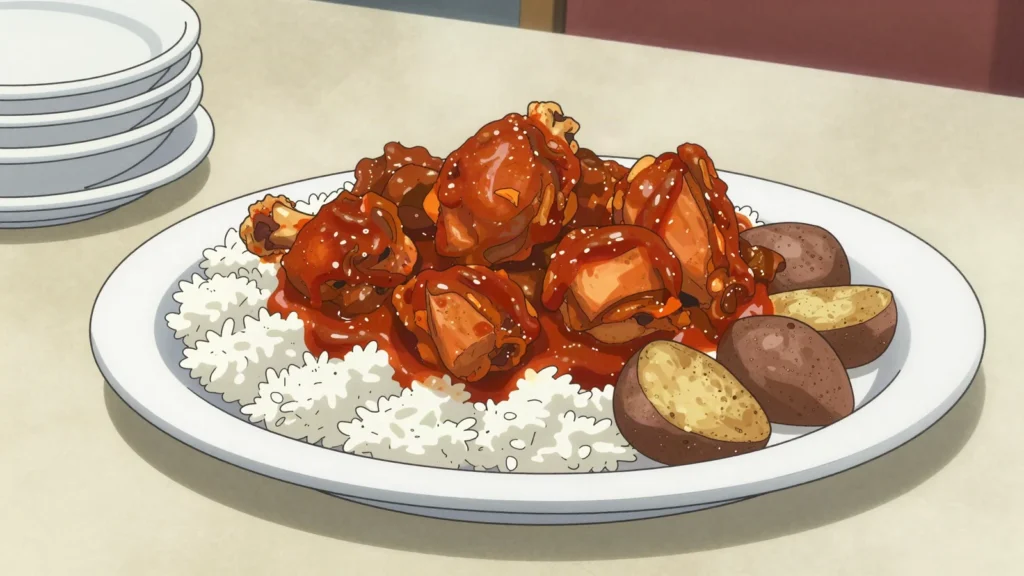
Picante de pollo is a main from Bolivia: chicken in fiery red ají sauce with chuño and rice.
How long does Picante de pollo take to make?
Picante de pollo takes 30 minutes of preparation and 1 hour of cooking. The recipe makes serves 6. It is rated medium to make.
What can I substitute in Picante de pollo?
Yes, within limits. Ají panca paste replaces ají colorado for a milder, smokier sauce. Dried red chillies soaked and blended replace shop-bought paste. Boiled potatoes replace chuño, which has no real substitute. Lard replaces oil and is traditional. Lamb, beef tongue or rabbit make the other picante dishes by the same method. A spoonful of slaked flour thickens the sauce if reducing is not enough.
What is the most important thing to get right in Picante de pollo?
Remove the stems and shake out most seeds. Cover them with hot water. Soak them for thirty minutes. Blend them with a little of the soaking water. Blend to a smooth paste. Push the paste through a sieve if you want it smooth. Wash with soap, then oil, then soap again. Do not lean over the blender when opening it.