
Ingredients
The basil
- 60 gGenovese basil leaves
- small young leaves
- washed and dried gently
The rest
- 30 gpine nuts
- 2garlic cloves
- peeled and degermed
- 60 gParmigiano Reggiano, grated
- 30 gPecorino Sardo, grated
- about 100 ml extra virgin olive oil
- Ligurian if you can
- coarse sea salt
The equipment
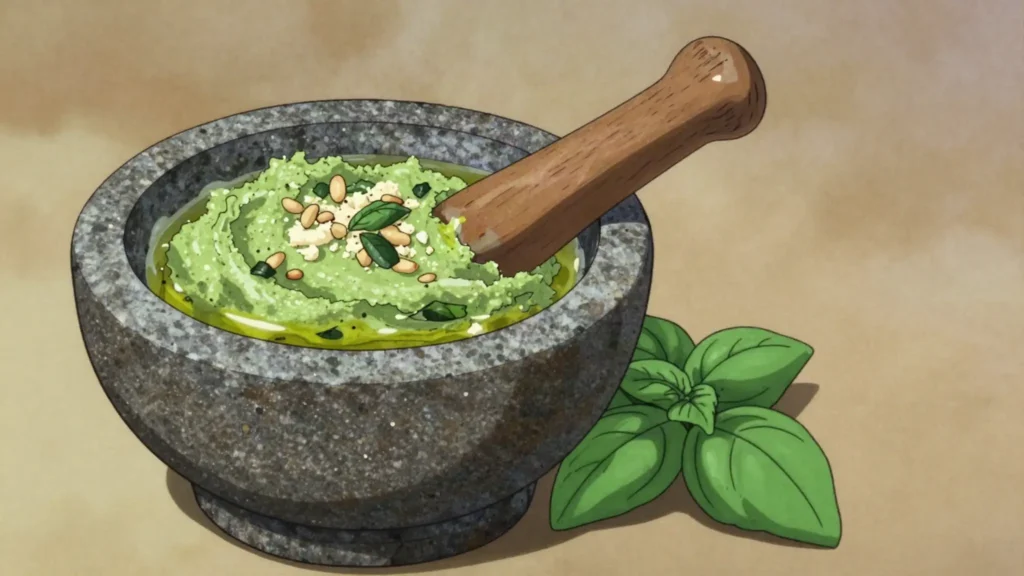
- a marble mortar
- a wooden pestle
- or a food processor, chilled
To serve
- with trofie or trenette
- and a little pasta water
- never heated
Directions
- Chill the bowl and blade first. Use whichever one of them you have. Use small and young basil leaves. Pick the smaller ones for this. Wash the basil gently in cold water. Dry it very carefully with a cloth. Remove the green germ from the centre. Lift the green shoot right out. Pesto is never cooked at all ever.
- Heat destroys the fresh basil aroma. It is stirred into hot pasta off the heat. Chill the marble mortar if you can. A cold mortar keeps the basil green. Put it in the refrigerator beforehand. It is a small step that helps. Put the garlic and salt in the mortar. Pound them both to a smooth paste. It helps break the garlic down.
- Add the pine nuts to the paste. Pound them until completely smooth. Pound them properly rather than briefly. There should be no whole pieces left. Add the basil leaves a handful at a time. Do not pound the basil straight down. Crush it against the mortar wall. Use a circular grinding motion. The basil should stay bright green. Work more gently if it darkens. Working with speed also helps here.
- Add both of the grated cheeses. Work them into the basil paste. Work it in thoroughly throughout. Add the olive oil in gradually. Stir it in using the wooden pestle. Add it in a thin steady stream. Stir rather than pounding now. Judging it takes a careful look. Add more oil if it is too thick.
- Chill the bowl and blade first. Cold metal heats the basil less. Freeze the bowl for ten minutes. Short pulses keep the sauce cool. Blend the garlic and nuts first. Cook the pasta until just done. It also helps it coat the pasta.
- Take the pan off the heat entirely. The pesto must never be cooked. Heat destroys the basil aroma at once. Take it right off the heat first. Thick pesto does not coat pasta well. Toss the drained pasta through the pesto. Toss it thoroughly in a warm bowl. Every piece should be coated green.
- Add more water if it is stiff. Serving it is done immediately. Serve it hot with extra cheese. It keeps a week in the refrigerator. Cover the surface with oil to keep it. That stops it darkening in the jar.
Technique
- The basil is crushed rather than cut, which is a genuine and tastable difference: cutting bruises and oxidises the leaves so the cut edges darken and turn bitter, where crushing releases the oils more gently and keeps the sauce greener and sweeter. In the mortar, grind the leaves against the wall in a circular motion rather than pounding straight down. A metal blade both cuts and heats the basil, which is the argument against a processor — though a processor makes perfectly good pesto if you chill the bowl and blade and pulse rather than run it.
- Pine nuts are a tree nut, tree nut allergy can be severe, and a smooth green sauce hides completely what is in it — so say clearly that nuts are in it.
- Pesto is never cooked: take the pan right off the heat before the pesto goes anywhere near it, since heat destroys the fresh basil aroma at once and darkens the sauce. Loosen it with a splash of pasta water first so it flows and coats.
Substitutions
- Genovese basil has small tender leaves without the minty note of other varieties; use small young leaves in any case, since large old ones are coarser and can taste faintly of mint.
- Parmigiano gives savoury depth and Pecorino salt and sharpness — the two together is the tradition, and one alone gives a flatter sauce.
Variations
- Split each garlic clove and lift out the green germ, which is bitter and harsh and more developed in older garlic; the coarse salt pounded with it acts as an abrasive to break it down.
- Use a mild fruity olive oil, since a peppery one overwhelms the basil, and add it gradually in a thin stream stirring rather than pounding — adding it fast makes the sauce split.
- The pine nuts go in raw rather than toasted, which would change the flavour entirely; pound them to a creamy paste with no whole pieces left, since that paste gives the sauce its body.
History
A sauce made by grinding fresh basil, pine nut, garlic, Parmesan and Pecorino cheese with olive oil, traditionally using a mortar and pestle, documented across Genoa in the Liguria region of northern Italy for many generations, with the region’s mild coastal climate and rich basil cultivation considered essential to producing the specific variety of basil traditionally used. Its name, derived directly from the Italian word for pounded or crushed, describes the sauce’s traditional preparation method, and many Ligurian cooks consider a hand-ground mortar-and-pestle pesto genuinely superior in flavour and texture to a version made with a modern blender, since the blades’ heat and speed can bruise the basil and dull its bright flavour. Pesto alla genovese remains one of Italy’s most internationally recognized and widely replicated sauces.
Frequently asked questions
What is Pesto alla genovese?
Pesto alla genovese is a sauce & condiment from Italy: basil, pine nuts, garlic, Parmigiano pounded with olive oil. A sauce made by grinding fresh basil, pine nut, garlic, Parmesan and Pecorino cheese with olive oil, traditionally using a mortar and pestle, documented across Genoa in the Liguria region of northern Italy for many generations, with the region’s mild coastal climate and rich basil cultivation considered essential to producing the specific variety of basil traditionally used. Its name, derived directly from the Italian word for pounded or crushed, describes the sauce’s traditional preparation method, and many Ligurian cooks consider a hand-ground mortar-and-pestle pesto genuinely superior in flavour and texture to a version made with a modern blender, since the blades’ heat and speed can bruise the basil and dull its bright flavour. Pesto alla genovese remains one of Italy’s most internationally recognized and widely replicated sauces.
How long does Pesto alla genovese take to make?
Pesto alla genovese takes 25 minutes of preparation and no cooking at all. The recipe makes serves 6. It is rated medium to make.
What can I substitute in Pesto alla genovese?
Yes, within limits. Genovese basil has small tender leaves without the minty note of other varieties; use small young leaves in any case, since large old ones are coarser and can taste faintly of mint. Parmigiano gives savoury depth and Pecorino salt and sharpness — the two together is the tradition, and one alone gives a flatter sauce.
What is the most important thing to get right in Pesto alla genovese?
Chill the bowl and blade first. Use whichever one of them you have. Use small and young basil leaves. Pick the smaller ones for this. Wash the basil gently in cold water. Dry it very carefully with a cloth. Remove the green germ from the centre. Lift the green shoot right out. Pesto is never cooked at all ever.