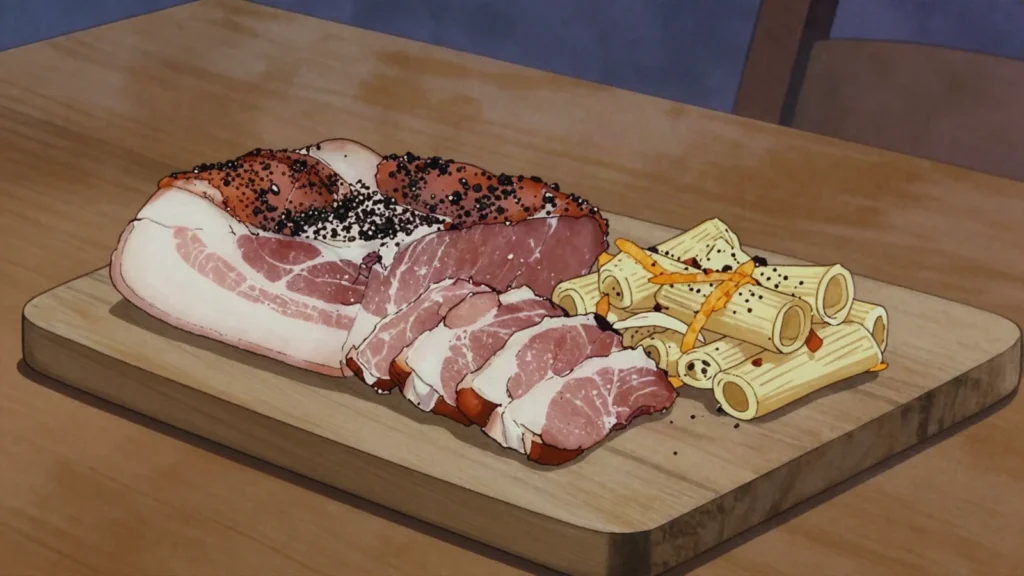

Cured pork cheek, fattier and sharper than pancetta, and the fat that carbonara, amatriciana and gricia are all built on. Nothing else renders quite the same way, which is why Roman cooks are so insistent about it.
It is a raw pork cure held at ambient temperature for months, and the cheek is a fatty cut where the salt has to reach the lean seams before anything else does.
What goes into it
- a whole pork jowl
- salt
- black pepper, in quantity
- sometimes garlic, rosemary or chilli
How it is made
The jowl is rubbed with salt and left for one to three weeks, turned and re-rubbed, then washed, coated heavily in cracked pepper and hung in a cool airy cellar. It dries for one to three months. It is never smoked and never cooked during curing — it is cut and rendered only when a dish is made.
How long it takes: one to three months of drying after the salt
How it is eaten
Cut in strips and rendered slowly, then tossed with pasta, pecorino and pepper.
History
The cured jowl of Lazio and Umbria; the Roman pastas carbonara, amatriciana and gricia are all built on its rendered fat.
Frequently asked questions
What is Guanciale?
Guanciale is a charcuterie & cured from Italy: cured pork cheek, fattier and sharper than pancetta. The cured jowl of Lazio and Umbria; the Roman pastas carbonara, amatriciana and gricia are all built on its rendered fat.
How is Guanciale made?
The jowl is rubbed with salt and left for one to three weeks, turned and re-rubbed, then washed, coated heavily in cracked pepper and hung in a cool airy cellar. It dries for one to three months. It is never smoked and never cooked during curing — it is cut and rendered only when a dish is made. It takes one to three months of drying after the salt.
Can I make Guanciale at home?
No, and the atlas gives no method for it. It is a raw pork cure held at ambient temperature for months, and the cheek is a fatty cut where the salt has to reach the lean seams before anything else does.
What goes into Guanciale?
A whole pork jowl, salt, black pepper, in quantity, sometimes garlic, rosemary or chilli.
How is Guanciale eaten?
Cut in strips and rendered slowly, then tossed with pasta, pecorino and pepper.