
Ingredients
Dough
- 500 gplain flour
- 1 tspsalt
- 60 gbutter or oil
- 1egg
- about 200 ml warm water
Filling
- 500 gwhite fish fillet, or smoked fish
- 1onion, finely chopped
- 3 clovesgarlic
- 1 bunchparsley, chopped
- 2spring onions
- 1 tbspmustard
- 1Maggi cube
- 1 tspwhite pepper
- 1chilli, chopped
- juice of 1 lime
- 2 tbspoil
Kaani, the sauce
- 4tomatoes
- 1onion
- 2scotch bonnet peppers
- 2 tbsptomato purée
- 3 tbspoil
- 1stock cube
- salt
- 200 mlwater
To fry
- oil, for deep frying
Directions
- Poach or steam the fish for 8 minutes, then flake it and remove every bone. Go through the flakes carefully with your fingers, because a bone in a sealed parcel is unpleasant and unfindable. Fry the onion, garlic and chilli in the oil until soft, then add the flaked fish. Cook it 5 minutes, then stir in the parsley, spring onion, mustard, Maggi cube, pepper and lime juice.
- Cook the filling until it is completely dry, because a wet filling makes the pastry soggy and bursts the parcel in the oil. Taste it and season hard. It should be strongly flavoured, because the pastry around it is plain.
- Spread the filling on a tray and cool it completely. For the dough, rub the butter into the flour and salt, then work in the egg and warm water into a firm dough. Knead 8 minutes until smooth, then rest it 30 minutes wrapped. The rest relaxes the dough so it rolls thin without springing back.
- Roll the dough out very thinly, about 2 mm, and cut rounds of about 12 cm. Roll it thin. A thick pastel is doughy and heavy, and the shell should be crisp and light. Put a spoonful of cooled filling on one half of each round, leaving a clear border. Brush the border with water and fold the dough over into a half moon.
- Press the edges together and seal them by crimping with a fork or by rolling the edge over on itself. Seal them thoroughly and press out any trapped air, because a parcel that opens empties into the oil. Fry the tomato purée in oil for 3 minutes, then add the blended mixture, the stock cube and water. Simmer 20 minutes until thick and the oil rises to the surface.
- Cook it until the oil separates, which is the sign the sauce is properly done and not raw. It should be hot, tangy and thick enough to spoon rather than pour. Heat the oil to 180°C (355°F) and fry the pastels a few at a time.
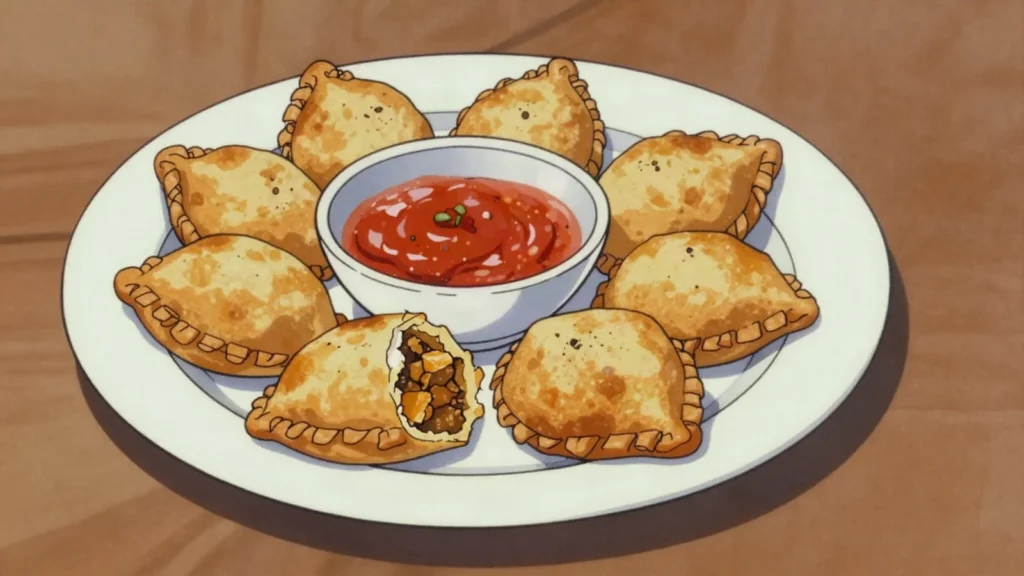
- Fry 3 to 4 minutes, turning, until deep golden and blistered. Do not crowd the pan, which drops the temperature and makes them greasy. Drain them on a rack rather than paper, which keeps them crisp. Serve hot, with the kaani spooned generously over each one at the moment of serving. They are sold by women from covered basins at Dakar street corners, kept warm and dressed to order for whoever stops.
Technique
- Fataya is the closely related Senegalese pastry, often larger and sometimes filled with meat.
- They keep several hours and are reheated in a hot oven.
- Smoked fish gives a much stronger and more traditional filling than fresh.
Substitutions
- Any firm white fish, or tinned tuna at a pinch.
- Ready-made empanada discs.
Variations
- With minced meat filling.
- Fataya, the larger version.
- Baked rather than fried.
History
Small, deep-fried pastries filled most often with spiced fish or meat, brought to Senegal through Portuguese and later broader Iberian colonial-era trade and cultural contact along the West African coast, closely related to the empanada and pastel traditions found across the Portuguese and Spanish-speaking world, adapted in Senegal with local fish, particularly common along its Atlantic coastline, and West African spicing. Its comparatively small, bite-sized format, distinct from the larger pastries and empanadas found in Latin America and Iberia, developed as a popular Senegalese street food and party snack, commonly served in large quantities at celebrations and gatherings. Pastels remain one of Senegal’s most recognized fried snack foods, sold widely from street vendors as well as prepared at home for social occasions.
Frequently asked questions
What is Pastels?
Pastels is a street food from Senegal: fried pastry parcels stuffed with spiced fish, dipped in tomato and chilli sauce. Small, deep-fried pastries filled most often with spiced fish or meat, brought to Senegal through Portuguese and later broader Iberian colonial-era trade and cultural contact along the West African coast, closely related to the empanada and pastel traditions found across the Portuguese and Spanish-speaking world, adapted in Senegal with local fish, particularly common along its Atlantic coastline, and West African spicing. Its comparatively small, bite-sized format, distinct from the larger pastries and empanadas found in Latin America and Iberia, developed as a popular Senegalese street food and party snack, commonly served in large quantities at celebrations and gatherings. Pastels remain one of Senegal’s most recognized fried snack foods, sold widely from street vendors as well as prepared at home for social occasions.
How long does Pastels take to make?
Pastels takes 45 min plus 30 min resting of preparation and 30 min of cooking. The recipe makes about 20. It is rated medium to make.
What can I substitute in Pastels?
Yes, within limits. Any firm white fish, or tinned tuna at a pinch. Ready-made empanada discs.
What is the most important thing to get right in Pastels?
Cook it until the oil separates, which is the sign the sauce is properly done and not raw. It should be hot, tangy and thick enough to spoon rather than pour. Heat the oil to 180°C (355°F) and fry the pastels a few at a time.