
Ingredients
The leaves
- 800 groselle leaves
- ngai ngai, Hibiscus sabdariffa
- picked from the stems
- or 100 g dried leaves
The pot
- 300 gsmoked fish
- soaked and flaked
- 2onions, chopped
- 4garlic cloves, crushed
- 5 tablespoonsred palm oil
- 2hot chillies, chopped
- about 300 ml water
- salt
Sometimes added
- 2 tablespoonsgroundnut paste
- a little dried shrimp
- 1stock cube
To serve
- chikwangue
- fermented cassava paste
- with grilled fish
Directions
- Heat it gently rather than fiercely. It keeps without refrigeration. Pick the leaves from the tough stems. Thick stems stay tough however long they cook. Discard the woody parts entirely. Wash the leaves in several changes of water. Fill a bowl and lift the leaves out. Repeat it until no grit settles. Stack the leaves and roll them up.
- Slice them across into fine ribbons. Cut them fairly fine for that. Rinse the smoked fish under cold water. Cover it with warm water in a bowl. Leave it for about thirty minutes. Drain the soaked fish thoroughly. Flake it and check it for bones. They do not soften in cooking at all. Heat the palm oil in a wide heavy pot.
- Warm it gently rather than fiercely. It should not smoke at any point. Add the chopped onions in to it. Cook them for a good eight minutes. Add the crushed garlic to them. Cook it for two more full minutes.
- Add the chopped chillies to the pot. Cook them for one full minute. Add the chopped leaves to the pot. Add them in batches if the pot is full. Raw leaves take up an enormous space. Add a handful, let it wilt, add more. Adding the liquid is straightforward enough.
- Add a little water to the pot. Season the pot with a little salt. Add only a little to start with. Add more later if it goes dry. Cover the pot and lower the heat. Let it cook for about thirty minutes. Stir it through every now and then. Add the flaked smoked fish to the pot.
- Let it cook for ten more minutes. It only needs to warm through and flavour. Let it cook for ten more minutes. Judging the sauce takes a look. Oil should be visible at the surface. It should not be a thin liquid.
- Taste it and adjust the salt as needed. Add more chilli if you want more heat. Taste it before adding any more. Serving it is always done hot. Spoon it out into a serving bowl. Serve chikwangue alongside it. Serve grilled fish with it as well. It keeps three days refrigerated.
Technique
- The leaves come from Hibiscus sabdariffa, the roselle plant — the same species as the hibiscus drinks, but this uses the green leaves where the atlas’s nam krachiap uses the fleshy calyx. They are quite different parts of one plant.
- The sourness is the whole point rather than incidental: palm oil and smoked fish are both rich, and a sharply sour green cuts through that richness. It should taste clearly sour and nothing should mask it.
- Red palm oil burns at a lower temperature than many oils, so warm it gently and never let it smoke — overheated palm oil loses its character and turns from orange to dull brown.
Substitutions
- Dried roselle leaves stand in out of season, using far less by weight.
- Groundnut paste loosened in hot water first is a common addition; say clearly if it has gone in, since peanut allergy can be severe.
Variations
- The leaves are often pounded in a mortar rather than chopped, which gives a softer denser sauce.
- Add the smoked fish near the end, since it is already cooked and only needs to warm through; adding it early breaks it up.
- It is eaten with chikwangue, the fermented cassava paste — a sour sauce with a slightly sour starch, which works in practice.
History
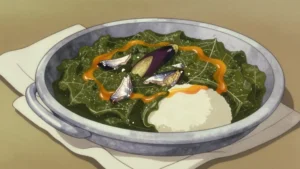
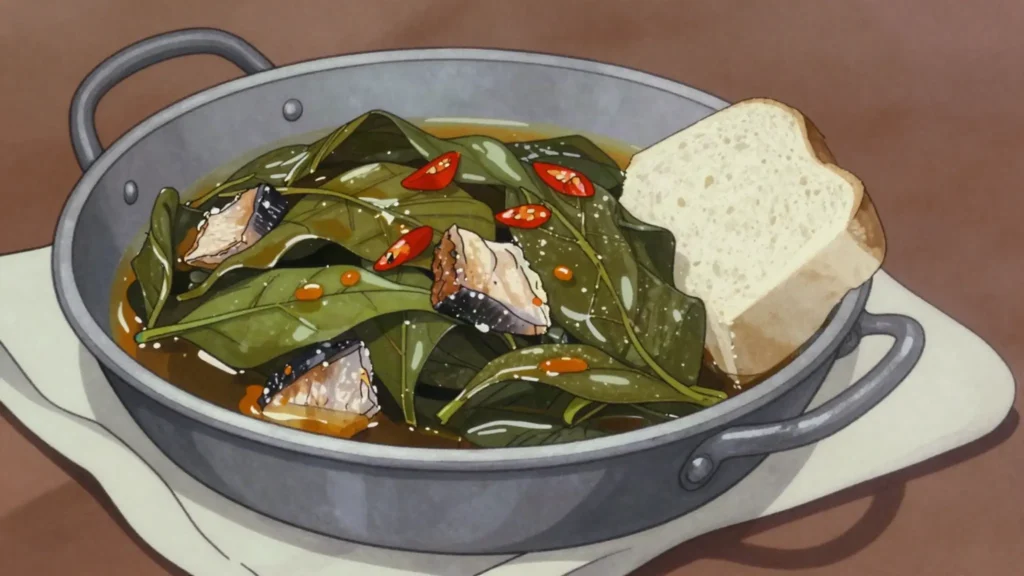
Cooked from Hibiscus sabdariffa leaves for their lemony acidity, a Kinshasa favourite eaten with chikwanga and grilled fish.
Frequently asked questions
What is Ngai ngai?
Ngai ngai is a soup & stew from DR Congo: sour hibiscus-leaf sauce simmered with smoked fish. Cooked from Hibiscus sabdariffa leaves for their lemony acidity, a Kinshasa favourite eaten with chikwanga and grilled fish.
How long does Ngai ngai take to make?
Ngai ngai takes 25 minutes of preparation and 45 minutes of cooking. The recipe makes serves 6. It is rated easy to make.
What can I substitute in Ngai ngai?
Yes, within limits. Dried roselle leaves stand in out of season, using far less by weight. Groundnut paste loosened in hot water first is a common addition; say clearly if it has gone in, since peanut allergy can be severe.
What is the most important thing to get right in Ngai ngai?
Heat it gently rather than fiercely. It keeps without refrigeration. Pick the leaves from the tough stems. Thick stems stay tough however long they cook. Discard the woody parts entirely. Wash the leaves in several changes of water. Fill a bowl and lift the leaves out. Repeat it until no grit settles. Stack the leaves and roll them up.