
Ingredients
Dough
- 300 gfine semolina
- 200 gplain flour
- 1 teaspoonsalt
- 1 teaspoonsugar
- about 320 ml warm water
To laminate
- 150 mlolive oil
- fine semolina, for dusting
Fillings
- harissa
- tinned tuna in oil, drained
- grated cheese
- sliced hard-boiled egg
- olives, chopped
To cook and serve
- a heavy griddle
- a little oil
- folded around the filling
- eaten in the hand
Directions
- Put the semolina and flour in a bowl. Add the salt and the sugar to them. Add warm water gradually as you work. Bring it together into a very soft dough. It should be soft and slightly sticky. Knead it for a good ten minutes. It should become smooth and very elastic.
- Divide the dough into even balls. Coat each one generously in oil. Set them all on an oiled tray. Cover them over and let them rest. Give them at least one full hour. Oil the work surface generously. Put one ball on the oiled surface. Press it flat with oiled hands. Work with the flats of your hands. Keep everything well oiled throughout. Stretch it until it is almost transparent.
- Brush more oil over the stretched sheet. Scatter a little fine semolina over it. The semolina keeps the layers apart. Scatter it lightly rather than thickly. Fold the sides of the sheet inwards. Set them all on an oiled tray.
- Cover them and rest them again. Give them at least twenty minutes. Press each square out with oiled hands. Work from the centre outwards. Press gently rather than forcing it. Aim for about half a centimetre thick. Make it a good hand span across. Heat a heavy griddle over a medium heat.
- Brush it with a very little oil. Medium heat is what this needs. Adjust it in between the breads. Griddling them takes a few minutes. Lay a bread on the hot griddle. Give it about two full minutes. Turn it over with a wide spatula. Give it another two full minutes.
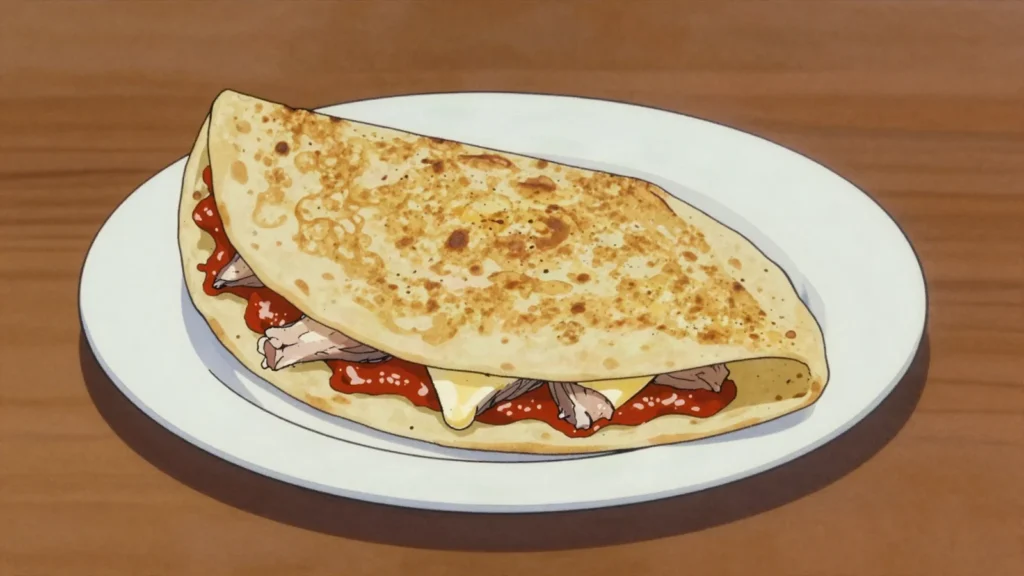
- Turn it several times as it cooks. It also stops either side burning. Use rather more oil next time. Spread harissa over one half of the bread. Harissa is hot and used sparingly. Add more if you want more heat. Flake the tuna over the harissa. Add sliced egg and chopped olives. Fold the bread over the filling.
- Press it down on top of it gently. That melts cheese if it has gone in. Wrap it in paper so that it holds. It must be eaten hot from the griddle. Warm them on a dry pan to revive them. Fill them only when you are ready to eat.
Technique
- The atlas also carries meloui from Morocco, and mlawi and meloui are the same word from the same Arabic root. Moroccan meloui is rolled into a rope and coiled into a spiral; Tunisian mlawi is folded flat into a square, stretched wider and thinner, and folded around a filling rather than eaten plain. The folding is what distinguishes them.
- The dough must be stretched almost transparent, and three things together make that possible: a very soft dough, at least an hour of rest that relaxes the gluten, and generous oiling of the dough, your hands and the work surface. Under-kneaded or unrested dough tears immediately.
- Scatter a little fine semolina over the oiled sheet before folding, which keeps the layers apart and stops them fusing; if the cooked bread does not pull apart in layers, there was too little oil.
Substitutions
- Grated cheese replaces the tuna and egg, and some stalls return the folded bread to the griddle briefly to melt it.
- Small tears in the stretched sheet are covered by the folding and are not a disaster.
Variations
- Harissa with tinned tuna is the standard filling, often with sliced egg and chopped olives.
- Tunisia has a large tuna industry and tinned tuna appears throughout its food rather than as a substitute.
- Turn it several times on the griddle rather than once, which cooks the middle evenly.
History
Sold from small griddle stalls as a fast breakfast or afternoon snack across Tunisia.
Frequently asked questions
What is Mlawi?
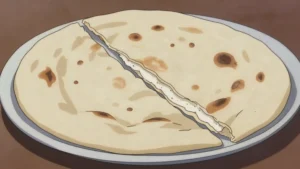
Mlawi is a bread & pastry from Tunisia: layered semolina flatbread griddled in oil and folded around harissa, tuna or cheese. Sold from small griddle stalls as a fast breakfast or afternoon snack across Tunisia.
How long does Mlawi take to make?
Mlawi takes 40 minutes plus resting of preparation and 25 minutes of cooking. The recipe makes about 8 breads. It is rated hard to make.
What can I substitute in Mlawi?
Yes, within limits. Grated cheese replaces the tuna and egg, and some stalls return the folded bread to the griddle briefly to melt it. Small tears in the stretched sheet are covered by the folding and are not a disaster.
What is the most important thing to get right in Mlawi?
Brush more oil over the stretched sheet. Scatter a little fine semolina over it. The semolina keeps the layers apart. Scatter it lightly rather than thickly. Fold the sides of the sheet inwards. Set them all on an oiled tray.