
Ingredients
Sesame paste
- 500 glight tahini, well stirred
- 1/2 teaspoonsalt
- 1 teaspoonvanilla, optional
Sugar syrup
- 500 gsugar
- 150 mlwater
- 1 tablespoonlemon juice
- or 1 tablespoon glucose
Soapwort, traditional
- 20 gdried soapwort root
- 300 mlwater
- or 2 egg whites, as a modern substitute
Sometimes added
- 100 gpistachios or almonds
- 1 teaspoonground cardamom
- cocoa powder, for a marbled version
Directions
- Work it too long and it turns oily and hard. It also helps create the layered texture. Soak the dried root in water overnight. Then simmer it gently for an hour. Strain it and discard the root. Whisk the strained liquid hard. It should foam up like egg white.
- Stir it thoroughly before measuring. It must be completely homogeneous. Warm it gently to about forty degrees. Warm tahini combines far better with hot syrup. Cold tahini seizes and goes grainy.
- Put the sugar and water in a heavy pan. Add the lemon juice or glucose. That prevents the sugar crystallising. Heat it gently until the sugar dissolves. Brush the pan sides with a wet brush. Once clear, stop stirring entirely.
- Boil the syrup up to about 120C. Too cool and the halva will never set. Keep children well away from the kitchen. Have a bowl of cold water within reach.
- Whisk the soapwort extract or egg whites to stiff peaks. Now pour the hot syrup into the foam. Pour it in a thin steady stream. Whisk hard for the whole time. The mixture becomes thick, white and glossy.
- Add the warm tahini to the meringue. Add the salt and any flavourings. Use a spatula to fold it over itself. Repeat that motion for a few minutes. The mixture goes from smooth to slightly stringy. Press it into a lined tin or a mould. Press it down firmly to remove air pockets.
- Cover it and leave it at room temperature. Give it at least twelve hours to set. Cut it with a very sharp knife. It keeps a month in an airtight container.
Technique
- Traditional halva is lightened with soapwort root extract, whose saponins whip into a stable foam, and egg white is the usual modern substitute.
- The crumbly flaky texture comes from folding and stretching the hot mixture, which draws the sugar into fine threads.
- Sesame is a recognised major food allergen and this sweet is made almost entirely of it.
Substitutions
- Egg white replaces soapwort extract and is far easier to obtain.
- Any good light tahini works, and it must be stirred thoroughly before use.
Variations
- A pistachio or almond version is sold alongside the plain one.
- A cocoa-marbled version is made in some shops.
- Similar sesame halva is made across the Middle East and the Balkans.
History
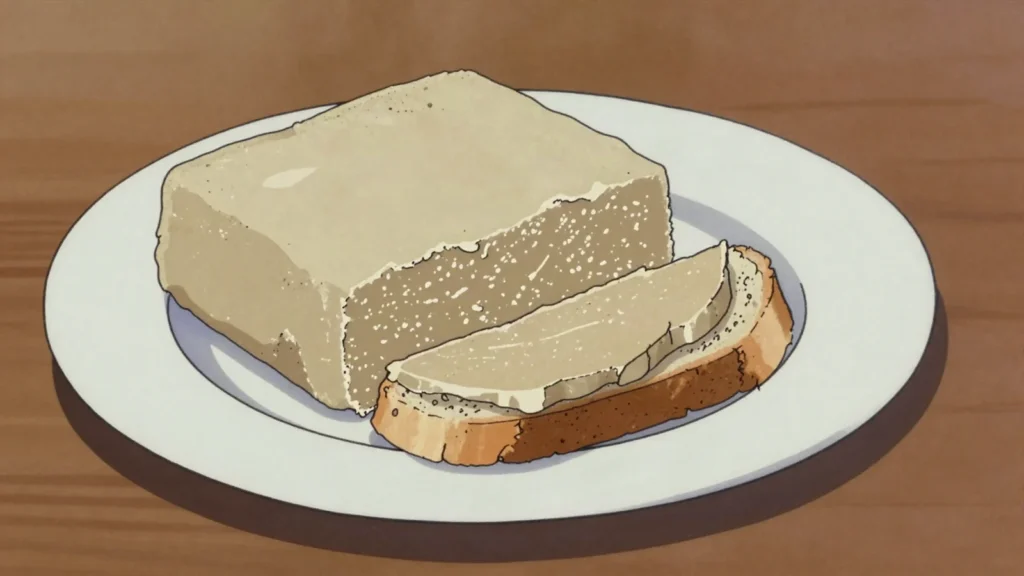
Sold by weight in Tunisian grocers and eaten as a cheap sweet with bread, especially in winter.
Frequently asked questions
What is Chamia?
Chamia is a dessert from Tunisia: crumbly sesame halva pressed into blocks and sliced onto bread. Sold by weight in Tunisian grocers and eaten as a cheap sweet with bread, especially in winter.
How long does Chamia take to make?
Chamia takes 30 minutes plus setting of preparation and 20 minutes of cooking. The recipe makes about 30 pieces. It is rated hard to make.
What can I substitute in Chamia?
Yes, within limits. Egg white replaces soapwort extract and is far easier to obtain. Any good light tahini works, and it must be stirred thoroughly before use.
What is the most important thing to get right in Chamia?
Stir it thoroughly before measuring. It must be completely homogeneous. Warm it gently to about forty degrees. Warm tahini combines far better with hot syrup. Cold tahini seizes and goes grainy.