
Ingredients
Chicken
- 1whole chicken (1.6 kg), jointed into 8, or 1.2 kg bone-in lamb shoulder
- 3 tbspghee or vegetable oil
- 2onions (300 g), finely chopped
- 6garlic cloves, minced
- 1 tbspgrated fresh ginger
Kabsa spice (baharat kabsa)
- 2 tspground black pepper
- 2 tspground coriander
- 1 tspground cumin
- 1 tspground cinnamon
- 1 tspground cardamom
- ½ tspground cloves
- ½ tspgrated nutmeg
- 1 tspturmeric or a pinch of saffron
- 1 tspdried lime powder (loomi)
The pot
- 400 gtinned chopped tomatoes, or 4 fresh tomatoes, grated
- 2 tbsptomato paste
- 3dried limes (loomi), pierced
- 3cardamom pods, 1 cinnamon stick, 3 cloves, 2 bay leaves
- 1.2 litreswater
- 2large carrots, coarsely grated
- 2 tspsalt
- 600 gaged basmati rice, rinsed and soaked 30 min
Daqoos and garnish
- 400 gtomatoes, blended
- 2garlic cloves, crushed
- 1green chilli, minced
- 1 tbspghee
- ½ tspsalt
- 60 gflaked almonds and 50 g raisins, fried in ghee
- 1 tbspchopped parsley
Directions
- Heat the ghee in a wide heavy pot and brown the chicken pieces in batches over medium-high heat, 5–6 minutes a side, until well coloured. Lift out.
- In the same fat, cook the onion 10 minutes until deep golden, then add the garlic and ginger for 1 minute.
- Stir in the tomato paste and fry 2 minutes, then add the tomatoes and the ground kabsa spices and cook 5 minutes until the mixture darkens and the ghee separates.
- Return the chicken with the whole spices, pierced dried limes, bay and the water. Bring to a boil, skim, then simmer covered 35–40 minutes until the chicken is cooked through and the broth is dark and heavily fragrant.
- Lift out the chicken and keep it warm. Measure the broth: you need 1 litre for 600 g of rice. Reduce it or top it up with hot water, then check the seasoning, which should be slightly too salty at this stage.
- Stir in the grated carrot and the drained rice, bring to a boil and cook uncovered 5 minutes until the liquid has dropped to the level of the rice and craters appear on the surface.
- Cover with a tight lid over a clean cloth, drop the heat to the lowest setting and steam 20–25 minutes without lifting the lid. The grains should be long, separate and stained amber.
- While it steams, finish the chicken: brush with ghee and grill or roast at 220°C (425°F) for 10–12 minutes until the skin is blistered and crisp. This is standard in Saudi restaurants and worth doing.
- Make the daqoos by simmering the blended tomato with garlic, chilli, ghee and salt for 10 minutes until it thickens to a pourable sauce.
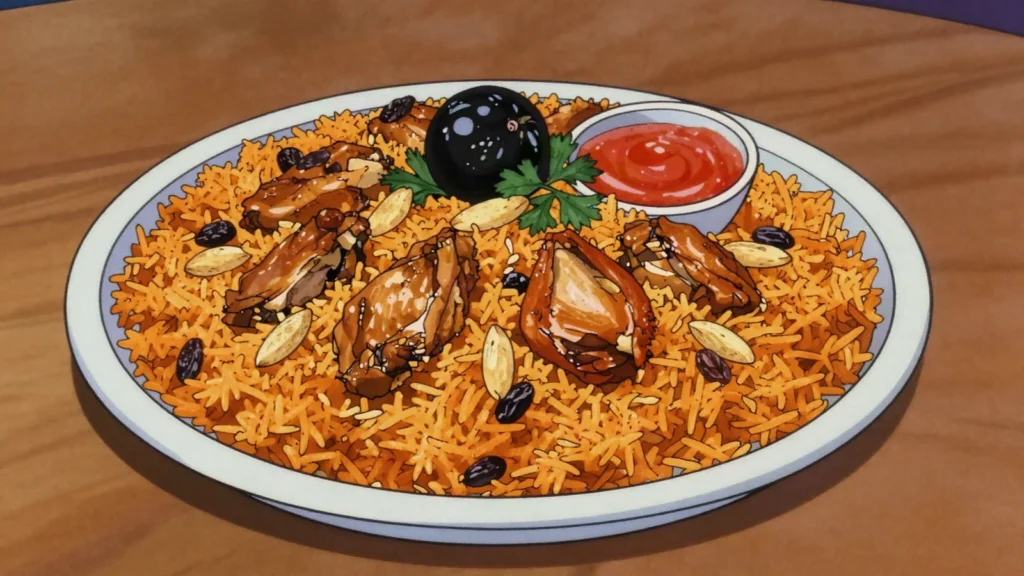
- Fluff the rice with a fork, pile it on a large platter, lay the chicken on top, scatter with fried almonds, raisins and parsley, and serve the daqoos in a bowl alongside with salad and pickles.
Technique
- Kabsa lives or dies by the broth. The rice is cooked in the meat’s own cooking liquid, never in water, and the liquid must be seasoned aggressively because rice absorbs salt.
- Dried limes carry the sourness. They are pierced whole, never crushed into the pot, and they give kabsa the distinctive musty citrus note that separates it from an Indian biryani or a Persian pilaf.
- Aged basmati is worth seeking out. New-crop rice absorbs too fast and clumps under the steam, and kabsa should be separate-grained.
- Kabsa is eaten communally from one platter with the right hand, and the crisped chicken is torn and passed to guests by the host.
Substitutions
- No ghee? Use a mix of butter and oil, though ghee is the traditional fat and carries the spices differently.
- Ready-made kabsa spice blends from a Middle Eastern grocer are entirely legitimate and used in most Saudi kitchens; use 3 tbsp in place of the ground spice list.
- Dried lime powder can substitute for whole loomi at 1 tsp per lime, added with the ground spices.
Variations
- Kabsa laham, made with lamb shoulder and simmered 1 hour 30 minutes before the rice goes in.
- Mandi, where the meat is cooked separately in a pit oven or hung over the rice and smoked with charcoal.
- Madfoon and madghout, the buried and pressure-cooked cousins of the same rice platter.
History
Spiced rice, most often cooked with chicken or lamb and dried lime, generally considered Saudi Arabia’s national dish, though closely related rice-and-meat dishes under different names are found across the wider Arabian Peninsula and Gulf region, reflecting a shared Bedouin and trading heritage across the peninsula rather than one country’s isolated invention. Its specific spice blend, commonly including cardamom, cinnamon, cloves and dried lime called loomi, reflects historic Indian Ocean and East African spice trade routes that passed through Arabian ports for centuries, bringing spices not native to the peninsula into what became defining local flavours. Kabsa is traditionally served on a large communal platter for a group to share by hand, reflecting broader Bedouin and Gulf Arab hospitality customs around large shared meals rather than individually portioned dining.
Frequently asked questions
What is Kabsa?
Kabsa is a main from Saudi Arabia: spiced rice with chicken or lamb, dried lime and tomato; national platter. Spiced rice, most often cooked with chicken or lamb and dried lime, generally considered Saudi Arabia’s national dish, though closely related rice-and-meat dishes under different names are found across the wider Arabian Peninsula and Gulf region, reflecting a shared Bedouin and trading heritage across the peninsula rather than one country’s isolated invention. Its specific spice blend, commonly including cardamom, cinnamon, cloves and dried lime called loomi, reflects historic Indian Ocean and East African spice trade routes that passed through Arabian ports for centuries, bringing spices not native to the peninsula into what became defining local flavours. Kabsa is traditionally served on a large communal platter for a group to share by hand, reflecting broader Bedouin and Gulf Arab hospitality customs around large shared meals rather than individually portioned dining.
How long does Kabsa take to make?
Kabsa takes 30 min of preparation and 1 hr 20 min of cooking. The recipe makes 6 servings. It is rated medium to make.
What can I substitute in Kabsa?
Yes, within limits. No ghee? Use a mix of butter and oil, though ghee is the traditional fat and carries the spices differently. Ready-made kabsa spice blends from a Middle Eastern grocer are entirely legitimate and used in most Saudi kitchens; use 3 tbsp in place of the ground spice list. Dried lime powder can substitute for whole loomi at 1 tsp per lime, added with the ground spices.
What is the most important thing to get right in Kabsa?
Return the chicken with the whole spices, pierced dried limes, bay and the water. Bring to a boil, skim, then simmer covered 35–40 minutes until the chicken is cooked through and the broth is dark and heavily fragrant.