
Ingredients
Syrup
- 250 gcaster sugar
- 400 mlwater
- 1 tsplemon juice
- 1 tbsporange blossom water, if wanted
Semolina
- 200 gcoarse semolina
- 120 gbutter, or ghee
To finish
- 200 gashta clotted cream, or fresh white cheese, or thick clotted cream
- 2 tspground cinnamon
- 2 tbspchopped pistachios, if wanted
To serve
- hot tea
- flatbread, in some households
Directions
- Put the sugar, water and lemon juice in a pan over a medium heat. Stir it only until the sugar dissolves, then stop stirring. The lemon juice stops the syrup crystallising later.
- Bring it to a simmer and cook it for five minutes. It should still be quite thin, since it has to be absorbed. Stir in the orange blossom water off the heat if you are using it. Keep it hot, since cold syrup added to hot semolina makes it seize.
- Melt the butter in a wide heavy pan over a medium heat. Let it foam up and then subside again. Add the semolina all at once and stir it into the butter. Keep stirring constantly with a wooden spoon.
- Toast it for eight to ten minutes over a medium heat. It will turn from pale cream to a golden nutty brown. Take the pan off the heat for a moment. Pour in the hot syrup in a steady stream while stirring hard. Keep stirring so no lumps form.
- Return the pan to a low heat once it has all gone in. The mixture will look far too loose at this point. Cook it gently for six to eight minutes, stirring often. It should be thick and glossy and should hold on a spoon.
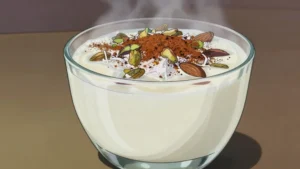
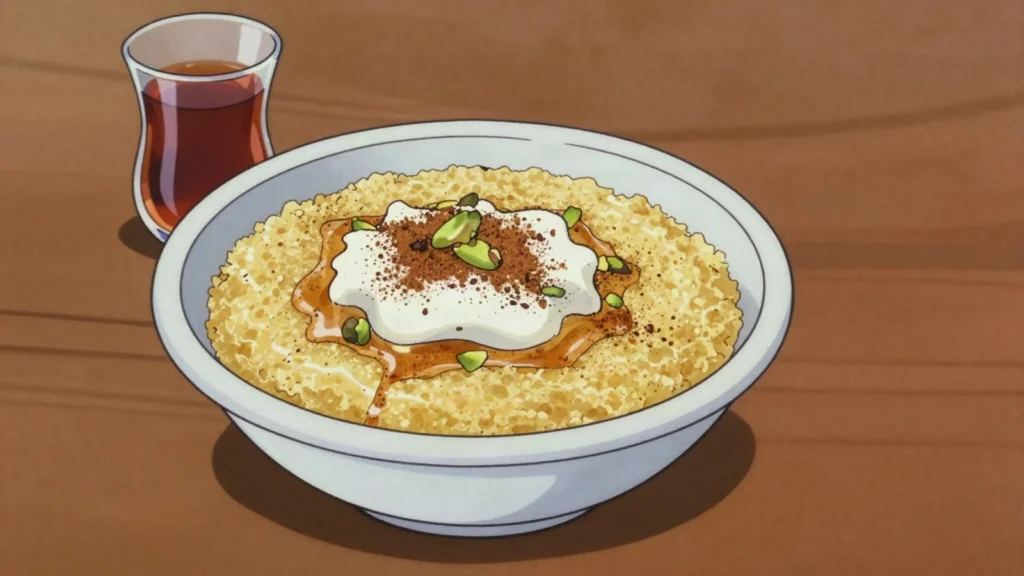
- Add a splash of hot water if it has gone too thick to spread. Serving it is done immediately and while it is properly hot. Spoon it into shallow bowls and level the surface. Spoon the ashta or cream over the top in a generous layer.
- Dust the whole surface heavily with ground cinnamon. Scatter chopped pistachios over it if you want them. Serve it hot with tea, before dawn or as a winter breakfast.
Technique
- Toast the semolina to a golden nutty brown, since undertoasted semolina tastes raw.
- Add hot syrup to hot semolina; cold syrup makes it seize into lumps.
- Stop while it is still slightly loose, as it stiffens considerably on cooling.
Substitutions
- Thick clotted cream in place of ashta.
- Ghee in place of butter, which some households prefer.
Variations
- With rosewater in the syrup instead of orange blossom.
- Topped with fresh white cheese rather than cream.
- Made richer, with more butter, which is the older style.
History
An Aleppo winter breakfast, traditionally eaten before dawn in Ramadan and named after a medieval Abbasid governor.
Frequently asked questions
What is Mamounia?
Mamounia is a breakfast from Syria: warm semolina cooked in butter and syrup, topped with cheese and cinnamon. An Aleppo winter breakfast, traditionally eaten before dawn in Ramadan and named after a medieval Abbasid governor.
How long does Mamounia take to make?
Mamounia takes 10 min of preparation and 25 min of cooking. The recipe makes 4 servings. It is rated easy to make.
What can I substitute in Mamounia?
Yes, within limits. Thick clotted cream in place of ashta. Ghee in place of butter, which some households prefer.
What is the most important thing to get right in Mamounia?
Dust the whole surface heavily with ground cinnamon. Scatter chopped pistachios over it if you want them. Serve it hot with tea, before dawn or as a winter breakfast.