
Ingredients
Dough
- 500 gfine semolina
- 250 gcoarse semolina
- 300 gghee, melted
- 100 mlmilk
- 50 gsugar
- 1 tspinstant yeast
- 2 tbsprose water
- 2 tbsporange blossom water
- 1 tspmahleb, ground
- ½ tspmastic, ground with sugar
Date filling
- 400 gdate paste
- 2 tbspghee
- 1 tspcinnamon
Walnut filling
- 300 gwalnuts, chopped
- 100 gsugar
- 1 tbsporange blossom water
- 1 tspcinnamon
Pistachio filling
- 300 gpistachios, chopped
- 100 gsugar
- 1 tbsprose water
To finish
- icing sugar
Equipment
- carved wooden maamoul moulds
Directions
- Pour the melted ghee over both semolinas and rub it through thoroughly with your fingers until every grain is coated. The next day, dissolve the yeast and sugar in the warm milk with the rose water and orange blossom water.
- Work the liquid into the semolina a little at a time, along with the mahleb and mastic, until it just comes together.
- Add the liquid sparingly and stop as soon as it holds. Too much and the dough becomes bready rather than short. Grind the mastic with a spoonful of sugar rather than alone, because it gums up instantly against a bare pestle.
- Rest the dough 30 minutes, which lets the semolina take up the last of the liquid evenly. Prepare the fillings, working the date paste with ghee and cinnamon until soft and pliable.
- Take a walnut-sized piece of dough, roll it into a ball, and press your thumb into it, turning to thin the walls into a cup.
- Fill the cup, then close the dough over the filling and seal it completely. Press the ball firmly into the wooden mould, filling the pattern right into the corners. Press hard into the mould or the carved pattern comes out faint and disappears entirely during baking.
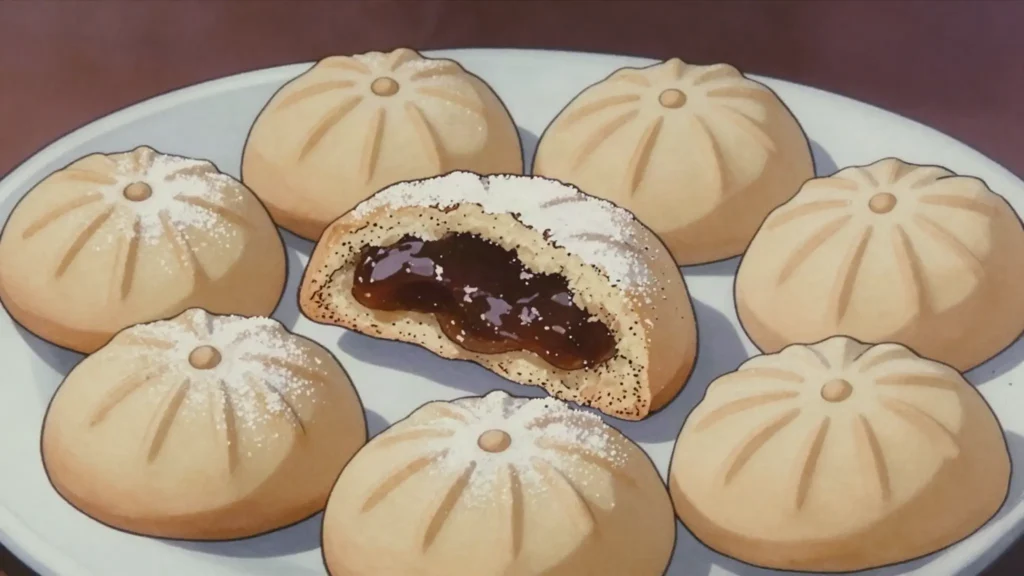
- Bake at 170°C (340°F) for 20 to 25 minutes. Take them out pale. Cool them completely on the tray before moving them, because they are extremely fragile while warm. Dust the nut-filled ones with icing sugar; the date ones are traditionally left plain.
Technique
- The wooden moulds, tabe, are inherited objects in many families and plastic ones are now common.
- They keep for weeks in a tin and improve for the first few days.
- The overnight semolina rest cannot be shortened, whatever the hurry.
Substitutions
- Butter, clarified at home, in place of ghee.
- A plastic maamoul press, or shaping by hand and marking with a fork.
Variations
- Kleicha, the Iraqi date version.
- Made flat and open, as karabij with natef cream.
- With a mix of nuts in one filling.
History
Baked in quantity for Eid and Easter, the mould pattern signalling which filling is inside.
Frequently asked questions
What is Maamoul?
Maamoul is a dessert from Jordan: buttery semolina cookies pressed in wooden moulds around date, walnut or pistachio. Baked in quantity for Eid and Easter, the mould pattern signalling which filling is inside.
How long does Maamoul take to make?
Maamoul takes 1 hr plus overnight resting of preparation and 25 min of cooking. The recipe makes about 40. It is rated hard to make.
What can I substitute in Maamoul?
Yes, within limits. Butter, clarified at home, in place of ghee. A plastic maamoul press, or shaping by hand and marking with a fork.
What is the most important thing to get right in Maamoul?
Add the liquid sparingly and stop as soon as it holds. Too much and the dough becomes bready rather than short. Grind the mastic with a spoonful of sugar rather than alone, because it gums up instantly against a bare pestle.