Ingredients
Beans
- 400 gdried red kidney beans, soaked overnight in cold water
- 1.5 litreswater
- 1bay leaf
Fry
- 4 tbspred palm oil (or sunflower oil)
- 3onions, sliced
- 5garlic cloves, chopped
- 2tomatoes, chopped
- 1green chilli, chopped
- 1 tspsalt
- ½ tspblack pepper
- 1vegetable stock cube (optional)
To serve
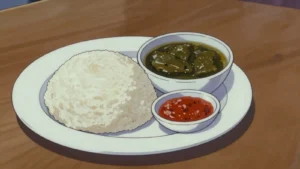
- Steamed rice, ugali or boiled green plantain
- Sautéed greens (isombe or amaranth)
Directions
- Drain the soaked beans and put them in a pot with the fresh water and the bay leaf. Bring to a hard boil for a full 10 minutes — with red kidney beans this rolling boil is a genuine food-safety step, not a formality.
- Lower to a simmer, cover partially, and cook 60 to 90 minutes until the beans crush easily between finger and thumb but still hold their shape. Add no salt yet; salt early keeps the skins tough.
- Drain, keeping 300 ml of the cooking liquid — it is starchy and will bind the finished dish.
- Heat the palm oil in a wide heavy pan over medium heat until it loosens and turns bright orange, then add the onions.
- Fry the onions 10 to 12 minutes, stirring, until deeply soft and browning at the edges. This slow browning is the whole flavour of ibiharage, so do not hurry it.
- Add the garlic and chilli for 1 minute, then the tomatoes, and cook 8 minutes until they collapse into the oil.
- Tip in the drained beans, the salt, pepper and stock cube if using, and 200 ml of the reserved liquid. Fry and stir for 10 minutes, mashing a spoonful of beans against the side of the pan to thicken the sauce.
- It is ready when the sauce clings to the beans and the oil sheens on the surface. Serve hot with rice, ugali or plantain and a bowl of greens.
Technique
- Ibiharage is the everyday meal in Burundi — beans and a starch, eaten at midday and again at night by most households. It is cheap, filling and unglamorous, and it is what people mean by home cooking.
- Red palm oil gives the orange colour and a faintly savoury, earthy note. Refined oil works but produces a paler, plainer dish.
- Never cook kidney beans from raw at a low simmer or in a slow cooker without that initial hard boil; undercooked red kidney beans contain phytohaemagglutinin and cause severe stomach upset.
Substitutions
- Tinned kidney beans work for a weeknight: use 800 g drained, skip straight to the frying, and add only 100 ml of water.
- Any firm bean — borlotti, pinto, or the local red-speckled beans — is used interchangeably in Burundian kitchens.
Variations
- Ibiharage n’ibitoke cooks green plantain in with the beans for the last 20 minutes so it absorbs the sauce.
- A soupier version, thinned with more of the bean liquor, is eaten with the fingers alongside cassava-leaf greens.
History
A dish of red kidney beans, slow-cooked with palm oil, onion and often plantain, considered one of Burundi’s most essential everyday staple dishes, reflecting the country’s significant bean cultivation, since Burundi has one of the highest rates of per-capita bean consumption in the world, with beans serving as a primary protein source across much of the population given the historically limited availability and higher cost of meat for many households. Its slow cooking, allowing the beans to fully soften and absorb the surrounding flavours, produces a hearty, filling dish typically eaten alongside rice, cassava or plantain as a complete meal. Ibiharage remains the most commonly eaten dish across Burundian households, considered a genuine dietary staple rather than an occasional specialty.
Frequently asked questions
What is Ibiharage?
Ibiharage is a main from Burundi: red kidney beans fried with onions and palm oil, the daily staple. A dish of red kidney beans, slow-cooked with palm oil, onion and often plantain, considered one of Burundi’s most essential everyday staple dishes, reflecting the country’s significant bean cultivation, since Burundi has one of the highest rates of per-capita bean consumption in the world, with beans serving as a primary protein source across much of the population given the historically limited availability and higher cost of meat for many households. Its slow cooking, allowing the beans to fully soften and absorb the surrounding flavours, produces a hearty, filling dish typically eaten alongside rice, cassava or plantain as a complete meal. Ibiharage remains the most commonly eaten dish across Burundian households, considered a genuine dietary staple rather than an occasional specialty.
How long does Ibiharage take to make?
Ibiharage takes 15 min plus overnight soaking of preparation and 1 hr 40 min of cooking. The recipe makes 4 servings. It is rated easy to make.
What can I substitute in Ibiharage?
Yes, within limits. Tinned kidney beans work for a weeknight: use 800 g drained, skip straight to the frying, and add only 100 ml of water. Any firm bean — borlotti, pinto, or the local red-speckled beans — is used interchangeably in Burundian kitchens.
What is the most important thing to get right in Ibiharage?
Fry the onions 10 to 12 minutes, stirring, until deeply soft and browning at the edges. This slow browning is the whole flavour of ibiharage, so do not hurry it.