
Ingredients
The chicken
- 1.5 kgchicken pieces
- on the bone
- salt and pepper
- oil, to brown
The palm nut
- 800 gpalm nut pulp
- tinned moambe or noix de palme
- or fresh palm nuts
- boiled and pounded
The pot
- 2onions, chopped
- 4garlic cloves, crushed
- 3tomatoes, chopped
- 1or 2 hot chillies
- 2stock cubes
- about 500 ml water
- salt
Sometimes added
- a handful of chopped greens
- okra
- smoked fish
Directions
- Check it rather than guessing. Wash hands after handling raw chicken. Wash boards and knives as well. Do not let raw juices touch other food. Adjust the added water accordingly. Boil fresh palm nuts until soft. That takes about forty minutes. Pound them all in a heavy mortar. Add hot water and squeeze the pulp out. Strain the pulp through a sieve. Press it through with a spoon.
- Discard the fibres and stones. Only the smooth pulp goes forward. Season the chicken with salt and pepper. Heat oil in a large heavy pot. Brown the chicken on all sides. Work in batches rather than crowding. Lift them out and set them aside. Add the chopped onions to the pot.
- Cook them for a good eight minutes. Add the garlic and cook it a minute. Add the chopped tomatoes to the pot. Cook them down for about six minutes. The tomato should break down completely. Add the palm nut pulp to the pot. Stir it through the whole base.
- Stir the pulp in very thoroughly. Add all of the water gradually. The pulp is very thick indeed. Add it gradually and judge as you go. It should be thick but not solid. Add the chicken back to the pot. Add the stock cubes and chillies. Season the whole pot with salt.
- Add whole chillies for aroma alone. Chop them in instead for real heat. Lift whole ones out before serving. Bring it up to a gentle simmer. Cover it and then let it cook. Give it about forty full minutes. Keep it at a gentle simmer only.
- Stir it every ten minutes or so. The thick pulp catches readily. Stir right into all the corners. Judging the chicken takes a proper check. Stir in chopped greens near the end. Judging the sauce takes a careful look.
- Oil rising is entirely expected here. Stir it back in before serving. Taste the sauce and adjust the salt. Palm nut pulp is rich and takes salt. Ladle it into bowls with the chicken. Serve rice or cassava alongside. It keeps three days refrigerated.
Technique
- Moambe is the pulp of the whole palm fruit rather than palm oil, and that distinction genuinely matters: palm oil is pressed out of the fruit where moambe is the fruit flesh itself, containing the oil and everything else, and so is thicker and more complex. Tinned palm nut pulp is widely sold in African food shops and is genuinely equivalent, which is what the atlas recommends — the fresh route means boiling the nuts, pounding them in a mortar, squeezing the pulp out with hot water and straining off the fibres and stones, which is hours of work.
- Keep it at a gentle simmer and stir every ten minutes right into the corners: hard boiling splits the oil out badly and the thick pulp catches on the bottom, where it burns and taints the whole pot.
- Chicken must be cooked right through: check the thickest part for seventy-five degrees avoiding the bone, or look for meat pulling from the bone and entirely clear juices. Wash hands, boards and knives after handling it raw.
Substitutions
- Whole chillies added for aroma alone or chopped in for real heat are both genuinely done; lift whole ones out before serving.
- Chopped greens, okra for thickening and smoked fish all appear in versions of this stew across the region.
Variations
- The stew is made right across the Congo basin under several names — moambe or mwambe in places, nyembwe in Gabon — following the language rather than being one country’s dish.
- Oil rising to the surface is expected rather than a fault, since the pulp is very high in oil; stir it back in before serving.
- Add the water gradually and judge as you go, since tinned pulp varies in thickness and it should end thick but not solid.
History
The palm-nut stew of the Congo basin, cooked wherever oil palms grow, from Bangui down the river to Brazzaville.
Frequently asked questions
What is Poulet a la moambe?
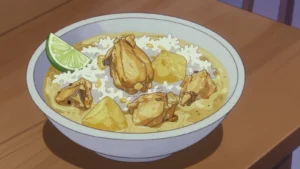
Poulet a la moambe is a main from Central African Republic: chicken simmered in thick palm-nut pulp, eaten with cassava or rice. The palm-nut stew of the Congo basin, cooked wherever oil palms grow, from Bangui down the river to Brazzaville.
How long does Poulet a la moambe take to make?
Poulet a la moambe takes 30 minutes of preparation and 1 hour 15 minutes of cooking. The recipe makes serves 6. It is rated medium to make.
What can I substitute in Poulet a la moambe?
Yes, within limits. Whole chillies added for aroma alone or chopped in for real heat are both genuinely done; lift whole ones out before serving. Chopped greens, okra for thickening and smoked fish all appear in versions of this stew across the region.
What is the most important thing to get right in Poulet a la moambe?
Check it rather than guessing. Wash hands after handling raw chicken. Wash boards and knives as well. Do not let raw juices touch other food. Adjust the added water accordingly. Boil fresh palm nuts until soft. That takes about forty minutes. Pound them all in a heavy mortar. Add hot water and squeeze the pulp out. Strain the pulp through a sieve. Press it through with a spoon.