
Ingredients
Leaves
- 600 gfresh jute leaves, or 300 g frozen
- water
Pot
- 150 mlred palm oil
- 2onions, chopped
- 3 clovesgarlic
- 1scotch bonnet
- 1 tbspground crayfish
- 200 gsmoked fish, flaked
- 150 gbeef or tripe, pre-boiled, optional
- 1stock cube
- salt
To serve
- plain rice
- fufu
Directions
- Strip the jute leaves from their stems and wash them thoroughly in several changes of water.
- Discard the stems entirely. They are woody and they stay woody however long you cook them.
- Chop the leaves very finely, or pound them briefly in a mortar.
- The finer you cut them, the more they release, and the slipperiness is exactly what this dish is for. Anyone hoping to avoid it has picked the wrong sauce.
- Fry the onions in the palm oil until soft, then add the garlic and the whole scotch bonnet.
- Use red palm oil and use it generously. It is the colour and much of the flavour, and a neutral oil gives something pale and thin.
- Add the smoked fish, ground crayfish and any pre-boiled meat, with the stock cube and a little water.
- Simmer for 15 minutes to build the base.
- Now add the chopped jute leaves and stir them through.
- Cook for 20 to 25 minutes over a medium heat, stirring often.
- It will turn dark green and visibly ropey, drawing into threads off the spoon. That draw is the sign it is working, not a fault.
- Do not add flour, cornstarch or any thickener. The leaves do all of it themselves.
- Keep it loose enough to pour, adding water if it tightens too far.
- Taste for salt, remembering the smoked fish and stock cube have brought plenty.
- Lift the scotch bonnet out at the end unless you want serious heat.
- Serve over plain rice, or with fufu, eaten by scooping.
- The same jute leaf sauce runs across West and North Africa under many names, including molokhia in Egypt and ewedu in Nigeria, and the slipperiness is common to all of them.
Technique
- Jute leaf is sold fresh in African markets and frozen almost everywhere else, and frozen works well.
- The texture divides people entirely, and in Sierra Leone it is the whole appeal.
- Smoked fish rather than fresh is what gives the depth.
Substitutions
- Frozen chopped jute leaf, which needs no preparation.
- Dried crayfish powder if fresh ground is unavailable.
Variations
- With more meat, as a fuller stew.
- Mixed with okra, which doubles the slipperiness.
- Ewedu, the Nigerian version, usually thinner and served with gbegiri.
History
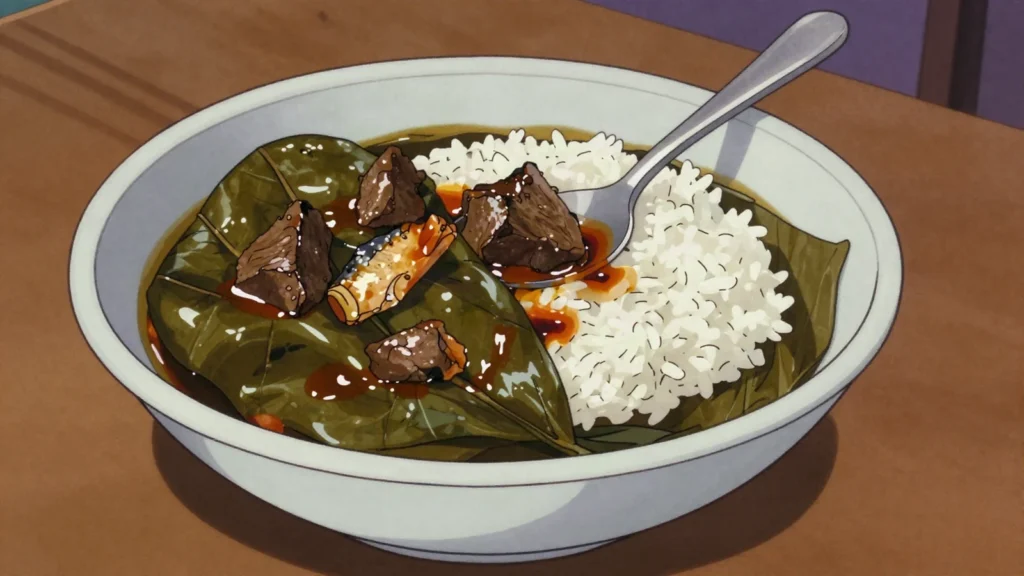
Krain krain is jute mallow, the same leaf as Egypt’s molokhia; it is cooked slippery with palm oil and smoked fish and served over rice.
Frequently asked questions
What is Krain krain?
Krain krain is a soup & stew from Sierra Leone: slippery jute-leaf sauce with smoked fish and palm oil. Krain krain is jute mallow, the same leaf as Egypt’s molokhia; it is cooked slippery with palm oil and smoked fish and served over rice.
How long does Krain krain take to make?
Krain krain takes 25 min of preparation and 50 min of cooking. The recipe makes 6 servings. It is rated easy to make.
What can I substitute in Krain krain?
Yes, within limits. Frozen chopped jute leaf, which needs no preparation. Dried crayfish powder if fresh ground is unavailable.
What is the most important thing to get right in Krain krain?
Fry the onions in the palm oil until soft, then add the garlic and the whole scotch bonnet.